WP Engine Web Hosting Review: Is It Worth the Premium?
WP Engine is a managed WordPress platform for site owners who would rather pay for maintenance, security controls, staging tools and specialist support than manage a general-purpose server. It is polished and developer-friendly, but the real buying decision is not simply whether WP Engine is “fast.” It is whether its workflow and support justify the higher renewal price, fixed visit allowance and platform restrictions.
WP Engine is excellent for serious WordPress work—but expensive for simple sites
WP Engine earns 8.8/10. Its strongest advantages are a mature production/staging/development workflow, automated platform updates, daily and on-demand backups, integrated edge delivery and 24/7 WordPress-focused support. Startup begins at an advertised $25 per month for the first year, then renews at a published $35 per month. The higher tiers become economical when their site allocations are actually used.
Choose it for a revenue-producing WordPress site, an agency workflow or a team that values operational convenience. Skip it when the site is a low-traffic brochure, you require unrestricted server access, or variable traffic could repeatedly trigger visit overages.
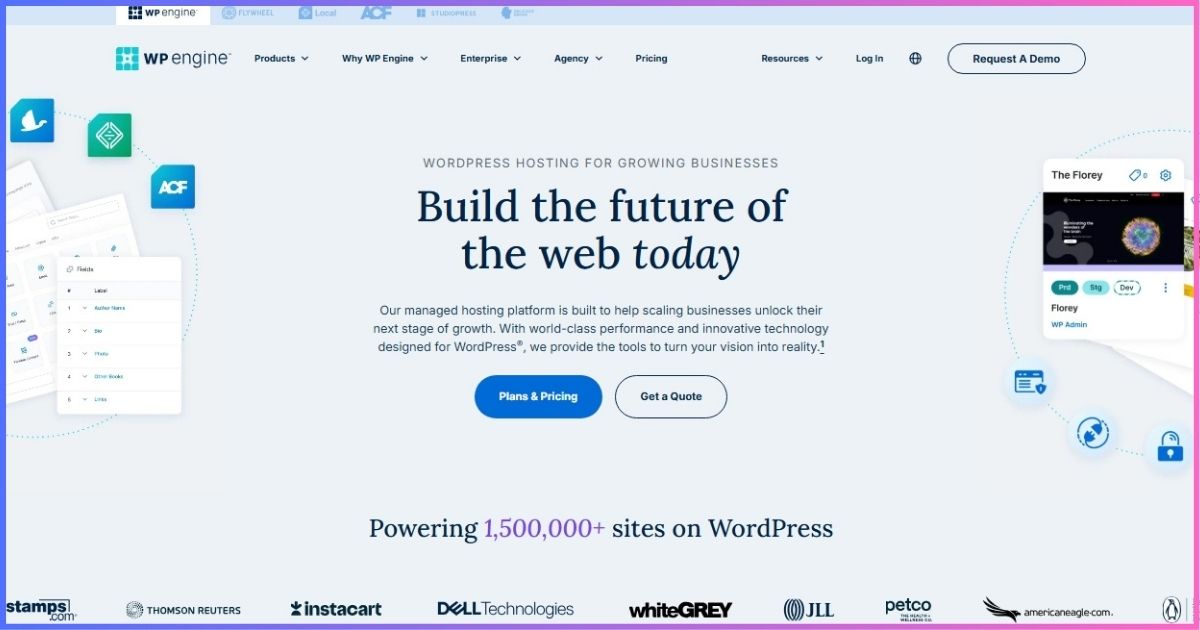
Table of contents
At a glanceWhat WP Engine Is—and Who It Is For
WP Engine is not traditional cPanel hosting. It is an opinionated managed environment built specifically around WordPress. The provider maintains the core platform, PHP and MySQL versions, layers in caching and a global CDN, monitors the infrastructure, and gives every billable site separate production, staging and development environments.
That distinction matters. A freelancer can copy a production site into staging, test an update and deploy it without assembling separate tools. A marketing team gets controlled user permissions and activity logs. A store or publisher gets specialist support when a WordPress-specific issue appears. In exchange, WP Engine controls parts of the stack, blocks some resource-heavy or duplicative plugins, meters visits and costs more than basic shared hosting.
Current plansWP Engine Pricing, Features and Resource Limits
The public Essential plan family has four main tiers. The advertised rates below are monthly equivalents for an eligible new customer’s first annual term. Published renewal prices are higher, so budget against renewal—not only the headline offer. Taxes and optional add-ons can raise the checkout total.
| Plan | First-year rate* | Published renewal | Sites | Visits/mo | Storage | Bandwidth/mo |
|---|---|---|---|---|---|---|
| Startup | $25/mo | $35/mo | 1 | 25,000 | 10 GB | 75 GB |
| Professional | $50/mo | $65/mo | 3 | 75,000 | 15 GB | 150 GB |
| Growth | $96/mo | $130/mo | 10 | 100,000 | 20 GB | 240 GB |
| Scale | $242/mo | $330/mo | 30 | 400,000 | 50 GB | 550 GB |
| Core | From $400/mo | Quote/order terms | Isolated resources, burst capacity, advisory services and a 99.99% SLA are listed; configuration varies | |||
*First-year promotional monthly equivalent shown on WP Engine’s plan page. New-customer discounts do not apply to upgrades or renewals and can be redeemed once. Confirm the amount due and your renewal schedule at checkout.
What the standard plans include
Managed platform
Managed WordPress, PHP and MySQL updates, proactive monitoring, SSL and a transferable-site workflow.
Delivery stack
EverCache, edge delivery and a global CDN designed to reduce work reaching WordPress and the origin server.
Safe changes
Development, staging and production environments, flexible copy tools, activity logs and granular permissions.
Recovery tools
Automated daily plus on-demand backups, one-click restore/download options and an automated migration plugin.
First-year vs. renewal price per month
Renewal is 30%–40% above the advertised first-year equivalent on these four plans.
Budget accuratelyThe True Cost: Renewals, Visitor Overages and Add-ons
A two-year comparison exposes the difference between promotional and ongoing cost. Assuming one year at the displayed introductory rate followed by one at the published renewal rate, Startup totals about $720, Professional $1,380, Growth $2,712 and Scale $6,864 before tax, add-ons or overages.
| Plan | Year 1 | Renewal year | Illustrative 2-year total | Renewal increase | First-year cost/site/mo* |
|---|---|---|---|---|---|
| Startup | $300 | $420 | $720 | 40% | $25.00 |
| Professional | $600 | $780 | $1,380 | 30% | $16.67 |
| Growth | $1,152 | $1,560 | $2,712 | 35.4% | $9.60 |
| Scale | $2,904 | $3,960 | $6,864 | 36.4% | $8.07 |
*Assumes every included site slot is used. This is arithmetic for comparison, not a quote; offers and billing terms can change.
Visitor overages are the key variable
Startup through Scale are charged $2 per 1,000 visitors above the monthly allowance. WP Engine says it does not throttle or shut down a site simply because traffic spikes. That is good for continuity, but it turns traffic into a variable bill: 35,000 visits on Startup is 10,000 over the allowance, or $20 extra; 150,000 visits on Growth is 50,000 over, or $100 extra.
WP Engine’s current bandwidth documentation says Shared and Premium plans are not automatically charged bandwidth overage fees or throttled for exceeding the listed transfer amount, although the company may contact you about optimization, acceptable use or a plan upgrade. Storage and extra sites can be purchased in eligible cases.
Money-back policy
The 60-day money-back guarantee applies to new Startup, Professional, Growth and Scale purchases. Premium and custom plans are excluded, and the refund must be requested as part of cancellation. Domain names, add-ons, taxes and other charges may have different treatment, so save the checkout terms.
Architecture, not hypeWP Engine Performance and Scalability
WP Engine’s performance story rests on a managed stack rather than a single benchmark: containerized environments isolate workloads, EverCache handles cacheable requests, and edge delivery uses a global CDN with more than 200 points of presence. That can reduce latency and the amount of PHP/database work required for repeat page requests.
Real speed still depends on theme weight, plugins, images, database health, geography and whether a page can be cached. Logged-in dashboards, carts, checkout flows and personalized pages are harder to cache than a public article. Google evaluates real-world loading, responsiveness and visual stability through Core Web Vitals, so test representative templates and real-user data rather than treating the host’s brand as a performance guarantee.
Monthly visit allowance by standard plan
Scale is the major capacity jump; Growth offers more sites but only 25,000 more visits than Professional.
What to test after migration
- Cached and uncached pages: homepage, articles, search, login and account pages.
- Dynamic commerce: cart, checkout, payment callbacks and personalized content.
- Geographic latency: use locations where the actual audience lives.
- Peak behavior: test safely in staging, then watch origin response time, errors and cache hit behavior during real campaigns.
Day-to-day useDashboard, Staging, Migration and Developer Tools
Workflow is where WP Engine most clearly separates itself from commodity hosting. Every site receives production, staging and development environments, and those non-production environments do not count toward the plan’s billable-site total. On shared plans, custom domains attach to production rather than staging or development.
Teams can create copies between environments, use activity logs and permissions, connect with Git or WP-CLI where appropriate, and make transferable sites before handing a project to a client. Included sandbox-site allowances are 2 on Startup, 3 on Professional, 5 on Growth and 8 on Scale; they are intended for development and cannot use custom domains.
The automated migration plugin handles many standard WordPress moves, but complex sites still deserve a migration
checklist. WP Engine does not use .htaccess, disallowed plugins will not carry over cleanly, and
custom cache rules may need support. Take an independent backup, lower DNS TTL ahead of launch, test forms and
ecommerce flows, and keep the old host active until DNS and transactional jobs are verified.
Solo business site
Staging reduces update risk without requiring a separate hosting account or manual database copy.
Agency team
Multiple environments, transferable sites and controlled access make handoffs and parallel work cleaner.
Publisher
Edge caching helps public content, while visit allowances make campaign planning important.
WooCommerce
Managed infrastructure helps, but dynamic checkout performance and optional ecommerce features still require testing.
Protection and recoverySecurity, Backups and Disaster Recovery
WP Engine combines managed updates and monitoring with a proprietary firewall, DDoS defenses, malicious-bot controls, disk write protection, vulnerability scanning and segregated environments. SSL is included. These controls reduce platform-level work, but they do not replace strong passwords, multifactor authentication, least-privilege accounts, secure custom code or prompt plugin maintenance.
Automated daily and manual backup checkpoints are stored offsite on Amazon S3 and encrypted in transit and at rest. Current support documentation states that 30 days of checkpoints are retained, with full or partial restore and download options. That is a strong operational baseline.
Plugin restrictions
Some caching, backup, related-post, broken-link and server-intensive plugins are disallowed because they duplicate platform functions or create security/performance problems. This can improve platform stability, but it also limits choice. Audit the official disallowed-plugin list before migrating a site that depends on a specialist backup, caching or reporting tool.
Help and availabilitySupport, Uptime and SLA Reality
All standard plans advertise 24/7 WordPress expertise. This is more valuable than generic infrastructure support when the problem sits at the intersection of WordPress, caching, PHP and the database. It does not mean support will debug every third-party plugin, custom theme or application bug; clarify scope for business-critical integrations before committing.
A common mistake is to apply a 99.99% service-level agreement to every WP Engine plan. The current plan comparison explicitly lists a 99.99% SLA for Core and Enterprise. Older general SLA material references 99.95% after excluded downtime. Your signed order form and current SLA control, so Startup-through-Scale buyers should not assume the Core promise is included.
How this review score is weighted
We prioritize operational value over unverified synthetic speed claims.
- Workflow and ease — 30%
- Value and pricing clarity — 25%
- Security and recovery — 20%
- Support and reliability — 15%
- Growth flexibility — 10%
Read before buyingWP Engine’s Most Important Limitations
- Renewal pricing: the four standard tiers renew 30%–40% above the displayed first-year monthly equivalent.
- Visit metering: extra visits cost $2 per 1,000 on standard managed plans, so successful campaigns can increase the bill.
- Opinionated platform: there is no cPanel-style unrestricted server administration, and some plugins are prohibited.
- Small storage allocations: 10–50 GB is adequate for optimized WordPress sites, but video and large downloadable libraries belong on specialist object/video storage.
- Multisite: Lite and Startup do not support WordPress Multisite. Confirm the eligible tier and pricing for a network.
- Add-on ambiguity: some automation, page-speed and security capabilities can be optional rather than included.
- Support boundaries: managed hosting is not a substitute for a developer maintaining custom code and third-party integrations.
ContextWP Engine Compared With Other Hosting Paths
The most useful comparison is not a list of brand slogans; it is the operating model. WP Engine sits between low-cost shared WordPress hosting and infrastructure-first cloud hosting.
| Hosting path | Best for | Main advantage | Main trade-off | Our guidance |
|---|---|---|---|---|
| WP Engine | Established WordPress sites and agencies | Integrated workflow, recovery tools and specialist support | Premium renewals, metered visits, platform rules | Best when staff time and safe deployments matter |
| Bluehost Cloud | High-traffic WordPress sites wanting pooled cloud capacity | Multi-region architecture and broader visit guidance | Long-term prepayment can be substantial | Compare full-term total and backup specifics |
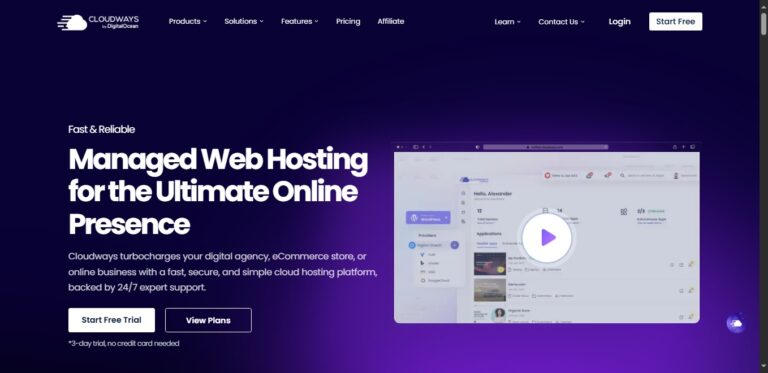
| Cloudways | Technical users wanting cloud-provider choice | Infrastructure flexibility and scalable server sizes | More infrastructure decisions and variable add-ons | Read our Cloudways vs WP Engine comparison |
| Budget shared hosting | Personal and early-stage brochure sites | Much lower entry cost and email may be bundled | Fewer workflow tools and more hands-on maintenance | Start here if revenue and traffic are still minimal |
For a wider managed shortlist, see our guide to the best managed WordPress hosting for Christian websites. The same operational questions—account security, donation reliability, backups, accessibility and responsible stewardship—also apply to nonprofits and ministries.
Decision guideWhich WP Engine Plan Should You Choose?
Startup
Choose for one established business site below roughly 20,000–22,000 normal monthly visits, leaving room for peaks.
Professional
Choose for up to three modest sites when the combined 75,000-visit pool and 15 GB storage are sufficient.
Growth
Choose for an agency portfolio needing up to 10 sites. Check traffic carefully: its 100,000 visits are shared across all sites.
Scale
Choose for a larger portfolio or traffic up to 400,000 visits. Compare Core when isolation or a contractual 99.99% SLA matters.
Do not select on site count alone. Add combined visits, storage and bandwidth for every site, then consider the busiest month—not the average one. Also compare the renewal-year cost with the value of staff time saved by staging, backups, updates and support.
Ready to compare your checkout total?
Verify the term, renewal schedule, included add-ons and visitor allowance before paying.
See WP Engine Plans →Balanced viewWP Engine Pros and Cons
Pros
- Mature production, staging and development workflow
- Daily and on-demand offsite backup checkpoints
- Managed WordPress, PHP and database updates
- Integrated caching, edge delivery, CDN and SSL
- 24/7 WordPress-focused support
- Useful agency permissions, logs and transferable sites
- 60-day refund window on eligible standard plans
Cons
- Renewals rise materially after the promotional term
- $2 per 1,000 visitors above plan allowance
- Limited storage relative to many general hosts
- Some plugins are disallowed
- Useful automation/security options may cost extra
- No email hosting or traditional cPanel workflow
- 99.99% SLA is not listed for standard Essential tiers
FAQFrequently Asked Questions
Is WP Engine worth the money?
How much does WP Engine cost after the first year?
Does WP Engine charge for traffic overages?
Does WP Engine include email hosting?
Are backups included?
Can WP Engine host a WooCommerce store?
Does WP Engine guarantee 99.99% uptime?
Can I cancel within 60 days?
WP Engine is a premium workflow purchase, not a bargain-hosting purchase
WP Engine deserves its place on a serious managed WordPress shortlist. The environment workflow, backup controls, delivery stack and WordPress-specialist support are coherent and useful—not a random bundle of plugins. For an agency or revenue-producing site, that operational maturity can outweigh the price premium.
The caveats are equally real: renewal rates are substantially higher than first-year offers, visits are metered, storage is conservative, and the platform limits certain plugins and server-level choices. Our recommendation is to choose WP Engine only after modeling renewal cost and peak traffic, checking required plugins, and confirming which add-ons are actually included.
Affiliate disclosure: We may earn a commission if you purchase through our WP Engine link, at no additional cost to you. This does not change the plan data, limitations or scoring in this review. Pricing and promotions can change; verify the checkout summary before purchase.
Sources & comparison methodology
Primary sources reviewed: WP Engine Plans; Updated Pricing; Managed WordPress Platform; Overage Pricing; Bandwidth—Cause and Effects; Change a Plan in the User Portal; Environments; Backup and Restore; Security Environment; Cache; Site Migration; Disallowed Plugins; current service-level materials; and terms/refund disclosures. Contextual standards came from WordPress.org Requirements and Google Search Central’s Core Web Vitals documentation.
Method: Pricing is normalized to a monthly equivalent, but annual totals and renewal prices are shown because headline rates can hide commitment length. Feature claims are included only when supported by current first-party documentation. We did not invent uptime observations or synthetic speed results. Scores weight workflow/ease 30%, value/pricing clarity 25%, security/recovery 20%, support/reliability 15%, and growth flexibility 10%.
Limitations: Promotions, localized taxes, checkout bundles and contract terms can change. Performance varies by site and audience. The signed order form, acceptable-use terms, SLA and checkout summary supersede this editorial comparison.