7 Best crypto friendly banks in Kenya: P2P Guide
Kenya is in the process of embracing the use of cryptocurrencies as a means of exchange and investment. As a result, many banks in Kenya are becoming crypto-friendly.
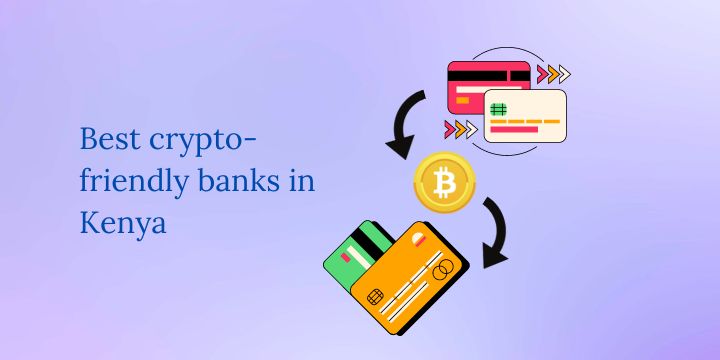
Buying cryptocurrency with a Kenyan bank account does not necessarily mean buying it directly from the bank. Most people looking for ways to use their bank accounts to purchase Bitcoin, Ethereum, or USDT need to understand the difference between a bank offering cryptocurrency services and a bank account being used to pay another person through a peer-to-peer (P2P) marketplace.
In Kenya, P2P trading provides a way to use familiar payment methods, including M-Pesa and bank transfers, when buying or selling cryptocurrency through a supported platform. Instead of sending money directly to a cryptocurrency exchange, you pay a matched buyer or seller according to the instructions for your trade.
This guide covers seven banking options to check when using P2P cryptocurrency marketplaces: Equity Bank, Stanbic Bank, Standard Chartered Bank, Co-operative Bank, Ecobank, GTBank, and Access Bank. It also explains how M-Pesa works as a payment method, how Binance P2P Express works, and how bank cards may be used through third-party cryptocurrency purchase providers.
Important: None of the banks listed below should automatically be treated as officially crypto-friendly or as offering direct cryptocurrency purchases. Your ability to complete a transaction depends on the bank’s policies, the payment methods accepted by the seller, platform requirements, and any applicable restrictions.
Key Takeaways
- M-Pesa can be used for P2P crypto payments. When an offer accepts M-Pesa, you send Kenyan shillings to the seller, who releases the cryptocurrency through the platform’s trading process.
- Bank transfers can also fund P2P purchases. A seller may accept payment into an account held with a supported bank.
- Binance P2P Express automatically matches trades. Select your currency, cryptocurrency, amount, and an available payment method to see a suitable offer.
- Bank cards may work through third-party providers. Availability depends on the provider, card issuer, location, fees, and verification requirements.
- A payment method is not an endorsement. A seller accepting a transfer from a particular bank does not mean that bank officially supports cryptocurrency trading.
- Always verify the payment. Never release cryptocurrency when selling until the funds have arrived in your own bank account or M-Pesa wallet.
What Does Crypto-Friendly Banking Mean?
The term “crypto-friendly bank” can mean different things. Some people use it to describe a bank that offers cryptocurrency-related financial products. Others use it to describe a bank account that they can use when paying for cryptocurrency through an exchange or P2P marketplace.
These are not the same thing.
A traditional bank generally provides services such as deposit accounts, card payments, and money transfers. A cryptocurrency exchange provides access to buying, selling, or trading digital assets. A third-party payment provider may connect a bank card to a cryptocurrency purchase.
With P2P trading, the bank can simply be the institution holding the account from which you pay another person.
For example, a Kenyan user may find a seller on Binance who accepts a bank transfer to a particular bank account. If the buyer and seller meet the platform’s requirements, the buyer can pay from an eligible bank account and receive cryptocurrency after the seller confirms the payment.
The bank has facilitated an ordinary account-to-account transfer. It has not necessarily sold, endorsed, or provided custody for the cryptocurrency.
This distinction matters because a bank may process some ordinary transfers while restricting or declining other transactions associated with cryptocurrency. Its policies and monitoring procedures can also change.
How M-Pesa Supports P2P Cryptocurrency Purchases
M-Pesa is a mobile-money service rather than a bank in the strict legal sense. Nevertheless, it provides users with a familiar way to hold and transfer value electronically, which makes it useful for eligible P2P cryptocurrency transactions.
When a marketplace lists M-Pesa as an accepted payment method, the process works much like a payment between two users.
For example, suppose you want to buy USDT with KSh 5,000.
- You find a seller offering USDT through a P2P marketplace.
- You open an order and review the seller’s payment instructions.
- The platform holds the cryptocurrency in escrow when its trading process supports this protection.
- You send the agreed amount from your M-Pesa account to the payment destination specified in the order.
- The seller confirms receipt of the money.
- The cryptocurrency is released to your exchange wallet.
This is a P2P purchase. You are buying cryptocurrency from another marketplace participant, not buying directly from Safaricom or a bank.
The same general principle applies to bank transfers. If the seller accepts a transfer from your bank account, you can pay using the specified details, subject to your bank’s policies and the platform’s requirements.
For a practical walkthrough, read our guide to crypto exchanges that accept M-Pesa in Kenya.
7 Banks to Check for P2P Crypto Purchases: Best crypto friendly banks in Kenya
The following banks are options to check when looking for a seller who accepts bank transfers. Their inclusion does not establish that every bank is currently accepted by every marketplace or that any of them officially supports direct cryptocurrency purchases.
Before placing an order, confirm the actual payment method displayed on the active P2P offer.
1. Equity Bank
Equity Bank Kenya provides personal and business banking services, including account transfers and bank cards.
For cryptocurrency users, the relevant distinction is between making an ordinary transfer to a P2P seller and buying crypto directly from Equity Bank.
If a marketplace offers a seller who accepts a bank transfer into an eligible Equity Bank account, you may be able to use your Equity account to make the payment, provided your transaction complies with the bank’s terms and the seller’s instructions.
You can also check whether a third-party cryptocurrency payment provider accepts your Equity Visa or Mastercard. That depends on the provider’s supported countries and card acceptance rules.
What to check: Available payment methods, transaction limits, bank transfer charges, card acceptance, and any restrictions that apply to your account.
2. Stanbic Bank Kenya
Stanbic Bank Kenya offers traditional banking services that may be relevant when paying a P2P cryptocurrency seller.
The key question is whether the seller’s current offer accepts a transfer from your account and whether the bank permits the transaction. P2P marketplace payment options are determined by the offers available at the time, not simply by the fact that you have a bank account.
If you prefer using a card, check the payment provider’s supported card types and whether your particular transaction can be processed.
What to check: Whether a seller accepts bank transfers to Stanbic accounts, applicable transfer fees, and any restrictions imposed by your bank or payment provider.
3. Standard Chartered Bank Kenya
Standard Chartered Bank Kenya offers conventional banking and card services. These services are separate from direct cryptocurrency trading.
A customer may be able to use an eligible payment method to settle a P2P order if the seller accepts that method and the transaction is permitted under the bank’s policies.
However, having a Standard Chartered account or card does not guarantee that a cryptocurrency transaction will be approved. A card payment routed through a third-party crypto provider may also be treated differently from an ordinary purchase.
What to check: Your account’s transfer capabilities, card restrictions, payment provider eligibility, and any applicable transaction limits.
4. Co-operative Bank of Kenya
Co-operative Bank of Kenya provides banking services to individual and business customers.
For P2P cryptocurrency purchases, the relevant question is whether a seller accepts a transfer from your account. This is different from Co-operative Bank offering a direct cryptocurrency purchase product.
If you see a suitable bank-transfer offer, read the instructions carefully and confirm that your bank permits the payment before proceeding.
You should not assume that the same transaction will work with every seller or every cryptocurrency platform.
What to check: Accepted bank-transfer methods, transaction costs, payment limits, and the bank’s current terms.
5. Ecobank Kenya
Ecobank Kenya is part of the Ecobank banking group, which operates across several African markets.
Its conventional banking services can be relevant to account transfers, but P2P cryptocurrency purchases depend on the payment method specified by the individual seller.
If you have an Ecobank account, look for a marketplace offer that accepts the appropriate transfer method. Verify the destination account and the amount before authorizing the payment.
Customers using Ecobank accounts in other African countries should check the arrangements and limitations applicable to their own country rather than assuming the Kenyan options apply everywhere.
What to check: Local account-transfer options, eligible payment routes, fees, and whether the seller accepts the transfer.
6. Guaranty Trust Bank (GTBank)
GTBank operates in multiple markets, so the relevant services depend on the country in which your bank account is held.
If you use a GTBank account, check whether the P2P marketplace has a seller offering a payment method compatible with your account and local banking system.
Do not assume that a bank-transfer option available to customers in one country is automatically available to customers in another. Currency, domestic payment systems, account rules, and platform restrictions can differ.
What to check: The country-specific banking arrangements, seller’s payment instructions, currency, transaction limits, and whether cross-border fees apply.
7. Access Bank
Access Bank provides banking services across several African markets.
As with the other banks listed, the relevant use case is an eligible payment to a P2P seller—not a direct cryptocurrency purchase from Access Bank.
Customers should confirm their country’s current banking arrangements and whether the marketplace’s payment instructions match the account they intend to use.
Kenya-specific note: Access Bank Kenya has been undergoing a transition following the approval of a transfer of its business, assets, and liabilities to National Bank of Kenya in 2026. Check the latest communication from Access Bank Kenya and National Bank of Kenya before relying on older account or payment instructions.
What to check: Current account details, available transfer methods, local bank policies, and whether the seller accepts the specific payment route.
How to Buy Crypto Through Binance P2P Express
One important feature available on Binance is P2P Express, which helps buyers and sellers find a matching order without requiring the buyer to manually compare every advertisement.
Binance explains that Express automatically matches a trade based on the selected cryptocurrency, fiat currency, amount, and preferred payment method. The matched transaction still takes place between P2P participants; it is not a direct purchase from your bank.
Here is how to use it.
Step 1: Open Binance P2P
Visit Binance or open the official Binance app. Sign in and complete any identity verification required to use P2P services.
Go to the trading section and select P2P.
Step 2: Select Express
Choose the Express option instead of the standard P2P marketplace.
Express allows you to enter the amount you want to spend or the cryptocurrency amount you want to receive. The platform then searches for a suitable available order.
Step 3: Select your currency and cryptocurrency
Choose KES if you want to make a purchase using Kenyan shillings and select the cryptocurrency you intend to buy, such as USDT or BTC, where supported.
Enter the amount you want to spend.
Step 4: Choose an available payment method
Select your preferred method from the choices displayed for the transaction.
If bank transfer is available, choose it. If you prefer M-Pesa and the option is available, select that instead.
The actual choices depend on the offers available to you. Selecting a bank or having an account with a particular institution does not guarantee that an eligible seller will be available at every moment.
Step 5: Review the matched order
Before confirming, review the displayed rate, purchase amount, payment instructions, transaction limits, and any other conditions.
Make sure that you can meet the requirements within the order’s payment deadline.
Step 6: Pay the seller
Follow the exact instructions displayed for the order. Transfer funds directly to the specified recipient using the selected payment method.
Do not change the recipient, amount, or payment method without following the platform’s official process.
Step 7: Confirm payment and receive the cryptocurrency
Once you have made the payment, mark the order as paid according to the platform’s instructions.
The seller should verify receipt and release the cryptocurrency through the marketplace’s process. Use the platform’s appeal procedure if a problem occurs.
Binance’s official instructions explain the process in more detail: How to Buy and Sell Crypto via Binance P2P Express.
Remember: Express is a P2P matching tool. The payment goes to the matched seller, not to your bank in exchange for cryptocurrency.
Can You Buy Cryptocurrency With a Bank Card?
Yes, some third-party cryptocurrency providers accept eligible Visa or Mastercard payments. However, this depends on the provider, your country, your card issuer, and the transaction being attempted.
This is separate from P2P trading.
With a direct third-party purchase, the payment provider processes the card transaction and arranges for the cryptocurrency to be delivered according to its service. With P2P trading, you pay another user through the agreed method.
Some card purchase providers may accept a card issued by a bank that does not offer its own cryptocurrency products. However, this is not a guarantee that the transaction will be approved.
Why might a card payment be declined?
A card purchase can fail for several reasons:
- The payment provider does not support your country or card type.
- The card issuer declines or restricts the transaction.
- The provider requires additional identity verification.
- The transaction exceeds a payment limit.
- The card’s security settings prevent the payment.
Contact your bank or payment provider through its official support channels if you need to understand a declined payment. Do not assume that another provider will accept the same card.
Is a card purchase better than P2P?
The answer depends on the specific transaction.
A card purchase may be convenient because the payment provider handles the purchase process. P2P may provide more flexibility in the payment method and quoted price.
Compare the total amount payable, fees, exchange rate, delivery time, and available customer support before deciding.
How to Choose a Payment Method
Choosing between M-Pesa, a bank transfer, and a bank card depends on the way the particular service processes the transaction.
| Payment Method | How It Works | Main Consideration |
|---|---|---|
| M-Pesa P2P | You pay a cryptocurrency seller using M-Pesa through a peer-to-peer (P2P) marketplace. | Check the seller’s payment instructions, account details, reputation, and transaction limits. |
| Bank-Transfer P2P | You transfer money from your bank account to a seller who accepts bank transfers. | Confirm that the seller accepts your bank and transfer method before placing an order. |
| Bank-Card Purchase | A cryptocurrency platform or third-party payment provider processes your card payment. | Check card eligibility, fees, exchange rates, and support for your country. |
| Direct Exchange Purchase | A supported cryptocurrency exchange or its payment partner processes the purchase directly. | Verify that direct purchases are available for your account, location, and preferred payment method. |
When comparing P2P offers, look at the price and amount of cryptocurrency you will receive, not just the advertised fee.
A seller offering a nominally fee-free trade might quote a less favourable exchange rate than another seller. Similarly, a card provider may charge additional fees or use a different conversion rate.
The most useful comparison is the total KES cost for the amount of cryptocurrency you want to receive.
Safety Tips for P2P Cryptocurrency Trading
P2P trading can provide access to additional payment methods, but it does not remove the risks of cryptocurrency transactions.
1. Use your own verified payment account
Follow the marketplace’s rules regarding account ownership and name matching. Do not use another person’s bank account or M-Pesa wallet unless the platform expressly permits the arrangement.
2. Never rely on a payment screenshot
If you are selling cryptocurrency, confirm that the payment has actually arrived in your own account before releasing the crypto.
A screenshot, SMS image, or message from the buyer does not prove that funds are available.
3. Do not pay outside the active order
Keep the transaction within the official P2P marketplace. Avoid requests to cancel an order and settle the transaction separately through WhatsApp, Telegram, or an unrelated payment channel.
Such arrangements can remove important protections.
4. Check the seller’s history
Review the seller’s completed trades, completion rate, current terms, price, and transaction limits.
Do not select an offer solely because it has the lowest advertised price.
5. Protect your account details
Never share your banking password, card PIN, one-time verification code, or cryptocurrency wallet recovery phrase with a buyer or seller.
Legitimate counterparties do not need these details to receive an ordinary payment.
6. Understand your bank’s policies
A bank’s appearance as a payment destination on a P2P offer does not establish that the institution endorses the transaction. Transfers may be restricted, delayed, investigated, or declined under applicable bank policies and law.
Use your account honestly and comply with any requests for legitimate source-of-funds information.
7. Understand the risks of cryptocurrency
Cryptocurrency prices can change quickly, and you could lose some or all of the money you invest. Stablecoins such as USDT also carry risks, including possible deviations from their intended peg and risks connected to their issuer and underlying infrastructure.
Kenya’s virtual-asset regulatory framework is evolving. Check current information published by the Central Bank of Kenya and the Capital Markets Authority before relying on assumptions about licensing or regulatory protection.
Frequently Asked Questions
Which banks in Kenya can I use for P2P crypto purchases?
The banks discussed in this article are Equity Bank, Stanbic Bank, Standard Chartered Bank, Co-operative Bank, Ecobank, GTBank, and Access Bank.
They are options to check for a compatible transfer method. Whether a particular transaction can proceed depends on the seller’s accepted payment methods, account requirements, and the bank’s current policies.
Does Equity Bank sell cryptocurrency directly?
This article does not establish that Equity Bank provides a direct cryptocurrency purchasing service. An Equity account may be relevant to a P2P transaction if the seller accepts a compatible transfer method. Card purchases may also be possible through a third-party provider, subject to the provider’s requirements and the card issuer’s approval.
Can I use M-Pesa like a bank when buying crypto?
M-Pesa is a mobile-money service rather than a bank in the strict legal sense. However, it can function as a convenient payment channel for P2P cryptocurrency transactions when the marketplace and seller accept M-Pesa.
You send the agreed amount to the seller, who releases the cryptocurrency through the platform’s process.
What is Binance P2P Express?
Binance P2P Express is a feature that automatically matches a buyer or seller with an available order based on the trade requirements and selected payment method.
It simplifies the matching process, but the transaction remains a P2P trade. You still pay the matched seller using the listed payment details.
Can I buy crypto with a bank transfer on Binance?
Yes, where a compatible bank-transfer option is available for your P2P trade. Open Binance P2P, choose Express or the standard P2P mode, select the supported currency and cryptocurrency, and check the payment options.
If bank transfer is available, follow the seller’s displayed instructions. The payment goes to the seller rather than directly to your bank or to a bank-owned crypto service.
Can I use my Kenyan bank card to buy Bitcoin?
Possibly. Some third-party services accept eligible debit or credit cards, but card acceptance depends on the provider, country, issuer, and transaction.
Confirm that the provider supports your card and location before attempting a purchase. Additional fees or exchange-rate differences may apply.
Is using a bank for P2P trading the same as the bank supporting crypto?
No. A bank account may be used to make an ordinary transfer to another person without the bank itself offering cryptocurrency products.
Always distinguish between the bank’s payment services, a cryptocurrency exchange’s P2P marketplace, and a third-party provider that processes a card purchase.
Are bank transfers safer than M-Pesa for buying cryptocurrency?
Neither method is automatically safer in every situation. Both require you to verify the recipient, follow the official order instructions, and keep transaction records.
The seller’s reputation, platform protections, bank or payment-provider policies, and your own security practices all matter.
Final Thoughts
Finding a way to purchase cryptocurrency with a familiar payment method does not require your bank to operate a cryptocurrency exchange.
M-Pesa can provide a payment route for eligible P2P purchases, while bank transfers can be used when the seller accepts them. Binance P2P Express can simplify the process by matching your order with an available counterparty. Third-party providers offer another possible route for users whose bank cards are supported.
The seven banks covered in this guide—Equity Bank, Stanbic Bank, Standard Chartered Bank, Co-operative Bank, Ecobank, GTBank, and Access Bank—should be viewed as banking options to check for compatible P2P payments, not as a list of banks confirmed to offer direct cryptocurrency purchases.
Before transferring money, check the current payment methods, total cost, account requirements, and bank policies. Never release cryptocurrency before verifying that you have received payment, and never assume that an available payment option is a guarantee of transaction approval or financial protection.
Related reading: Crypto Exchanges That Accept M-Pesa in Kenya.
Disclosure: This article may contain affiliate links. JoshWP may earn a commission if you use certain links, at no additional cost to you. This article is for informational purposes only and is not financial or investment advice. Conduct your own research before using any cryptocurrency platform or payment service.