How to Form a US LLC from Asia A region-wide guide to formation, banking, taxes and country-specific decisions
Founders living in Asia can generally form and own a US limited liability company without moving to America. The legal filing is only the beginning. The right state, bank, tax classification and way to move capital depend on where you live and where the business actually operates. This guide explains the shared US process and then highlights the decisions that change between India, China, Singapore, the Philippines and other Asian jurisdictions.
Quick Answer: How to Form a US LLC from Asia
A resident or citizen of an Asian country can generally form a US LLC remotely. Decide why the business needs a US entity; choose a state based on actual operations; appoint an in-state registered agent; file the formation document; sign an operating agreement; apply for an EIN; apply for banking with truthful ownership and address details; and maintain the applicable US and home-country filings.
A US LLC does not guarantee a visa, US bank account, payment-processor approval or zero tax. A wholly foreign-owned single-member LLC may need Form 5472 with a pro forma Form 1120 when it has reportable transactions with its owner or another related party, even without sales. US income tax depends on classification, income source and US business activity. State sales-tax and registration issues can exist separately.
Asia is not one tax or currency jurisdiction. India has overseas-investment and banking rules; China has its own individual tax and cross-border payment framework; Singapore treats different types of foreign income differently; and the Philippines distinguishes resident from nonresident taxpayers. Some countries have US income-tax treaties and some do not. Residence and beneficial ownership matter more than passport or LLC address for treaty claims. Begin with your own country and business facts.
Table of Contents
- When an LLC is useful
- Ownership and LLC basics
- Country-by-country planning
- Choose a US state
- Fees and charts
- Prepare before filing
- Seven-screen formation walkthrough
- Get an EIN
- Banking and payment acceptance
- US tax and Form 5472
- Treaties and withholding
- Home-country tax and transfers
- Compliance calendar
- Alternatives and mistakes
- Practical scenarios
- Launch checklist
- Frequently asked questions
When Does a US LLC Make Sense for an Asia-Based Founder?
A US LLC is a state-created legal entity that can contract, own assets and separate many business liabilities from its owners. It may provide a recognizable contracting party for US clients, a vehicle for a specific joint venture or a structure for real US operations. Its value should be measured against its annual maintenance and the rules in the country where founders actually live and work.
For some founders, a home-country sole proprietorship, company or partnership already meets the commercial need. An American customer can often pay a foreign business by bank transfer. If the only desired outcome is a USD account, check whether a provider supports your actual residence before spending on an LLC. A formation certificate does not override that provider’s eligibility rules.
Ask four questions before ordering: Will the business have a US physical footprint? Does a real customer or investor require a US counterparty? Can the owners lawfully fund and maintain a foreign company from their home jurisdiction? How will the income be taxed where management and work occur? A useful answer to all four makes the entity choice easier than starting with a promotional filing price.
US LLC Basics and Foreign Ownership
US states generally allow a foreign individual or foreign company to own all membership interests in an LLC. State formation usually does not require US citizenship, residence, an SSN or a US co-owner. The state may require a company name, organizer, addresses and a registered agent with a physical address inside the state. Ownership alone does not grant US immigration status or permission to work physically in America.
| Term | What it means | Why it matters from Asia |
|---|---|---|
| Articles of Organization | State filing creating the LLC | Keep the approved copy for accounts and contracts. |
| Registered agent | In-state recipient of legal notices | It is not automatically your operating office or residence. |
| Operating agreement | Internal ownership and management rules | Particularly important for cross-border partners. |
| EIN | Federal business tax identifier | Available directly from the IRS without a fee. |
| Disregarded entity | Default US income-tax treatment of a one-owner LLC | Does not decide home-country tax classification. |
| Foreign qualification | Registration in another US state where activity occurs | Wyoming filing may not cover a warehouse in California. |
A liability shield is useful, but it has limits. The owner can remain responsible for a personal guarantee, fraud or their own misconduct. Keep separate business records, sign contracts under the LLC name and document every capital contribution and distribution. These habits support both liability separation and tax reporting.
One member generally means disregarded status for US federal income tax unless a corporate election is made. Two or more members generally means partnership treatment unless an election changes it. Tax classification changes the return, possible withholding and foreign-owner documentation. Your home country may classify the same LLC differently; do not assume the US choice controls both systems.
Country-by-Country Planning Across Asia
Citizenship, residence, place of work and company management are separate facts. The table identifies issues to investigate; it is not a country eligibility list for any bank. Local law, tax residence and provider policies can change without altering US state ownership rules.
| Founder base | Issue to examine before funding a US LLC | US treaty status to verify | Practical first check |
|---|---|---|---|
| India | Overseas investment, outward remittance, resident tax and reporting under current RBI/FEMA rules | US–India treaty exists | Ask an Indian authorised dealer and cross-border adviser how the proposed ownership is classified. |
| China | Resident tax, the nature of outbound investment and documented cross-border payments | US–China treaty exists | Explain the planned capital route to a qualified local bank and adviser. |
| Singapore | Where work and management occur; individual versus company foreign-income rules | No general US–Singapore income-tax treaty listed by IRS | Review IRAS treatment of the actual income and entity. |
| Philippines | Resident-citizen worldwide-income rules, local business registration and payment records | US–Philippines treaty exists | Confirm tax residence and the right payee documentation. |
| Japan, Korea, Indonesia and others | Local entity classification, resident tax, reporting and bank rules vary | Check current IRS treaty list for the specific country | Obtain country-specific tax and banking advice before paying. |
The IRS treaty list includes India, China and the Philippines. Singapore is not on that general income-tax treaty list. A treaty’s existence says nothing by itself about whether a particular LLC payment qualifies for a reduced rate. Residence, income category, beneficial ownership and any limitation-on-benefits rules must be checked.
India’s Reserve Bank of India publishes Overseas Investment Directions for persons resident in India. That framework can affect how an owner invests in or funds a US entity. China’s State Taxation Administration explains taxation of resident individuals’ foreign income, while bank and foreign-exchange documentation is a separate issue. Singapore’s IRAS guidance distinguishes foreign income received in Singapore from income earned through a Singapore trade or business. The Philippines also distinguishes resident and nonresident taxpayer categories. Avoid a blanket “Asia tax rule” in your business plan.
If an owner holds several passports or lives outside their country of citizenship, use the actual tax residence and work location for analysis. A Singapore citizen resident in Japan can face Japanese rules; an Indian citizen resident in the UAE may have a different Indian exchange-control position from a person resident in India. Bank identity forms should show real current residence, not a convenient nationality or agent address.
Choose the US State Based on Real Activity
Start with any US office, staff, inventory, property or regular in-person operations. The state where that activity occurs may require registration and taxes regardless of where the LLC was formed. For a genuinely remote business run from Asia, state formation and annual maintenance costs become more relevant, but they never replace the federal and local tax analyses.
| State | Base filing example | Routine annual state charge | Reason to consider | Watch for |
|---|---|---|---|---|
| New Mexico | $50 | No routine LLC annual report | Lower direct state maintenance for a simple remote business | Agent, federal returns and licenses continue. |
| Wyoming | $100 | Annual report licence tax, $60 minimum | Predictable state-level costs | Online convenience and asset-based charges may add cost. |
| Delaware | Illustrative $110; verify live filing fee | $400 annual LLC tax due June 1 | Specific investor, contract or counsel preference | LLCs pay tax even though they do not file a corporation annual report. |
| Operating state | Varies | Varies | Actual US employees, warehouse or premises | A second registration can duplicate fees. |
Wyoming’s official LLC form lists a $100 base filing fee. Delaware’s current instructions put the LLC annual tax at $400, a change from older $300 figures still found online. Confirm the state’s current formation charge and the checkout amount, including optional processing, before paying. State cost is a comparison point, not a guarantee of low total tax.
Column chart: illustrative base state filing fees (USD)
State filing illustrations; *confirm Delaware’s live Certificate fee. Excludes service and processing fees.
Horizontal bar chart: routine annual state charges (USD)
Routine state report or LLC tax only; agent and taxes on business activity are excluded.
Budget for Formation and the First Two Years
The state filing is usually the smallest part of a cross-border structure. Budget for an agent, professional tax work, banking and currency conversion, and your home country’s corporate or personal filings. Promotional formation pricing may cover only the initial service charge; read renewal terms and every selected add-on.
| Item | Planning amount | Frequency | Comment |
|---|---|---|---|
| State formation | $50 NM; $100 WY; DE fee to verify | Once | Check official state portal. |
| Formation service | Illustrative $39 plus state fee | Once | Live price and add-ons can differ. |
| Registered agent | Often $100–$200 | Annual | Ask if the first year is bundled. |
| Direct IRS EIN | $0 | Once | Third-party assistance is optional. |
| Wyoming report | $60 minimum | Annual | May increase based on Wyoming assets. |
| Delaware LLC tax | $400 | Annual | Due June 1 under current instructions. |
| US and local tax advice | Quote required | Setup and ongoing | Entity classification drives cost. |
| Banking, FX and wires | Provider-specific | Ongoing | Count exchange spread as well as fees. |
An illustrative $39 formation charge plus Wyoming’s $100 base filing gives a $139 starting example before processing, add-ons and future agent fees. The IRS EIN itself is free. If cash is limited, reserve next year’s compliance cost before buying optional certified copies or a mailbox. Professional advice can cost more than the filing, especially when a home-country company or trust will own the LLC.
Donut chart: illustrative $139 Wyoming checkout
Planning illustration, not a live price quote. Agent renewal, online fees and tax advice are excluded.
Line chart: minimum cumulative state charges
State charges only. DE formation starts with an illustrative $110; confirm it live. US and local taxes, agent and professional fees are excluded.
Compare the whole checkout, including the state fee, optional services and registered-agent renewal.
Review Northwest Formation Options →Prepare Your Documents and Ownership Plan
Collect the intended legal company name, formation state, business activity, owners, management choice and reliable contact details. Search the state database and check trademark conflicts separately. Decide whether the owner is an individual, an existing Asian company, a trust or a partnership. That choice can affect US Form 5472, tax treaty eligibility, local overseas-investment approval and banking checks.
- Identity: prepare a valid passport or other accepted ID and proof of actual residence for every beneficial owner.
- Business evidence: keep a website, product description, sample contract, expected customer markets and anticipated transaction pattern.
- Address plan: distinguish the registered agent, mailing address, principal place of business and each owner’s residence.
- Ownership: write down percentages, initial contributions, voting rights and who can sign.
- Funds plan: determine how the formation fee and later capital can be paid lawfully from the home jurisdiction.
- Local review: identify tax registration, company-law and foreign-exchange questions before moving money.
A registered agent must meet the selected state’s physical-address and availability requirements. It receives lawsuits and state mail. Its address is not evidence that you live or perform work in the US. If a bank asks for a US operating office, answer according to the actual facts; misleading address information can delay or close an account.
Seven Steps to Form a US LLC from Asia with Northwest
The following seven images illustrate a guided formation-service order. Screen wording, prices and eligibility can change. Use the walkthrough to understand each decision, then inspect the live order before payment. You can also file directly with the state if you appoint an agent separately.
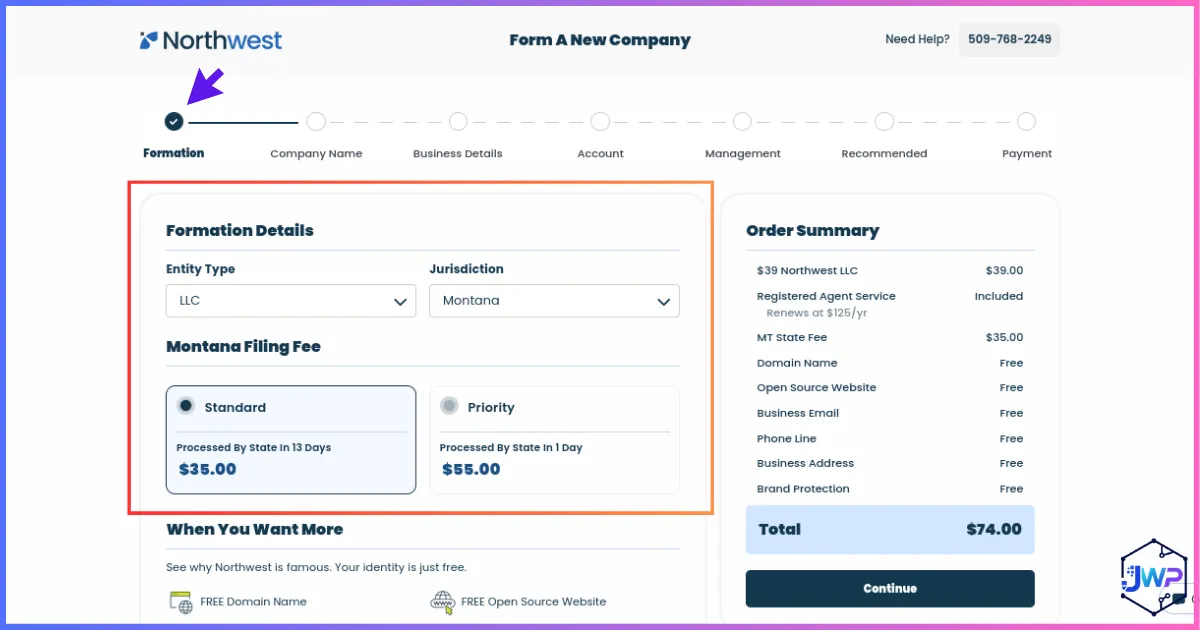
Choose LLC and state
Select the LLC entity type and your chosen formation state. If the business has US employees, premises or inventory, discuss the operating state before picking a low-fee alternative. A remote service business may compare Wyoming, New Mexico and Delaware based on costs and business plans.
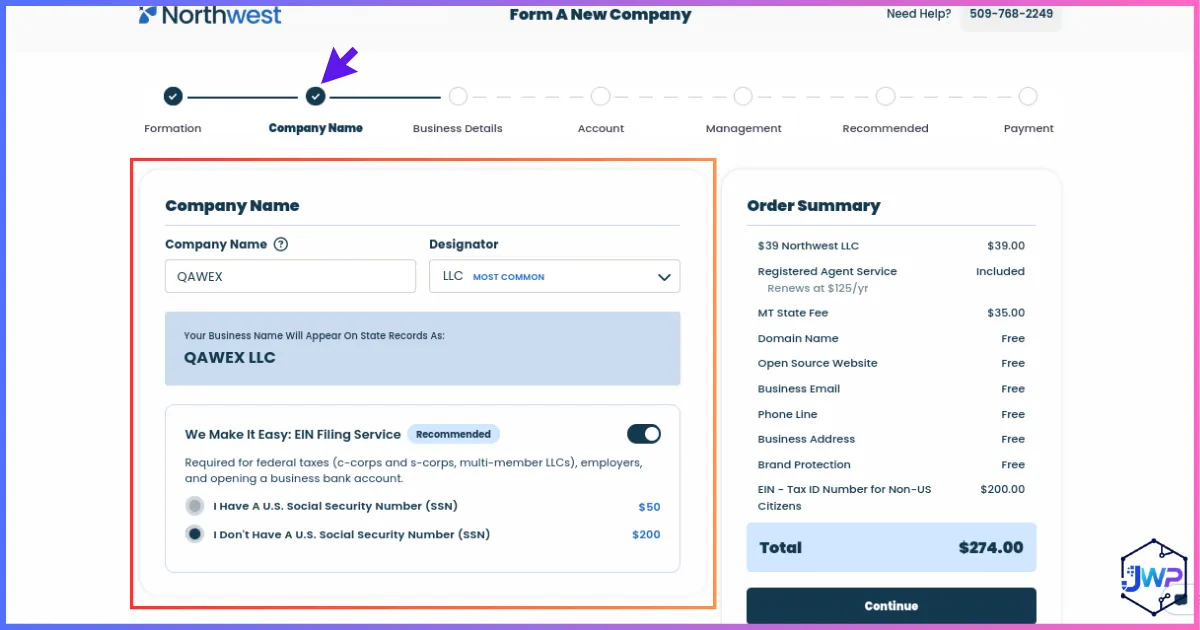
Enter the legal name
Use the state-required LLC ending and match the exact spelling planned for contracts, invoices and domain registration. A name availability search is not trademark clearance. If optional EIN assistance appears, remember a direct IRS application is free.
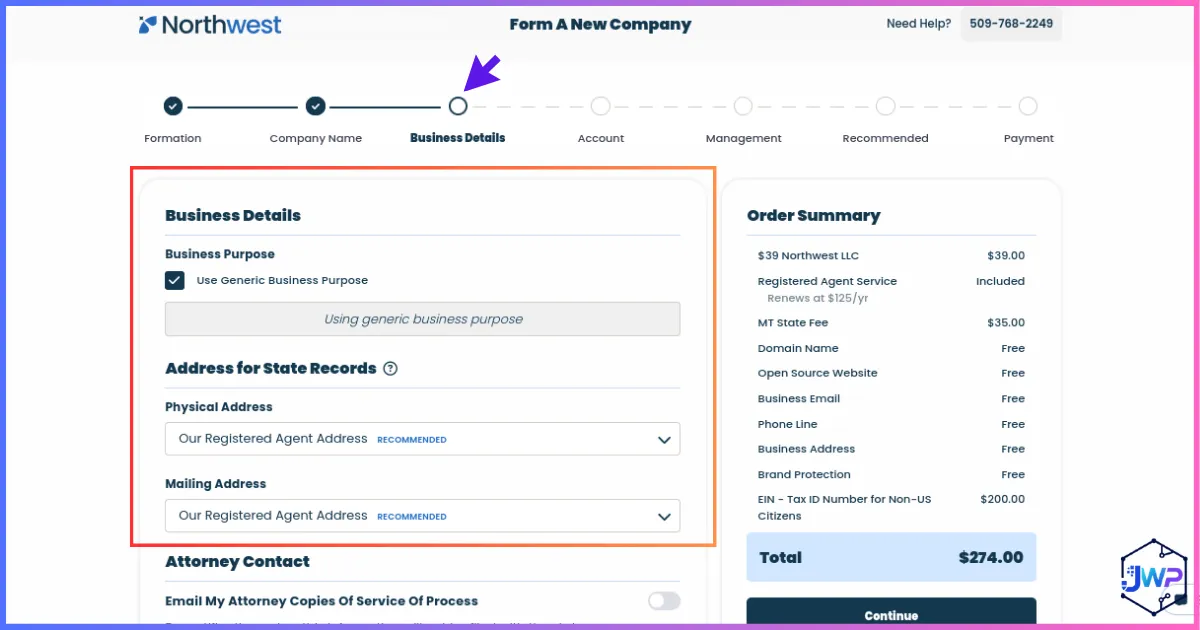
Describe the business accurately
State what the company actually sells, where work is performed and how customers will pay. Provide your real principal business location in Asia if that is where management and work occur. The agent address has a separate legal purpose.
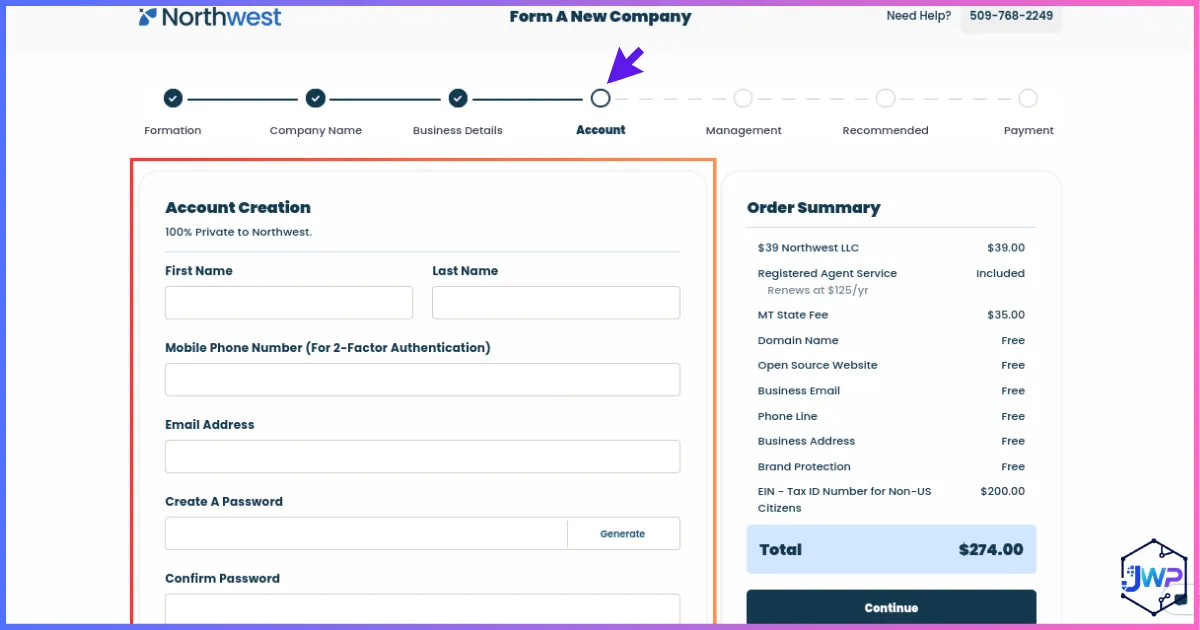
Create a secure account
The dashboard may hold filing documents, state mail and renewal notices. Control the login and email, enable security features and save access information with company records. Partners should agree who manages service renewals.
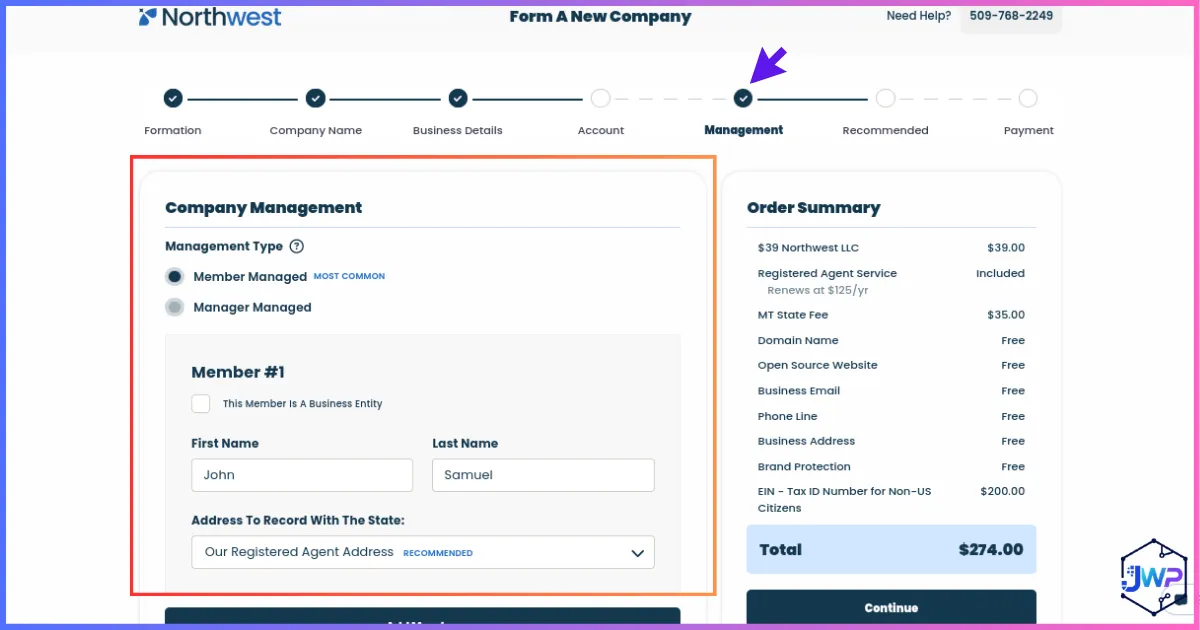
Record owners and managers
List the real legal members and select member-managed or manager-managed. If several Asian founders share ownership, settle capital, voting, transfers and exit rights in an operating agreement. An existing foreign company owner may require more bank evidence.
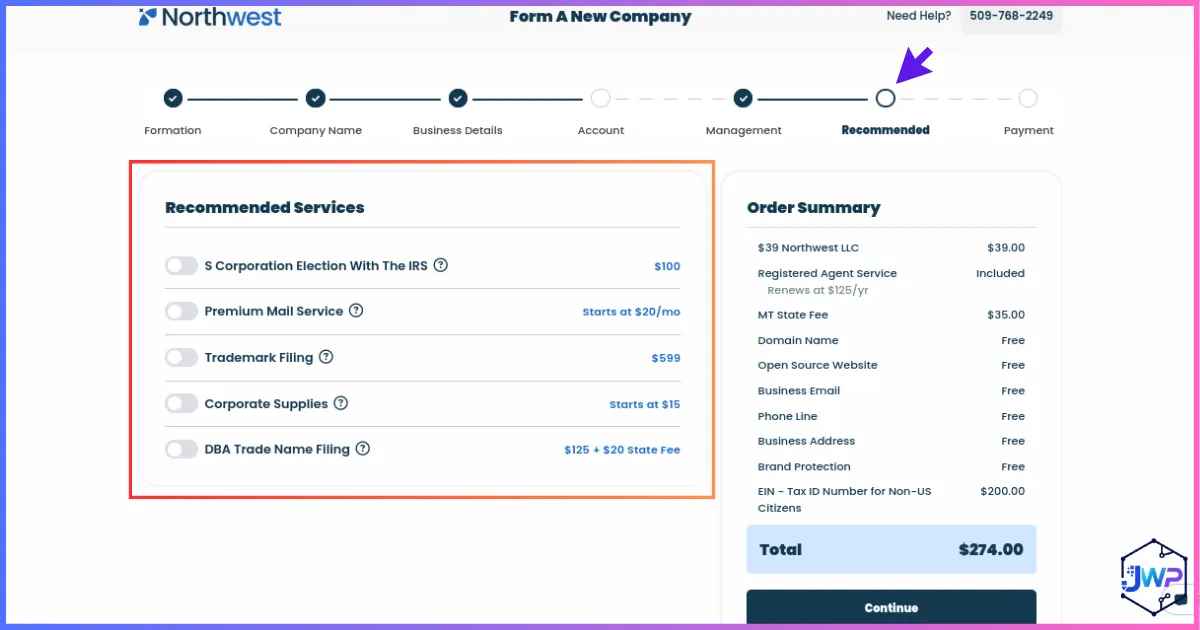
Review optional services
A registered agent is necessary; paid EIN preparation, certified copies, mail forwarding and annual report handling are conveniences in many cases. Check the recurring price and whether the bank you intend to use actually requires an extra document.
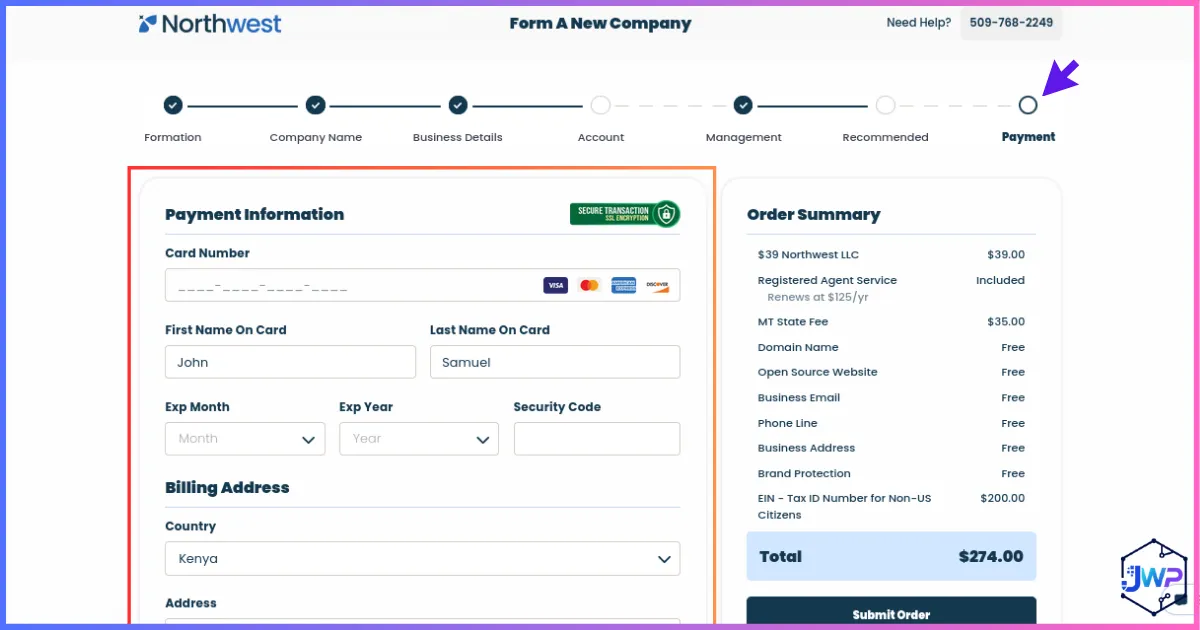
Check total and save confirmation
Review the state fee, service fee, agent terms and every selected add-on. Save the receipt. After state acceptance, download the stamped formation document, agent confirmation and operating agreement. A paid order is not itself state approval.
Get an EIN as an International Applicant
An Employer Identification Number identifies the LLC to the IRS and is requested by many banks, processors and clients. The IRS issues it free. Your application channel depends on the principal place of business, not simply the state where the LLC was formed. An LLC organized in Wyoming but managed entirely from Manila, Bengaluru or Shanghai can have its principal business location outside the US.
The current IRS Form SS-4 instructions say an applicant with no US legal residence, principal place of business, principal office or agency cannot use the online EIN application. International applicants may use the dedicated telephone line, fax or mail. The current IRS page lists 267-941-1099 for international calls and 304-707-9471 for a fax sent from outside the US; confirm the latest numbers and hours before using them.
- Copy the accepted LLC name and formation date from the state document onto SS-4.
- Identify the real responsible party. Follow the current line 7b instruction when that person has no SSN or ITIN; never invent one.
- Choose the correct entity type. The instructions contain a special line 9a entry for certain foreign-owned disregarded LLCs formed for section 6038A reporting.
- Submit once via the available international channel, or authorize a third-party designee properly.
- Save the signed form, submission record and IRS EIN confirmation; resolve any name mismatch promptly.
IRS guidance indicates a complete fax application with a return fax number can take about four business days and mail about four weeks, but actual processing may be longer. Telephone issuance can be faster if an authorized caller reaches the IRS and can answer its questions. A formation service cannot guarantee government processing time.
Banking and Payment Processors Across Borders
Formation and banking are separate decisions. A US LLC and EIN make you eligible to apply to some providers; neither guarantees acceptance. Banks and fintechs check beneficial owners, current residence, real business activity, expected transactions, industry and addresses. Country support lists change. Before forming solely for a particular US account, ask that provider whether an owner resident in your country and your business type are currently supported.
| Route | Potential use | Question to settle first |
|---|---|---|
| US business bank or fintech | USD details, domestic transfers, cards | Owner residence, required business address, accepted industries |
| Local Asian bank | Home-currency operating relationship | Allowed inward and outward transfers, supporting documents |
| Cross-border payment service | Multi-currency collections or conversion | Legal-entity eligibility, payout country and FX spread |
| Merchant processor | Online cards and subscriptions | Supported owner, product, chargebacks and reserve terms |
Prepare the state-approved filing, EIN notice, operating agreement, owner IDs, proof of real residence, website and sample contracts. Describe whether customers will pay for services, software, licences or goods. The processor’s risk decision can differ by product even for the same LLC. Do not represent a registered-agent address as a US operating office or a rented mailbox as your personal residence.
Compare the cost of collecting US$1,000 and receiving spendable local funds: incoming fee, intermediary fee, account charge, transfer cost and exchange-rate spread. Save the source contract, invoice and account statements for both banking and tax reconciliation. For general account features, read our Wise and Payoneer guides; current provider country lists control eligibility.
Pie chart: illustrative allocation of US$1,000 in receipts
Budgeting illustration, not measured data or a recommended tax rate.
US Tax Rules for a Foreign-Owned LLC
The federal income-tax answer depends on classification and activity. A one-owner LLC normally passes income through to its owner for US income-tax purposes. A multi-member LLC normally files as a partnership unless it elects otherwise. A corporate election makes the entity a taxpayer in its own right. US-source income, a US trade or business, employees, inventory and real estate can create different tax returns and withholding requirements.
Where is service income sourced?
For personal services, the IRS generally looks to where the work is physically performed. A programmer working entirely in India for a New York client generally has foreign-source service income for US purposes; the client’s address, USD invoice and US LLC bank account do not relocate the work. US workdays during travel may create US-source income requiring allocation. Product sales, royalties, software licensing and warehouse inventory follow different rules. The IRS personal-service sourcing page explains the starting point.
Foreign-source service income is not a universal promise of zero US tax. US trade-or-business facts and effectively connected income require their own analysis. A US warehouse can trigger state sales-tax registration; a US employee can trigger payroll and state tax; a US customer may require a withholding form. Document work location, contracts and travel rather than relying on where the invoice was paid.
Form 5472 and pro forma Form 1120
A wholly foreign-owned US disregarded LLC is treated as a separate entity for certain information-reporting purposes. When it has a reportable transaction with its foreign owner or another related party, it generally files Form 5472 attached to a pro forma Form 1120. Reportable transactions include many contributions, distributions, formation payments, reimbursements and nonmonetary transfers. A company can have no customer revenue and still have an owner-funded transaction.
The IRS instructions state an initial $25,000 penalty for a missing, late or substantially incomplete required Form 5472. The form follows the Form 1120 due date; for a calendar-year filer that is generally April 15 the next year, with a valid extension potentially available. Keep a related-party ledger from the first day. If you believe no filing is due, document the transaction review rather than assuming a dormant LLC is exempt.
| Transaction or fact | Possible US implication | Record to keep |
|---|---|---|
| Owner pays formation costs personally | May be a reportable owner contribution | Receipt and capital ledger |
| LLC sends money to owner | Distribution, fee or loan repayment classification | Bank record and written explanation |
| Work done entirely in Asia | Generally foreign-source personal services | Contract and work-location log |
| US work trip | Possible US-source allocation | Travel dates and invoice allocation |
| US warehouse stores goods | Possible state tax and federal business questions | Warehouse and shipment records |
Federal BOI and state filings
FinCEN’s August 2026 final rule exempts entities created in the United States from federal Corporate Transparency Act beneficial ownership information reporting. This does not eliminate bank know-your-customer checks, IRS filings or state annual reports. Review FinCEN’s BOI page if rules change. An LLC doing business in a second US state may need foreign qualification and additional taxes.
Treaties, Withholding and Payee Forms
US treaties are negotiated country by country. The IRS list includes India, China and the Philippines, but not Singapore on its general income-tax treaty page. A treaty can reduce withholding or assign taxing rights on a particular category of income for an eligible resident. It is not a blanket exemption for everyone with a passport from that country. Some states do not follow treaties for state tax.
To claim a treaty benefit, determine the true tax resident, beneficial owner and income category, then consider the treaty’s specific conditions. A founder born in India but tax resident in Singapore cannot normally claim an India treaty rate just because of citizenship. A US LLC owned by a foreign person can be disregarded for US tax, so the person treated as receiving the income may differ from the name on the invoice. That can affect whether a payer requests W-8BEN, W-8BEN-E or W-9.
US-source dividends, royalties and certain other fixed or determinable annual or periodic income can face a default 30% withholding rate unless a treaty or statutory exception applies. Service payments have a different source analysis. A software licence is not automatically a service fee just because both are delivered digitally. Ask a qualified adviser before sending a withholding certificate or promising a treaty rate to a customer. Read the IRS withholding guidance alongside the treaty text.
Home-Country Tax, Exchange Controls and Management
A US company certificate does not move the owner’s tax residence. Many jurisdictions tax residents on foreign business income, though the details differ. Some also treat a company managed locally as resident or require a branch registration. Others have detailed outward-investment rules before a resident can fund a foreign entity. Ask both a local tax adviser and, where relevant, the bank that will process the transfer.
India: residents should examine the current RBI Overseas Investment framework and how capital leaves India. The identity of the investing person, the type of foreign entity and permitted transaction matter. Record the designated bank route and documents. Indian income-tax reporting is separate from US Form 5472.
China: distinguish personal investment from a mainland company’s investment and identify the documented payment route. The State Taxation Administration explains that a resident individual can be taxed on income from inside and outside China. A USD balance held by a US LLC is not automatically outside Chinese tax or banking scrutiny. Review current requirements with a China-qualified professional before moving capital.
Singapore: income treatment depends on who earns it and whether it is Singapore-sourced, received from abroad or connected with a Singapore business. The general statement that foreign income received by individuals may be exempt has exceptions; a Singapore company faces a different set of rules. A US LLC managed from Singapore needs its own classification and local tax review.
Philippines: resident-citizen, nonresident-citizen and corporate classifications can change the local income-tax outcome. A founder doing work physically in the Philippines should not infer local exemption from a US invoice. Keep contracts, work location, local registration details and transfers aligned with the actual taxpayer.
For any country, create a transfer file: ownership documents, client contract, invoice, proof of service or shipment, US bank statement, remittance instruction and home-bank credit. Keep the exchange rate used for local accounts. The records answer bank source-of-funds questions and support both tax returns.
An Annual Compliance Calendar You Can Use
Use a calendar for state charges, US returns, agent renewal and local filings. The LLC’s tax year may differ from the home country’s tax year, so reconcile transactions monthly. Reminders from a service help, but legal responsibility remains with the entity and its owners.
| When | Action | Who should handle it |
|---|---|---|
| At approval | Save state filing, sign operating agreement, enter owner capital | Founder |
| Before invoicing | Confirm EIN, bank acceptance, payer form and local registration | Founder with advisers |
| Monthly | Reconcile accounts, currencies, owner transfers and work location | Bookkeeper or founder |
| Wyoming anniversary month | File annual report and pay licence tax if applicable | LLC or service |
| June 1 for Delaware LLC | Pay annual LLC tax | LLC or service |
| Generally April 15 for calendar-year 1120 | File required 5472 with pro forma 1120 or valid extension | US preparer |
| Home-country cycle | Report income, entity interests and transfers as applicable | Local tax adviser |
| Every year | Renew agent and review banking, state nexus and treaty positions | Founder |
Multi-member partnership returns, corporate elections, US payroll, sales tax and local value-added tax add more dates. If you no longer need the LLC, arrange state dissolution and final returns. Leaving an unused entity active can continue fees and reporting.
Radar chart: planning priorities by operating model
Qualitative editorial scores, not empirical data. More reach signals an issue needing closer review.
DIY, Formation Services and Common Missteps
Direct state filing may save a service charge if you understand the form, appoint an agent and manage deadlines. A formation service offers a guided checkout and document dashboard. Neither route replaces cross-border tax advice or local permission to invest in a foreign company. Compare two years of costs rather than the lowest initial headline price.
Direct filing may suit you when
- The ownership and purpose are simple.
- You know the actual operating state.
- You have priced a separate registered agent.
- You will manage US and local calendars.
Seek specialist help when
- Several owners or a foreign company own the LLC.
- Home-country outward-investment approval is unclear.
- US inventory, employees or IP create nexus.
- Tax classification or treaty treatment is uncertain.
Our formation-service comparison and Northwest review help assess service features. Our anonymous LLC guide explains why public-record privacy is different from anonymity to a bank or government agency.
A common mistake is choosing Delaware because well-known startups form there, while ignoring its current $400 annual LLC tax and the possibility that the business really needs a C corporation. Another is picking Wyoming even though US inventory or staff are elsewhere. Other avoidable errors include treating the registered-agent address as a US office, filing an EIN request with an invented SSN, forgetting owner-funded transactions for Form 5472, and assuming that a US entity erases home-country income tax.
Ready to compare filing routes? Review the actual order total and annual agent terms after settling your state and ownership plan.
View Northwest LLC Formation →Three Practical Founder Scenarios
1. Software consultant in India
A developer performs all work in India for US clients. She wants a familiar contracting party and explores a Wyoming LLC. She first checks the RBI overseas-investment route for her proposed ownership and funding, then asks a tax adviser how the LLC’s income is reported in India. US personal-service income sourcing begins with where she works, and she records days spent in each country. Her first owner contribution is entered in the LLC ledger for Form 5472 review.
2. Singapore-based online course creator
A creator sells digital courses to global customers and considers a US LLC to work with a particular platform. He confirms the platform accepts Singapore-resident owners of US LLCs before forming. He asks IRAS-oriented and US advisers whether course receipts are service, licensing or other income, where they are sourced, and how Singapore treats the actual income. He also checks whether local or US consumption taxes apply to sales.
3. Philippine merchant with US inventory
A merchant based in the Philippines stores physical goods in a US fulfillment center. This differs sharply from remote consulting: warehouse location can trigger state sales tax and other US obligations. She documents shipping, returns, product rules and processor reserves, and checks Philippine resident-tax and business registration requirements. A cheap filing in a different US state does not substitute for registration where the goods and operations are located.
- ☐ Define why a US entity is commercially useful.
- ☐ Check home-country permission, tax and reporting for foreign ownership.
- ☐ Map every owner, tax residence, management location and capital source.
- ☐ Select the state based on real US activity and recurring fees.
- ☐ Search the LLC name and appoint a qualifying registered agent.
- ☐ File the Articles or Certificate and retain state approval.
- ☐ Sign an operating agreement and record owner contributions.
- ☐ Apply for the EIN using the correct international IRS route.
- ☐ Verify bank and processor support for each owner’s true residence.
- ☐ Keep monthly books for income, owner transfers, currency and work location.
- ☐ Review US tax, Form 5472, treaties, state filings and local returns.
- ☐ Set reminders for agent renewal and every annual deadline.
Frequently Asked Questions
Can someone living in Asia own 100% of a US LLC?
Is a US visa or visit required?
Do I need a US partner or SSN?
Which state is best for a remote Asian founder?
How much does the LLC cost?
Can I obtain an EIN for free?
Will the LLC guarantee a US bank account or Stripe?
Does the LLC pay no US tax if work happens in Asia?
Must every foreign-owned LLC file Form 5472?
What is the Form 5472 penalty?
Does every Asian country have a US tax treaty?
Can an Indian resident freely fund a US LLC?
Is a US LLC bank balance outside local tax?
Do US-created LLCs currently file federal BOI reports?
Can I close an unused LLC?
Final Thoughts
The practical process is consistent across Asia: choose the right US state, appoint an agent, file the LLC, sign an agreement, obtain an EIN, apply for financial services and maintain records. What changes sharply is the local side. Residence, overseas-investment controls, tax classification, treaty access and banking eligibility differ from one Asian jurisdiction to another.
Start with the commercial problem the US LLC will solve, confirm the funding route and estimate two years of total costs. Then document ownership and every transfer from day one. A well-run cross-border entity can be useful; a cheap filing without a local and US compliance plan can create unnecessary expense.
Sources & Research Notes
Primary official sources reviewed in September 2026. Country rules and provider eligibility require a current, individual check.
- Wyoming Secretary of State LLC Articles: base filing and annual report timing.
- New Mexico Secretary of State LLC filing: $50 application fee.
- Delaware Division of Corporations: $400 annual LLC tax, June 1 due date.
- IRS SS-4 instructions: EIN routes for international applicants.
- IRS Form 5472 instructions: reportable transactions and penalties.
- IRS service-income sourcing: work location.
- IRS tax treaties A to Z: country-specific agreements.
- Reserve Bank of India Overseas Investment Directions: Indian resident investment framework.
- China State Taxation Administration, Individual Income Tax Law: resident foreign-income rules.
- Singapore IRAS overseas-income guidance: local source and receipt issues.
- FinCEN BOI page: August 2026 final rule for US-created entities.