Best eSIM for Budget Travelers: Affordable Plans That Fit Your Trip
The best eSIM for budget travelers is the cheapest suitable package for the trip you are actually taking. That means enough data, validity through your final travel day, coverage for every stop, and any calling or hotspot features you need. A one-day introductory offer can look unbeatable and still be the wrong purchase for a two-week holiday. A larger bundle can advertise excellent value per GB while costing more than you need to spend.
This guide compares Saily, eSIM4Travel, eSIMX, ETravelSim, and Orbit Mobile through that practical lens. It includes checked US and Japan price examples, fixed-versus-unlimited tradeoffs, detailed provider reviews, and a calculator that matches estimated usage to the published US packages. The comparisons use product pages and official support information, rather than invented speed scores or claims that one brand is cheapest in every country.
Which budget eSIM should you choose?
Start with eSIM4Travel for the lowest verified US price in our matched 10 GB / 30-day sample. Its checked AT&T-only package costs US$8.40. eSIMX is another inexpensive option with varied package durations. Choose Saily if you prefer a reusable app-based setup and included browsing tools. Compare ETravelSim when a US calling package is useful, and Orbit Mobile when you want a reusable profile for repeat travel.
These are editorial picks for different needs. Network options, validity, top-ups, and the live price can change the winner for your itinerary. Orbit’s current checkout prices could not be verified from its public site, so it is excluded from the numerical price ranking.
- Prices in USD
- No coupon assumptions
- Fixed & unlimited explained
- Mobile-friendly comparisons
In this budget eSIM guide
What makes an eSIM good value for budget travel?
A travel eSIM installs a digital mobile-network profile on a compatible device. You purchase a package for a country or region, select that line for mobile data, and connect without swapping a physical SIM. Most budget packages focus on data. Your established number and carrier plan remain separate, even if both lines stay active in the same phone.
The best value is the package that meets your requirements at the lowest total cost. Before comparing brands, write down your destinations, travel dates, likely usage, and whether you need a phone number or laptop tethering. Then compare eligible packages. Filtering out unsuitable offers first prevents you from being distracted by tiny starting prices or large data allowances you will not use.
| Check | Budget consequence | Practical action |
|---|---|---|
| Country list | An uncovered stop needs another purchase or Wi-Fi. | Include layovers, border crossings, and territories. |
| Validity | A package can expire with unused data still left. | Cover the final travel day and read the activation trigger. |
| Usable data | A daily allowance is different from one pooled allowance. | Compare total capacity and peak daily needs. |
| Required features | A cheap package may omit calls or block hotspot. | Check the exact plan, not a generic brand feature list. |
| Final payment | Coupons, taxes, or currency settings change checkout totals. | Use the final amount in your budget; check renewal settings. |
Compare with your existing plan first
If your home plan already includes the destinations and enough roaming data, the cheapest additional purchase may be no purchase at all. Check that the allowance is usable abroad, that any fair-use rules suit your trip, and that calling charges are understood. For long stays, also compare a local SIM or eSIM with a destination-local number. A travel app is convenient, but convenience alone does not prove it costs less.
How we compare budget eSIMs
A provider’s market share or the projected growth of the eSIM industry tells you little about what your holiday will cost. We prioritize package prices, duration, network options, and restrictions. This update replaces the old market-growth and adoption charts with comparisons that help you choose a plan and control spending.
The price examples were checked on October 7, 2026. Amounts are in US dollars as displayed by the cited product listings, without coupon codes or estimated currency conversions. Cost per GB is our calculation. Prices are a snapshot, so confirm availability, taxes, the named network variant, and the final checkout amount before payment. We have not performed fresh field-speed tests for these five providers.
Where information is incomplete, the comparison says so. Orbit Mobile’s site requires JavaScript, and its accessible official “All Plans” list was last modified in September 2025. That list conflicts with newer public price reports. We do not carry those old amounts into a chart labeled current, or substitute a third-party quote as a verified checkout price.
The five budget eSIM providers at a glance
| Provider | Best reason to compare | Verified US price example | Main limitation |
|---|---|---|---|
| eSIM4Travel | Low fixed-data prices; choose between network variants. | 10 GB / 30 days: US$8.40 on the checked AT&T-only product. | Other network variants have different prices. |
| eSIMX | Low-cost fixed bundles and daily-data packages. | 10 GB / 30 days: US$10.90. | US and Japan FAQs currently say top-up is not supported. |
| Saily | Reusable profile, app management, and browsing tools. | 10 GB / 30 days: US$22.99. | Higher price in this particular fixed-data sample. |
| ETravelSim | Fixed-data, unlimited, and US call-enabled choices. | 10 GB / 30 days: US$15.00. | Checked US unlimited plans exclude hotspot. |
| Orbit Mobile | One installed profile for later purchased plans. | Current app / checkout quote required. | Public official price list is too old for a current ranking. |
The shortlist is intentionally specific. “Best for budget travel” can mean the lowest purchase cost, fewer setup steps, keeping a useful number, or avoiding several separate purchases on a cross-border route. These are different priorities. Read the relevant provider review and compare the exact destination package before choosing.
Current pricing: compare equal allowances and validity
The first comparison matches 10 GB of fixed data with 30-day validity in the United States. It avoids comparing a seven-day tiny bundle with a month-long package. The eSIM4Travel row uses its AT&T-only product; the same provider sells other US network variants at different prices. This is a package-price comparison, not a claim that all four services deliver identical coverage, latency, or support.
| Provider / variant | Package price | Cost per included GB | Price verification |
|---|---|---|---|
| eSIM4Travel · AT&T-only | US$8.40 | US$0.84 | Official product listing checked October 7, 2026. |
| eSIMX | US$10.90 | US$1.09 | Official product listing checked October 7, 2026. |
| ETravelSim | US$15.00 | US$1.50 | Official product listing checked October 7, 2026. |
| Saily | US$22.99 | US$2.30 | Official product listing checked October 7, 2026. |
| Orbit Mobile | Check live quote | Not calculated | No verified current checkout amount; excluded from price ranking. |
Sources: eSIM4Travel’s USA (AT&T) selector, eSIMX’s United States page, ETravelSim’s official US variant table, and Saily’s US selector. Unit costs are rounded to two decimals.
USD total · lower is cheaper · bars use a shared US$25 scale starting at zero
Same values as the matched table. eSIM4Travel uses the AT&T-only variant. Orbit is omitted because its current price was not verified; omission does not indicate a zero price.
A low starting price only helps if its validity fits
| Provider / variant | Allowance | Validity | Package price |
|---|---|---|---|
| eSIM4Travel · AT&T-only | 1 GB | 7 days | US$0.89 |
| eSIMX | 1 GB | 7 days | US$2.80 |
| ETravelSim | 1 GB | 30 days | US$3.50 |
| Saily | 1 GB | 7 days | US$3.99 |
| Orbit Mobile | Confirm in app | Confirm in app | Current quote required |
These are small-plan examples, not an equal-duration ranking. If you need a small amount of data throughout a ten-day trip, a seven-day package fails the duration test. Buying more data can also buy longer validity, but compare the final total rather than assuming the cheapest 1 GB offer is still the cheapest suitable solution.
Japan shows why you should re-check the destination
| Provider | Small-plan example | 10 GB / 30 days | 20 GB / 30 days |
|---|---|---|---|
| eSIM4Travel | 1 GB / 7 days: US$0.77 | US$9.44 | US$18.28 |
| eSIMX | 3 GB / 7 days: US$3.50 | US$10.80 | US$15.80 |
| Saily | 1 GB / 7 days: US$3.99 | US$17.99 | US$24.99 |
Sources: the three providers’ Japan product selectors, checked October 7, 2026. The small-plan column contains different allowances; compare it only with your own requirements. ETravelSim and Orbit are not assigned invented Japan prices.
The lowest price can change with the bundle size even within one destination. In this Japan sample, eSIM4Travel is cheaper at 10 GB, while eSIMX is cheaper at 20 GB. A useful shopping process compares the sizes you might actually need. It does not transfer a winner from one country or allowance to all other trips.
Network variants can explain a large price difference
eSIM4Travel’s checked US AT&T-only 10 GB package is US$8.40. Its separate AT&T / T-Mobile listing shows US$15.40 for 10 GB / 30 days, and another AT&T / Verizon listing shows US$18.00. Those are distinct products. The cheaper one is attractive when its network suits your route; a broader network choice may be worth considering when coverage matters more than saving the last few dollars.
Do not interpret a network name as a guaranteed service level. Roaming access, supported technology, and local congestion can affect performance. Check the current product details and coverage for your actual accommodation and itinerary. A plan that is excellent in a city center may be a poor fit for a remote road trip.
eSIM4Travel
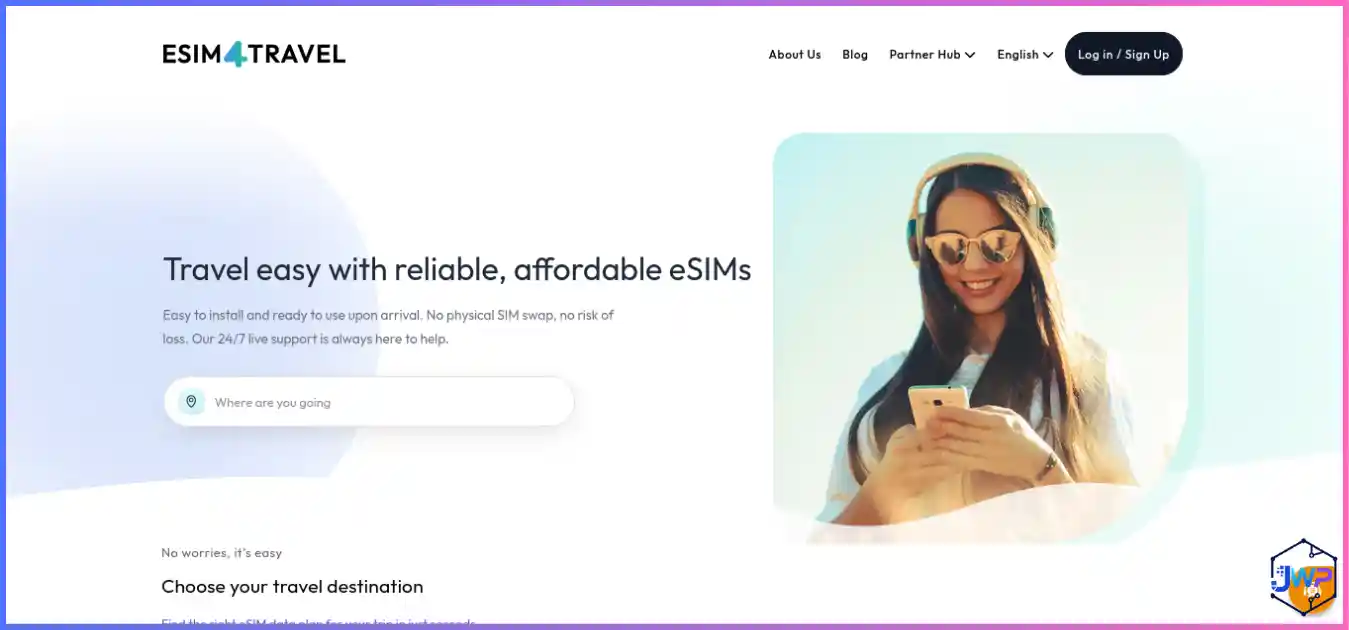
eSIM4Travel is the first provider we would price-check for a low-cost fixed bundle. Its checked US AT&T-only and Japan listings are competitive in the samples above. The appeal is straightforward: inexpensive data with several package sizes. The most important choice is the exact product variant rather than the provider name alone.
The checked US product lists hotspot and top-up availability, with 5G / 4G / LTE depending on the network. Validity begins when the eSIM connects to a supported network; the plan must be activated within 90 days of purchase. It is a data-only package, so internet-based messaging is separate from carrier calls and SMS on your home line.
For a budget traveler, top-up capability offers useful flexibility. You can begin with a reasonable package and arrange more data if your usage changes. However, verify the top-up price and its expiry before relying on that strategy. Several small purchases may cost more than a larger initial bundle, and you still need connectivity to make the next purchase.
Read the selected product carefully when an unusually small price appears. A one-day package is not interchangeable with a seven-day package, and a single-network package is not interchangeable with a multi-network one. We use the selectable prices and named network details in this guide because generic “from” text elsewhere on a page may describe a different option.
Best fit: a price-conscious traveler who can check network coverage and package terms before purchase. If your trip is simple and your usage predictable, low fixed-data pricing can leave more of your budget for the trip itself. If the itinerary is complicated or reception is critical, compare the network variants as well as the price.
Why consider it
- Low verified fixed-data prices in the illustrated destinations.
- Several package sizes and network variants to compare.
- Checked products list hotspot and top-up availability.
Check before buying
- Select the exact network variant shown in the comparison.
- Read the activation deadline and usage validity separately.
- Do not assume every daily or unlimited option has identical limits.
eSIMX
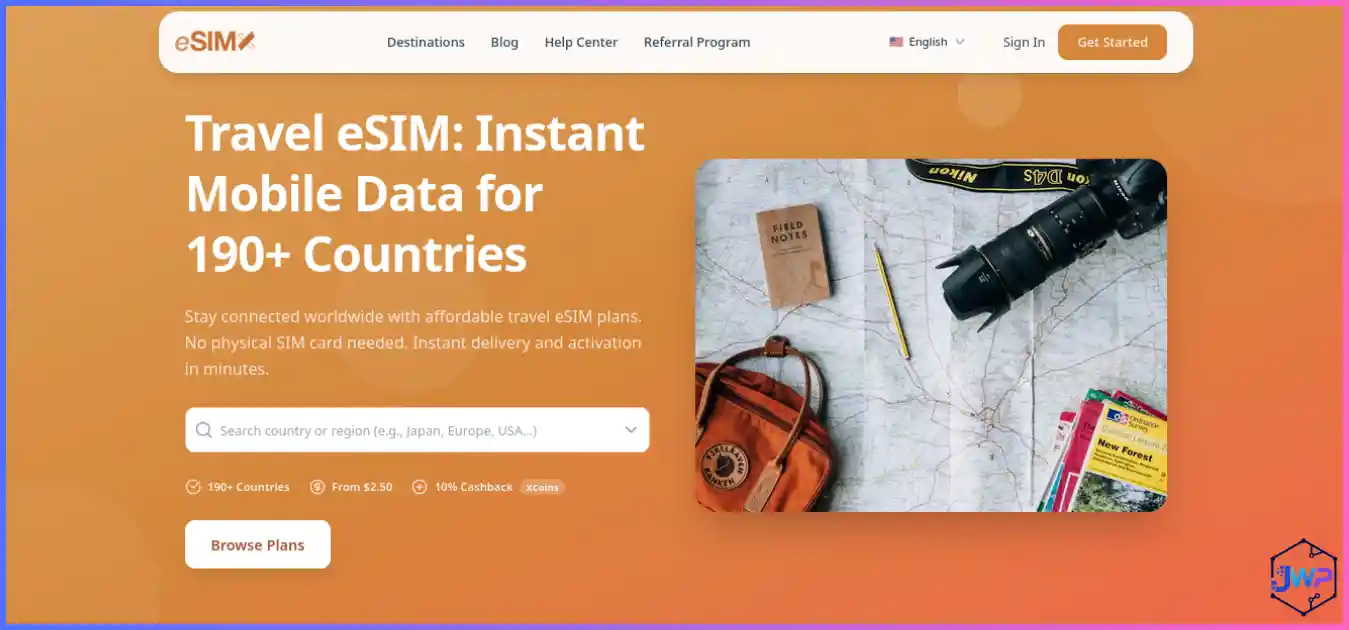
eSIMX deserves a close look when you want a low-cost fixed package or a short daily-data option. Its Japan selector includes both seven-day and 30-day packages at several sizes. That lets you match a short visit more closely, rather than paying for a package designed around a longer stay.
The US and Japan pages describe delivery through email and an order page, with an app installation flow, quick-install link, QR code, or manual details. Usage can be viewed through the website or app on supported plans. The current FAQs say top-up is not supported. That distinction matters when you are choosing a smaller allowance to save money.
Without a supported top-up route, budget for the possibility of purchasing another package if you run out. Check whether that means installing another profile and whether you can complete the process on the road. A slightly larger initial package can be sensible when your usage is uncertain or an uninterrupted connection matters, but avoid automatically buying the biggest option.
The daily packages are a different product shape from fixed data. For example, a “daily 2 GB” package provides a per-day high-speed allowance, while a 10 GB fixed package is a total pool. A traveler who uses most of their data on one excursion may prefer a pooled allowance; someone with consistent usage may prefer the daily structure. Read the hotspot and reduced-speed conditions for the selected option.
Best fit: travelers who want to compare allowance and duration carefully and can plan ahead for replenishment. eSIMX’s competitive pricing is useful, but the lack of top-up is a practical reason to be realistic about your data forecast.
Why consider it
- Competitive fixed-data pricing in the checked samples.
- Short and longer-validity options in the Japan listing.
- Multiple installation methods.
Check before buying
- Current product FAQs say top-ups are unavailable.
- Daily-data packages have a high-speed limit.
- Hotspot restrictions can differ by package.
Saily
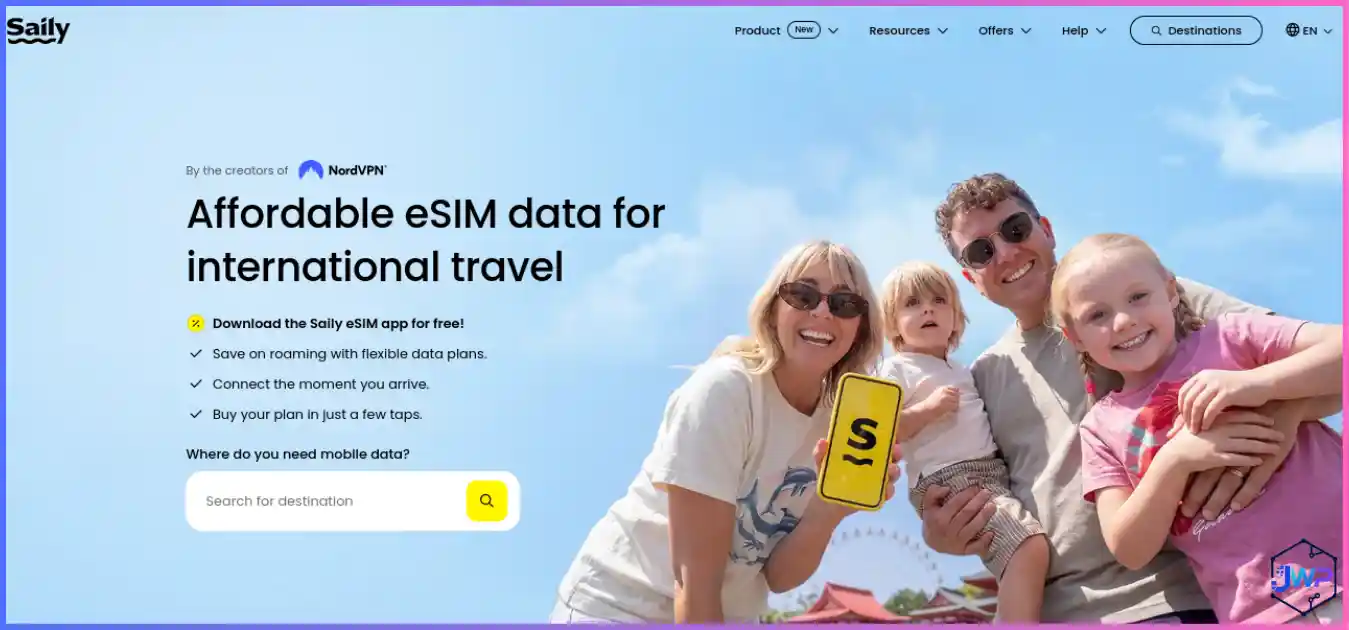
Saily is our convenience-focused option for travelers who prefer app management and a reusable eSIM profile. You can add later destination packages to the existing profile. It also provides virtual location, ad blocking, and web protection. Those tools may be useful, but they do not make the checked US fixed packages the cheapest in this guide.
The budget decision is whether the extra convenience is worth the price difference for your trip. If you are comfortable comparing product variants and installing a QR-code profile, you may prefer a cheaper fixed package. If you expect repeat trips, want one familiar app workflow, or value the included browsing tools, Saily can be a reasonable choice despite the premium in this sample.
Saily’s basic data package should not be confused with a full VPN subscription. Its browsing features have their own scope, and you should not assume they protect a separate hotel Wi-Fi connection. Its DNS-based ad blocker may leave ads served from the same domain as the content. Do not subtract a guaranteed percentage from your data estimate just because filtering is available.
Saily also offers an optional US phone-number subscription at a published US$1.99 per month, with call/text bundles starting at US$0.99. That is an additional product, rather than calling automatically included with a cheap data package. Recurring Ultra subscriptions are another separate choice. A short sightseeing trip usually needs a suitable data bundle before it needs a premium subscription.
For more detail on Saily’s current country and regional packages, unlimited-data rules, optional number, and refund conditions, read our Saily eSIM review. Use that review to check the features you actually need rather than paying for extras because they sound reassuring.
Why consider it
- Reusable profile for later supported destination purchases.
- App management plus browsing controls.
- Optional communication and recurring travel products.
Check before buying
- Costs more in the checked US fixed-data comparison.
- Calls and SMS require the appropriate separate option.
- Unlimited does not mean unlimited data at full network speed.
ETravelSim
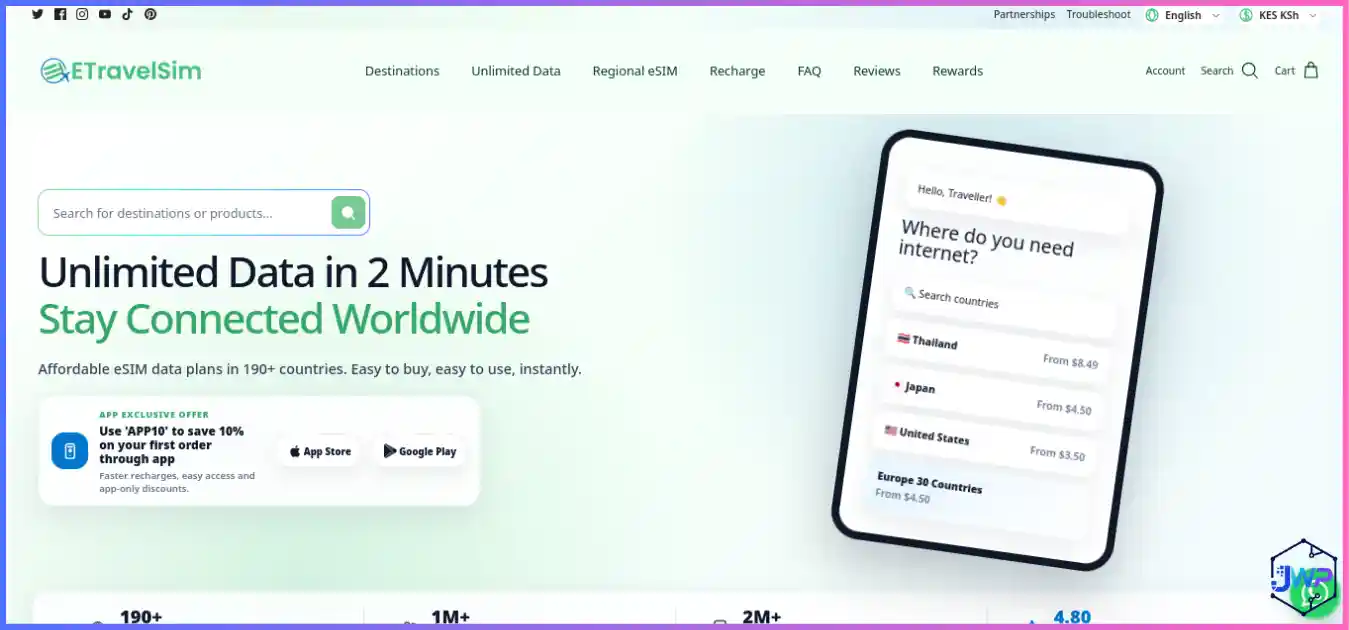
ETravelSim is particularly relevant when you need to compare data-only service with a US call-enabled package. The official US product table includes fixed bundles, unlimited packages, and packages with a US (+1) number. That allows a different comparison from simply finding the cheapest gigabyte.
Its checked 12 GB + unlimited calls package costs US$24.00 for 30 days; the 30 GB and 50 GB call-enabled packages are listed at US$30.00 and US$36.00. Confirm the permitted calling destinations and communication features in the selected package. A traveler calling accommodation or local services may value the number, while someone relying on an existing messaging app may not need it.
The US page makes a budget-critical distinction: data-only validity begins at first use, while calling-plan validity starts at purchase. Buying a calling package well ahead of a trip can spend its usable days before you leave. That timing difference can matter more than a modest discount.
The checked US unlimited packages do not allow hotspot. They provide 4 GB of high-speed data daily, then continued data at 1 Mbps. These are useful facts for phone-heavy usage, but the package is unsuitable if your main purpose is connecting a laptop. Fixed bundles have different hotspot terms, so select the product for your workload.
Also compare bundles within the same table. The checked 5 GB and 7 GB packages are both US$10.00 for 30 days. If the live checkout still offers those terms and all other requirements match, buying the larger allowance makes sense. Package menus do not always follow a smooth price-per-GB curve, which is why checking neighboring options can save money.
Why consider it
- US call-enabled options alongside data-only packages.
- Useful fixed-data sizes and a published variant table.
- Recharge options exist for eligible packages.
Check before buying
- Calling packages start their validity at purchase.
- Checked US unlimited packages exclude hotspot.
- Verify calling destinations and the exact plan’s activation terms.
Orbit Mobile
Orbit Mobile is worth comparing for travelers who want to keep one installed profile and add later plans. Its official support information describes a data-only service, additional plan purchases on the existing eSIM, and personal hotspot support. A familiar reusable setup can reduce repeated installation work during several trips.
The limitation in this update is pricing verification. Orbit’s public storefront requires JavaScript, while its accessible official price list was last modified in September 2025. We found newer price reports that differ from that list, so quoting the older amounts as current would be misleading. Check the app or checkout for your destination, allowance, and dates. Orbit remains in the provider review but is excluded from numerical price charts and the calculator’s cheapest-package result.
This is not a judgment that Orbit costs more or less than the other four providers. It is a distinction between a verified price and an amount we cannot confirm. When you have its live quote, compare the same allowance and validity used in the tables above. Add any relevant tax or currency cost and check whether the selected plan includes every country you need.
If you buy future packages in advance, check their start conditions rather than assuming every purchase waits until your next trip. Orbit’s support says an added plan can begin when the current allowance is exhausted. That can be convenient, but knowing which package is queued prevents surprises when several plans are attached to one profile.
Best fit: repeat travelers who value the reusable workflow and find a competitive live quote for their route. It should win on the final package terms, rather than on a stale price copied into a comparison.
Why consider it
- Reusable eSIM profile described in official support.
- Additional plans can be added without a new profile.
- Official support confirms personal hotspot availability.
Check before buying
- Current checkout prices need direct confirmation.
- Do not rely on the older official public price list.
- Check the start rules for queued packages and regional coverage.
Unlimited eSIM plans: budget for the fast-data allowance
An unlimited plan usually means that data continues after the high-speed allowance is used, often at a reduced maximum rate. It does not mean that every gigabyte runs at the fastest available network speed. Compare the daily fast allowance, the reduced rate, the reset schedule, hotspot permissions, and validity before deciding whether the higher purchase cost is worthwhile.
| Provider / product | Published daily fast allowance | After that allowance | Budget implication |
|---|---|---|---|
| Saily · checked US unlimited | 5 GB/day | Up to 1 Mbps | Useful for heavier phone usage; actual speeds still depend on the network. |
| eSIM4Travel · checked US unlimited | 3 GB/day | Up to 1 Mbps in the selected product panel | Confirm the exact duration and selected variant before quoting a total price. |
| eSIMX · daily 2 GB packages | 2 GB/day | Reduced speed; product FAQ states minimum 128 kbps | Do not assume remaining access will be comfortable for video. |
| ETravelSim · checked US unlimited | 4 GB/day | 1 Mbps; refreshes every 24 hours | No hotspot on this US unlimited product. |
| Orbit Mobile | Confirm in the selected plan | Confirm in the selected plan | No verified unlimited offer is assigned a price or allowance here. |
These are the selected US product rules, not universal brand policies. eSIM4Travel’s general daily-plan FAQ mentions a different reduced rate; follow the chosen product panel and obtain confirmation if the order terms conflict.
A plan-rule diagram, not a measured speed graph
Network performance depends on reception and congestion. Keep major transfers within the stated daily quota.
The connection remains available under the package’s terms. Large uploads and video may become much less practical.
The next allowance starts on the plan’s reset schedule. Unused daily capacity may not roll forward.
When fixed data is the better budget choice
Fixed data suits travelers whose total usage is predictable and who can move entertainment or large uploads to Wi-Fi. A pooled allowance lets you spend little on most days and more on one busy day. A daily package is different: using very little on Monday does not necessarily create extra high-speed data for Tuesday.
Unlimited is worth comparing when you consistently use several gigabytes per day and accept the limits. It can be poor value if you buy it mainly to stop watching the balance but then use little data. It can also be unsuitable for remote work when hotspot is blocked or your uploads exceed the fast-data quota. Estimate both the whole-trip total and the heaviest day.
Compare duration before quoting an unlimited price
In the checked US listings, Saily’s 15-day unlimited option is US$45.99 and ETravelSim’s 15-day option is US$39.00. eSIMX’s daily 2 GB / 15-day package is US$16.90, with a smaller fast allowance and different reduced-speed terms. These are not equivalent products. A cheaper total may buy substantially less comfortable service after the daily threshold.
We do not attach a total unlimited price to eSIM4Travel’s default selector because the duration was not reliably exposed in the retrieved product view. A number without a confirmed duration is not useful for a fair comparison. Select the exact number of days before comparing its checkout amount with the examples here.
Estimate your data needs before choosing a package
Look at your phone’s recent mobile-data usage and identify the biggest consumers. Then adjust for travel: you may use maps and translation more, while spending less time on video if you are outdoors. Cloud photo backup, automatic media downloads, and tethered laptop updates can matter more than navigation itself. The best estimate comes from your own habits.
| Travel style | Daily planning input | 7-day budget | 14-day budget |
|---|---|---|---|
| Light: messages, bookings, offline maps | 0.15 GB/day | 1.31 GB | 2.63 GB |
| Moderate: browsing and occasional media | 0.50 GB/day | 4.38 GB | 8.75 GB |
| Heavy: frequent media or hotspot work | 1.50 GB/day | 13.13 GB | 26.25 GB |
These are planning assumptions, not measurements of what specific apps consume. The reserve is additional capacity in the estimate: days × daily GB × 1.25. A single large upload or a few long video sessions can exceed a modest budget. Check actual consumption after your first full travel day and revise the plan if necessary.
Editorial planning example · the reserve is part of the purchased 10 GB
- Maps & bookings: 2 GB · 20%
- Messaging & browsing: 3 GB · 30%
- Media & uploads: 3 GB · 30%
- Reserve: 2 GB · 20%
Suggested categories for managing a package. This is not a survey, an average traveler’s consumption, or a guarantee about app usage.
US fixed-plan budget calculator
Estimate required data, then find each provider’s cheapest suitable package among the verified examples. The sample covers four providers; Orbit’s live price is not available. It does not search the whole market or include discounts.
Lowest purchase price in this sample: eSIM4Travel’s AT&T-only 10 GB / 30-day package at US$8.40. Check network suitability and current checkout terms.
Purchase cost and value per used GB are different
Imagine you need 3 GB. A 3 GB package costing US$5 costs less than a 20 GB package costing US$15, even though the bigger package has a lower price per included GB. If you use only 3 GB of the larger one, you effectively pay US$5 per used GB rather than the advertised US$0.75 per included GB. Those are hypothetical amounts to illustrate the calculation, not additional provider quotes.
Hypothetical 20 GB package: only 3 GB used
Illustration of capacity use, not real customer data. A larger bundle saves money only if the extra allowance or validity is worth its extra price to you.
Avoid the spending traps that change the final bill
First, check automatic top-up and subscription settings. A prepaid package and a recurring plan are not the same commitment. Second, check the final currency and your payment method’s conversion cost. Third, compare any coupon against the ordinary price without assuming the code applies to every product. A promotion is only relevant if it works on the plan you intend to buy.
Finally, protect your home line from accidental data fallback. An inexpensive eSIM can be undermined by a roaming day pass triggered on the original line. Select the travel eSIM for data, disable automatic data switching if appropriate, and review roaming separately for each line. Ordinary carrier calls, voicemail, and SMS can still have their own charges.
Country, regional, or global: choose around your route
A country package usually makes sense when you spend the whole trip in one destination. A regional package can simplify a border-crossing itinerary by giving you one pool of data across its included countries. A global package can be useful for travel between regions or as a longer-lived reserve. None of those product names means every place in the catalog is covered.
| Trip | Start by comparing | Key condition |
|---|---|---|
| One city or one country | A country-specific fixed package. | Its network and validity cover the whole stay. |
| Several countries in one region | Separate country purchases versus one regional package. | Every stop appears in the exact regional country list. |
| Trips across continents | Global versus a combination of country or regional packages. | Global includes all destinations and offers suitable validity. |
| A long stay with local calls | Travel data versus a destination-local carrier package. | A local number and ongoing data may matter more than advance setup. |
| An airport stop only | A short package versus available Wi-Fi and offline documents. | You need enough validity, not necessarily a large allowance. |
Use a total-itinerary calculation
For a three-country trip, add the actual prices of the separate packages you would need. Then compare a regional package that covers all three. The separate packages may be cheaper, but the regional package can avoid repeatedly choosing a line or tracking balances. The decision is whether that convenience justifies the difference and whether you will use the pooled data across borders.
As a hypothetical example, three separate US$4 packages total US$12. A suitable US$15 regional package costs US$3 more. That may be reasonable for convenience, or unnecessary if you are comfortable managing the separate purchases. These figures are illustrative; use live prices and confirmed country lists for the actual route.
Check transit and remote locations
Include layovers in the coverage check if you want mobile data while waiting. A country named in a catalog does not mean coverage inside every airport terminal, rural village, park, or train carriage. For remote travel, inspect the available local networks and plan offline access to maps, tickets, and accommodation details.
Be careful near borders: a phone may detect a network in the neighboring country before you physically cross. Follow the provider’s network instructions and know which package would apply there. A virtual location selector changes how your online connection appears; it does not expand where a data package can connect.
Budget device compatibility: check before you spend
A low-cost eSIM is useless if the phone cannot install it. Verify the exact model and regional variant, whether eSIM functionality is enabled, and whether the device is carrier-unlocked. A familiar model name is not enough because regional versions can differ. Employer-managed devices can also have restrictions on adding mobile plans.
On iPhone, check Settings → General → About → Carrier Lock. “No SIM Restrictions” indicates an unlocked device. Then confirm support for your model and chosen service. Apple’s guide to using eSIM while traveling internationally explains unlocked-device requirements and using a travel line alongside your existing SIM.
On Android, look in the SIM or mobile-network settings for an eSIM installation option and confirm with the manufacturer or carrier if uncertain. An EID can help establish eSIM hardware support, but it does not prove the device is unlocked or accepted by every travel service. Check the provider’s supported-device information before checkout.
| Check | Why it matters | Next step |
|---|---|---|
| Exact regional model | Variants can differ in eSIM support. | Read the model number in device settings. |
| Carrier lock | A lock can block another provider’s profile. | Ask the original carrier about unlocking. |
| Available active lines | Stored profiles and active lines are different limits. | Decide which lines need to remain active during the trip. |
| Device management | Work or school policies may restrict mobile setup. | Confirm with the device administrator. |
| Installation internet | Adding a profile generally needs connectivity. | Use reliable Wi-Fi before leaving. |
Do not buy a replacement phone solely to save a few dollars on one holiday’s data without comparing the total cost. If your existing device does not support the needed eSIM, a suitable physical SIM, included roaming, or shared connection may be the lower-cost option. If you are already replacing a phone, verify eSIM support before buying the exact model.
Choose a budget eSIM by travel style
| Traveler | Start with | What decides the purchase |
|---|---|---|
| Light user on a short visit | Small fixed-data packages from eSIM4Travel or eSIMX. | Enough validity and a realistic reserve. |
| Two-week sightseeing trip | A suitable 5–10 GB fixed package, based on personal usage. | Whole-trip estimate and the exact destination price. |
| First-time eSIM buyer | Compare Saily’s app workflow with the cheaper fixed alternatives. | Whether convenience is worth the price difference. |
| US visitor needing ordinary calls | ETravelSim’s call-enabled packages; compare Saily’s separate number option. | Number type, calling destinations, price, and start date. |
| Frequent repeat traveler | Reusable profiles such as Saily or Orbit Mobile. | The current package price and route coverage. |
| Laptop worker or content uploader | Large fixed bundles with explicit hotspot support. | Uploads, latency, daily peaks, and fallback connectivity. |
Families and groups
Work out whether each traveler needs an independent connection. A shared hotspot can be economical when everyone stays together, but it depends on the host phone’s battery and signal. It stops helping a companion who leaves for a separate activity. Several separate small packages may be worth the extra money for independence.
Ordering several eSIMs at once is different from sharing one data allowance. Keep installation instructions clearly associated with the correct person and phone. Do not scan the same profile on several devices and assume it becomes a group plan. Check any actual shared-plan feature and agree how the group will manage heavy uploads.
Remote workers and heavy users
Choose around the task, rather than a generic “business traveler” label. Video calls need more than a high download rate; uploads, latency, and stability matter too. Test the actual app at your accommodation, pause cloud synchronization, and retain a backup connection for important meetings. A cheap mobile package is useful, but it is not a guaranteed service-level agreement.
If you expect large transfers, compare a fixed pool against daily high-speed limits. Check that hotspot is allowed and whether there is a separate tethering cap. The unlimited package with the smallest purchase price may be the wrong choice when the reduced rate or hotspot restriction blocks the work you intended to do.
How to set up a travel eSIM without surprise roaming charges
- Confirm compatibility and the packageCheck the exact device, carrier lock, country list, usable dates, and required features. Save the final order details.
- Read when the clock startsSome plans begin on first network use; others start at purchase or installation. Install in advance only in line with the package’s terms.
- Install on reliable internetUse the app flow, quick-install link, QR code, or supplied manual details. Stay connected until the profile is confirmed.
- Label the travel and home linesClear names reduce mistakes when changing mobile-data and roaming settings.
- Select the travel line for dataEnable its roaming as instructed. Disable home-line data roaming and automatic data switching where appropriate.
- Test at the destinationOpen a lightweight page or map on mobile data and check the package balance. Save support details for later.
- Review settings after returning homeSelect your usual data line again, retain reusable profiles as appropriate, and cancel unwanted recurring products in time.
Installation, activation, and validity are separate
Installation adds the digital profile. Activation makes the purchased package usable under its rules. Validity determines how long that allowance remains usable after the start trigger. The purchase-to-activation deadline is another separate clock. Keep the dates from your order rather than assuming an unused package waits indefinitely.
A regional plan may start during an early transit stop if that country is included. A call-enabled package may start before departure because it begins at purchase. Those details can change the lowest-cost choice. Read them before paying, especially when you are buying several weeks ahead.
Keeping your home number does not make roaming free
You can often keep your home line active while using a travel eSIM for data. That is convenient for an established number or account messages, but the carrier still controls its roaming charges. Disabling its data roaming does not automatically remove charges for calls or voicemail. Check the carrier’s terms or disable the line if you want to prevent that exposure, after arranging access to essential account verification.
Use Wi-Fi sensibly to preserve your budget
Download entertainment and map areas ahead of time, restrict cloud backups to Wi-Fi, and switch off autoplay where available. If you tether a laptop, mark the connection as metered when supported so it does not immediately download large updates. Check usage early rather than discovering a depleted allowance just before your final transfer.
The FTC’s public Wi-Fi safety guidance explains that HTTPS encryption generally protects data in transit, while an encrypted scam site can still deceive visitors. Use updated software, strong account security, and legitimate network names. Wi-Fi can reduce mobile-data spending, but it should be one part of a sensible travel setup.
Troubleshooting, top-ups, and refund expectations
If you cannot connect
Check that the profile is enabled, the travel line is selected for data, and roaming is enabled for that line as instructed. Confirm the package covers your current destination and has started without expiring or exhausting its allowance. Disconnect from Wi-Fi briefly so you know which connection you are testing. Then try reconnecting with airplane mode or restarting the phone.
Use the provider’s current network and APN instructions where required. Do not copy settings from an unrelated destination or an old customer comment. Avoid deleting the profile as a first step: a simple settings problem can become a reinstallation problem, and a used installation code may not work again. Contact support if the basic checks do not resolve it.
If the connection is slow
Check whether a daily fast-data limit has been reached before assuming a fault. Pause hotspot devices, photo uploads, and background downloads. Move to a location with better signal if practical. A strong signal indicator does not guarantee spare network capacity, and a 5G label does not guarantee a particular speed.
Send support the device model, destination, package, and a clear description of the issue. State whether it is a failed installation, no signal, signal without data, or low speed. Relevant screenshots help, but remove personal account details and never share passwords or full card information. Use a backup connection if the eSIM is completely offline.
Plan replenishment before the balance reaches zero
Top-up policies differ. eSIM4Travel’s checked products list top-up availability; eSIMX currently says it does not support top-up; ETravelSim offers recharge options; Saily and Orbit allow appropriate further plan purchases. Check the exact package, start trigger, and expiry of the next purchase. An additional plan is not necessarily an extension of the existing validity.
When deciding how much extra data to buy, use the remaining travel days rather than the original trip length. A small final-day package may be sufficient, while a larger recharge can make sense if several workdays remain. Keeping a little data available helps you complete the purchase without depending on finding Wi-Fi.
A refund policy is not a free trial
Read refund eligibility before purchase, especially for an unfamiliar device or uncertain travel dates. Policies often distinguish between an unactivated package, an installed profile, and data that has already been used. A “money-back” heading does not mean you can complete a holiday on the package and obtain a full refund afterward.
For example, eSIMX’s product FAQ describes a full refund within 30 days for an unactivated package, with activated cases assessed for technical or service problems. Orbit’s support describes individual review and reduced eligibility after substantial usage. The useful action is to contact support promptly, preserve order information, and follow the current policy for the product you purchased.
Frequently asked questions about budget travel eSIMs
Which eSIM is cheapest for budget travelers?
There is no single cheapest provider for every route. In our verified US 10 GB / 30-day sample, eSIM4Travel’s AT&T-only package has the lowest purchase price. Japan’s 20 GB comparison favors eSIMX. Match your destination, duration, and allowance before ranking prices.
Is Saily the best budget eSIM?
Saily is a useful convenience-focused choice with a reusable profile and browsing tools. It is not the lowest-priced option in the matched US sample. Whether it is worth the premium depends on the workflow and features you actually value.
Why is Orbit Mobile missing from the price charts?
Its current checkout amounts could not be verified from the public site. The accessible official price list is older and conflicts with newer reports. Orbit is reviewed for its documented features, but we avoid treating an old quote as a current price.
How much data should I buy for two weeks?
Use your own usage history. The illustrative moderate estimate in this guide is 0.50 GB per day, which becomes 8.75 GB over 14 days with a 25% reserve. Heavy video or tethering can need much more. The calculator is a planning tool, not an app-consumption guarantee.
Is a 1 GB package enough?
It can be enough for a very light user who downloads maps and media in advance and uses Wi-Fi for larger tasks. It can also run out quickly with video, backups, or hotspot use. Check validity as well: a cheap seven-day package will not last through a longer visit.
Does unlimited mean unlimited fast data?
Usually not. The selected packages in this guide have daily high-speed allowances followed by reduced-speed access. Daily limits, reset times, and hotspot restrictions differ. Read the chosen product terms before buying unlimited for streaming or work.
Can I use these eSIMs on a locked phone?
A travel eSIM from another provider generally requires an unlocked compatible device. Ask the original carrier about unlocking before purchase. An app download or the presence of eSIM hardware does not remove a carrier lock.
Can I keep my original number and WhatsApp?
You can often use the travel line for data while retaining the established messaging account and home number. Avoid unnecessarily re-registering an app with a new number. Carrier calls or texts on the home line remain subject to its roaming terms.
Do cheap travel eSIMs include calls and SMS?
Many basic packages are data-only. ETravelSim lists US call-enabled packages, while Saily offers a separate US number option. Verify the exact number type, calling destinations, and communication allowance; do not assume ordinary calls are included in every plan.
Can I use my phone as a hotspot?
Only if the selected plan allows it. Several fixed packages in this guide support tethering, but the checked ETravelSim US unlimited product excludes it. A group or laptop also consumes the same data pool, including background transfers.
Can I top up every provider?
No. The current eSIMX US and Japan FAQs say top-up is unavailable. Other providers offer top-ups, recharges, or additional packages under their own rules. Confirm how replenishment works and whether a new profile or validity period is involved.
Should I buy country or regional coverage?
Compare the total cost of the actual country packages against one regional package that includes every stop. Regional convenience can be worth a small premium, but a regional label does not guarantee all countries or territories in that region are covered.
When should I install the eSIM?
Use reliable internet before departure when the package permits advance installation without wasting validity. Read the start trigger first. In particular, ETravelSim’s checked US calling packages start at purchase, while its data-only packages start at first use.
Are the charts based on speed tests?
No. The price chart uses published package prices. The other visuals explain plan rules or illustrate data budgeting. This update does not claim new field tests, an average speed, market-share measurements, or guaranteed roaming savings.
Final recommendation: buy the smallest suitable package
For a strict budget, compare eSIM4Travel and eSIMX first for your exact destination and allowance. Their checked fixed packages are competitive, but duration and network choice can change the result. Choose Saily when its reusable app workflow and browsing tools justify the extra cost. Compare ETravelSim when US calling features matter, and Orbit Mobile when its live quote and reusable setup fit your travel pattern.
The most reliable way to save money is to decide what you need before shopping: countries, dates, total data, heaviest daily use, and required features. Then compare the final price of packages that meet those requirements. Keep a reserve, install at the appropriate time, and control your home line’s roaming settings. A small suitable package is often a better budget purchase than an impressive bundle you barely use.
Compare the package for your route before checkout. Check the named network, validity, hotspot rules, and final currency.
Research and chart notes
Checked October 7, 2026 using official product selectors and support material. Numerical comparisons use the named package and currency without assumed promotions. eSIM4Travel network variants are kept distinct. ETravelSim new-purchase prices are not replaced with recharge prices. Orbit’s old public list is excluded from current numerical comparisons.
The price chart is derived from the matched table. Usage scenarios, the donut, and the unused-data graphic are editorial examples. The calculator compares only the encoded fixed US packages, checks both allowance and validity, and excludes unverified Orbit prices. It is not a live booking service, a market-wide recommendation engine, or a speed benchmark.