How to Form a US LLC from Africa
An entrepreneur in Africa can generally form and own a US limited liability company without US citizenship, a US visa, or a flight to America. What happens next depends on your country of residence, the kind of work you do, your clients, and whether a bank or payment provider supports your circumstances. This guide explains how to form a US LLC from Africa, what it costs, how to obtain an EIN, and how to avoid the tax and banking mistakes that make a cheap filing expensive.
Quick answer: How to form a US LLC from Africa
First decide whether you need a US company at all. If you do, choose the state that fits your actual operations, arrange an in-state registered agent, file the state’s LLC formation document, adopt an operating agreement, apply to the IRS for an employer identification number (EIN), and only then seek banking and payment services. Establish bookkeeping immediately and assess tax and filing duties in both the United States and the country where you live and work.
An African passport does not, by itself, stop you forming an LLC. Nor does it guarantee that a US bank will accept your application. A Kenyan software consultant working entirely in Nairobi, a Nigerian retailer storing goods in Texas, a South African consultant who spends months working in New York, and an Egyptian founder raising venture capital need different state, banking, and tax plans. This is a decision framework for all of them, followed by country guides for local detail.
Table of Contents
- Who can form an LLC?
- Do you need one?
- LLC fundamentals
- Choose a state
- Costs and charts
- Prepare documents
- Seven formation screens
- Get an EIN
- Banking and payments
- US tax rules
- Form 5472
- African-country obligations
- Treaties and sanctions
- Business model examples
- Compliance calendar
- DIY versus services
- Common mistakes
- FAQs
- Master checklist
Can an African citizen form and own a US LLC?
In general, yes. US states create LLCs under state law and normally do not require the owner to be a US citizen or resident. One person may own 100% of an LLC. A foreign company may also be an owner, though that can make tax reporting and bank due diligence more complicated. The state needs a valid filing and a registered agent in that state; the owner may live abroad.
Three questions are often mixed together. Formation asks whether the state accepts the filing. Banking asks whether a private institution accepts your identity, residence, industry, operating address, and expected transactions. Immigration asks whether you can enter or work in the US. An approved LLC filing answers only the first question. It does not create a visa, work authorization, or a guaranteed payment account.
Nationality is also different from residence. A Ghanaian citizen working in Dubai may face different bank eligibility and tax residence questions from a Ghanaian citizen working in Accra. A founder with two passports should disclose the identities and residences requested by each provider. The safest setup tells the same true story on the state filing, IRS application, bank onboarding, contracts, and invoices.
Should you form a US LLC in the first place?
A US LLC is useful when a genuine US entity makes contracting, liability separation, or an eligible payment workflow easier. It may be unnecessary if you already invoice successfully through a local business, a marketplace, or an employer-of-record arrangement. Adding an LLC can add a registered-agent bill, state renewals, bookkeeping, and two-country tax coordination without solving a real problem.
Strong reasons to explore one
- US clients require a registered US contracting party.
- You need to ring-fence a distinct commercial venture and its obligations.
- A supported bank or payment provider will onboard your specific owner and business profile.
- You plan a US operation and have chosen an appropriate state and tax adviser.
- You have a credible plan for annual filings and local-country reporting.
Reasons to pause
- You only want a US address to appear on invoices.
- You assume an LLC automatically removes African taxes.
- Your expected bank will not serve your country or activity.
- You cannot explain where customers, suppliers, or funds are located.
- You do not have a way to pay recurring obligations or receive official mail.
Run a small decision exercise before paying: list the specific client, platform, or contract that requires the LLC; obtain current eligibility confirmation from your preferred payment provider; estimate first-year and annual cost; then ask a local adviser how your country treats the income. If the case still works, formation is the easy part. If not, compare a local company or another structure first.
US LLC fundamentals for a first-time founder
A limited liability company is a legal entity created by a US state. It can sign contracts, own property, and open accounts in its own name. Properly operated, it can separate company liabilities from the owners’ personal property. That protection is not absolute: personal guarantees, fraud, commingled funds, and neglected records can undermine it.
The tax label is separate. A one-owner LLC is usually a disregarded entity for US federal income tax unless it elects corporate taxation. A multi-owner LLC is usually a partnership unless it elects otherwise. The default does not mean “tax-free.” It means the tax analysis follows the owner and the nature of the income. A US-formed LLC can still have its own federal information-reporting duties.
| Term | Plain-English meaning | Why it matters abroad |
|---|---|---|
| Articles of Organization | The state filing that creates an LLC; Delaware uses “Certificate of Formation.” | Keep the stamped approval, not just the checkout receipt. |
| Registered agent | An in-state recipient for legal and official notices. | A foreign home address cannot replace this statutory contact. |
| Operating agreement | The private rulebook for ownership, management, contributions and distributions. | Helps prove who controls the entity to a bank. |
| EIN | The IRS’s employer identification number for the entity. | Often needed for tax filing and business-account onboarding. |
| Foreign qualification | Registration of an LLC in another US state where it does business. | Forming in Wyoming does not erase obligations in a state where you actually operate. |
| Good standing | State status showing filings and required payments are current. | Banks and clients may ask for evidence later. |
For most solo founders, a single-member, member-managed LLC is administratively simple. Multiple founders should agree in writing on percentages, voting, capital calls, departure, intellectual property, dispute resolution, and what happens if one owner cannot obtain a bank account. A cheap state filing cannot settle a partnership dispute.
Choose the right formation state
There is no single “best state for Africans.” The right choice begins with your US footprint. If the company has an office, staff, warehouse, or substantial business activity in a particular state, investigate that state’s registration and tax rules first. Forming elsewhere may create two filing sets, not a shortcut. A purely remote service business with no US presence can compare states chiefly on filing cost, annual cost, agent availability, and business plans.
| State | Upfront state filing | Ongoing state item | Where it may fit |
|---|---|---|---|
| Wyoming | $100 for LLC Articles | Annual report and license tax, $60 minimum; higher when applicable Wyoming assets increase the calculation | A straightforward remote-company option when no other US state is the real operating location. |
| New Mexico | $50 for LLC formation | No routine LLC annual report under current rules | Founder focused on low state maintenance, subject to current disclosure and service requirements. |
| Delaware | Check the live certificate fee and processing options | $300 annual LLC tax due June 1; no LLC annual report | Often considered where US investors or counsel have a clear Delaware preference. |
| Your actual US operating state | Varies | Varies | Important if employees, inventory, offices, or other substantial activities are there. |
Wyoming’s published LLC filing instructions show a $100 fee and the anniversary-month annual report. Delaware’s Division of Corporations confirms the $300 annual LLC tax and the absence of an LLC annual report. Verify state fees at the official portal on the day you order; cards, expedited processing and service providers can add charges.
State filing fee comparison: remote-founder shortlist
State fee only; excludes agent and service fees. Delaware is omitted because the current filing package should be quoted at checkout. Sources: New Mexico and Wyoming state materials in Sources & Research Notes.
Privacy claims need care. A state filing may disclose less about members than another state’s filing, but banks, the IRS, state regulators, and business partners can still require beneficial-owner information. State disclosure rules can also change. Our guide to anonymous LLCs and their limits explains the difference between public-record privacy and anonymity.
What does it really cost to form and run the LLC?
Keep one-time costs separate from recurring costs. The first invoice might look inexpensive, while the annual work is where the real budget sits. The table below uses examples, not a promise that every founder will receive the same checkout price or professional quote.
| Item | When | Budget logic |
|---|---|---|
| State filing | At formation | $50 in New Mexico or $100 in Wyoming under the cited schedules; other states vary. |
| Formation assistance | At formation | Northwest’s advertised offer in the reference is $39 plus state fees; check live terms and optional extras. |
| Registered agent | At formation and renewal | Check first-year inclusion, renewal amount, mail handling and cancellation policy. |
| EIN | Once | Free when applied for directly with the IRS; a paid agent is optional. |
| State annual item | Recurring | Wyoming $60 minimum annual license tax; Delaware $300 annual LLC tax; rules vary elsewhere. |
| Tax and bookkeeping | Recurring | Variable. A foreign-owned LLC may need US reporting even with little revenue; local-country work may be additional. |
| Accounts and payments | Setup and transaction-based | Look for receiving, transfer, foreign-exchange, card, reserve and chargeback fees. |
Illustrative first checkout: Wyoming filing plus $39 service offer
Illustration excludes agent renewal, optional products, bank charges and tax help. Verify the current service offer at checkout; the affiliate destination is intentionally not used as a research source.
Build a twelve-month cash plan rather than asking only “How much is an LLC?” For example, a no-revenue LLC can still owe its registered agent, state renewal and preparation costs. A venture-backed startup might spend far more on counsel and contracts than on formation. A marketplace seller with US stock can need sales-tax and inventory advice beyond the basic entity budget.
Ready to price the filing? Review the state fee, registered-agent renewal and add-ons before entering payment information.
View Northwest Formation →What to prepare before you file
A little preparation prevents name mismatches that slow EIN and account applications. Collect your legal name exactly as it appears on your passport, real residential and operating addresses, a reliable email, the chosen LLC name and alternatives, a description of what you sell, and the names and ownership percentages of all members. Decide who will manage the company and who is authorized to deal with the IRS and banks.
- Company name: search the formation state’s database and include the required LLC designator. Check trademarks and domain availability separately; state name approval is not a trademark clearance.
- Ownership: record beneficial owners honestly. Do not substitute a nominee merely to make onboarding appear easier.
- Activity: describe services, products and locations accurately. A vague “consulting” label can invite questions if actual payments come from trading goods or digital assets.
- Addresses: distinguish the registered agent’s service address, mailing address, and real principal or trading location.
- Payment plan: identify a lawful card or transfer route for the state fee and annual renewals; check foreign-exchange costs in your home market.
Also decide whether your business needs licenses, professional registration, sales-tax registration, or import permits. Formation alone does not authorize a regulated activity. Online education, food, health, financial services, travel, and physical goods can each bring distinct requirements.
How to form a US LLC from Africa: seven practical steps
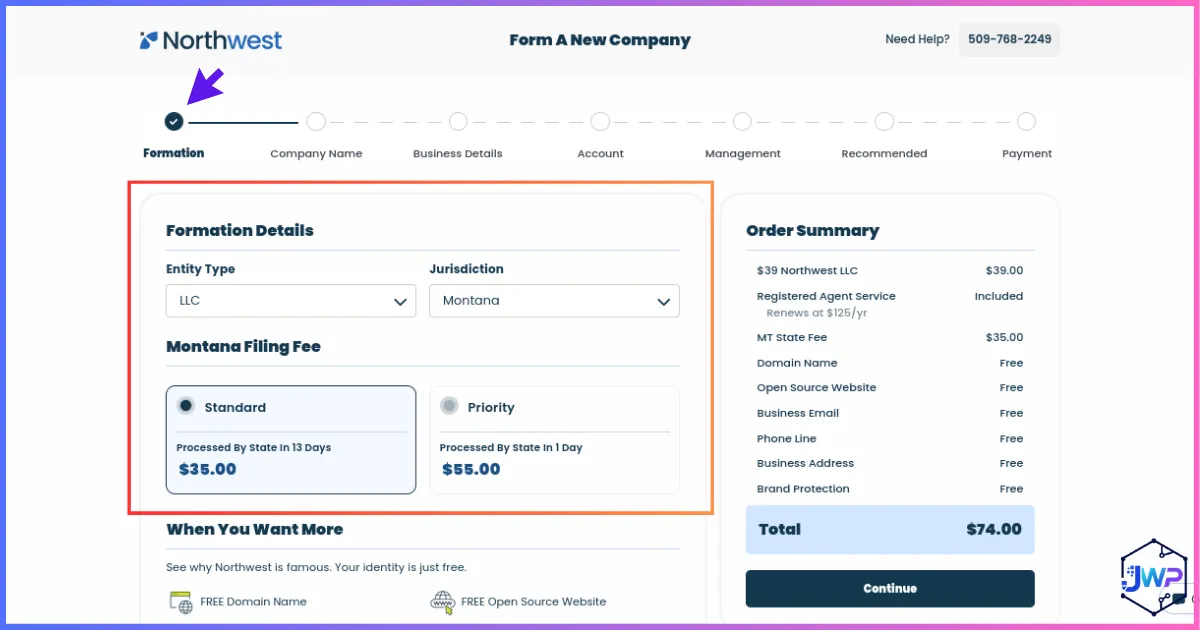
The following screenshot walkthrough uses Northwest’s order flow as a concrete example. Screen labels and optional prices can change. You can file directly with a state instead. Either route should end with an approved state document in the LLC’s exact legal name.
Choose entity type and state
Select “LLC,” not corporation, unless your advisers have recommended a different structure. Choose the state after mapping actual US operations. A founder working entirely from Lagos may consider a different shortlist from one employing people in California.
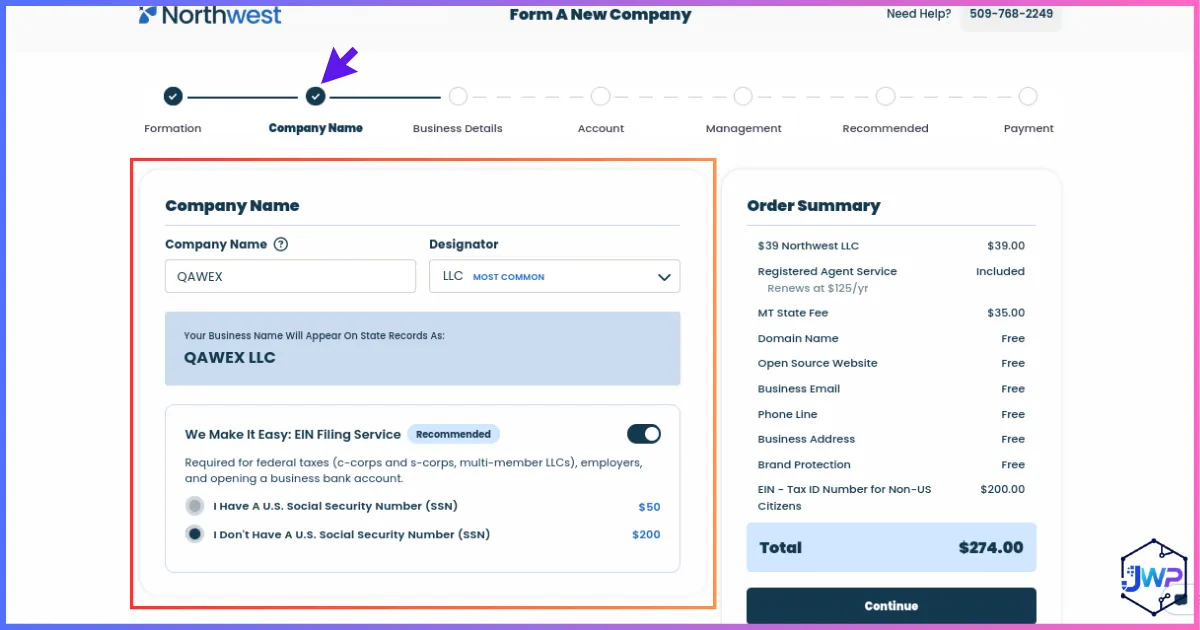
Enter and check the company name
Type the name exactly as you want it on the state record, including “LLC.” Run a state name search and keep two alternatives. An optional EIN service may appear: using it can save administration, while applying directly to the IRS is free.
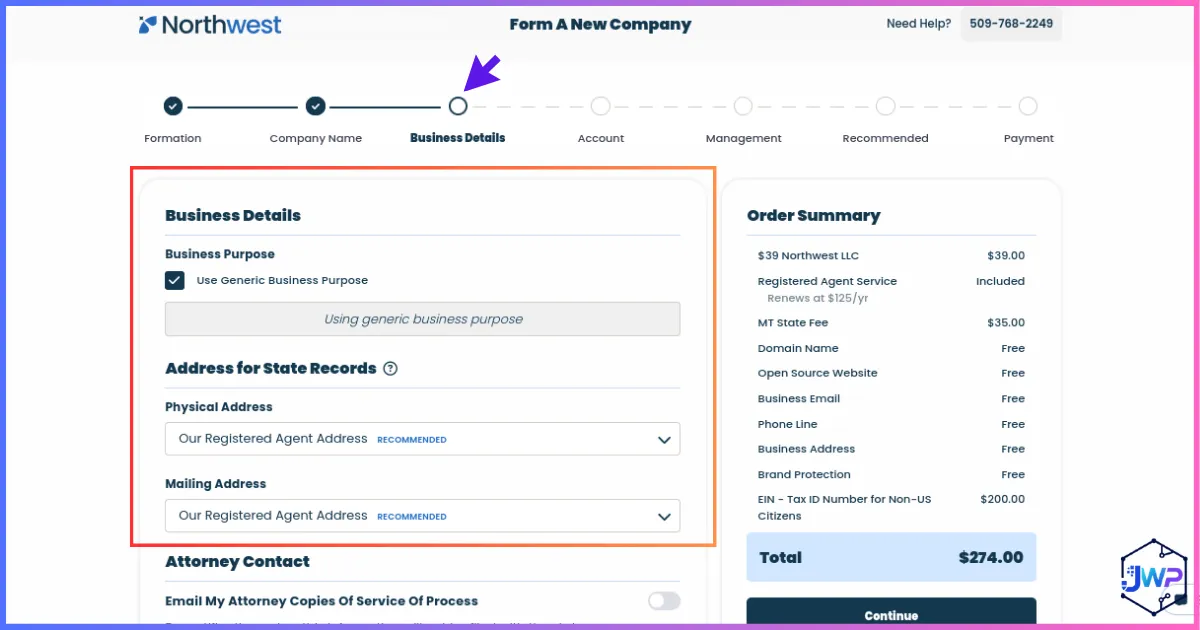
Describe the business and provide contact details
Use an honest description of the real business. Give a durable contact email and an appropriate mailing address. If the business is operated from Accra, Cairo or Nairobi, do not invent a US office simply because the registered agent has a US address.
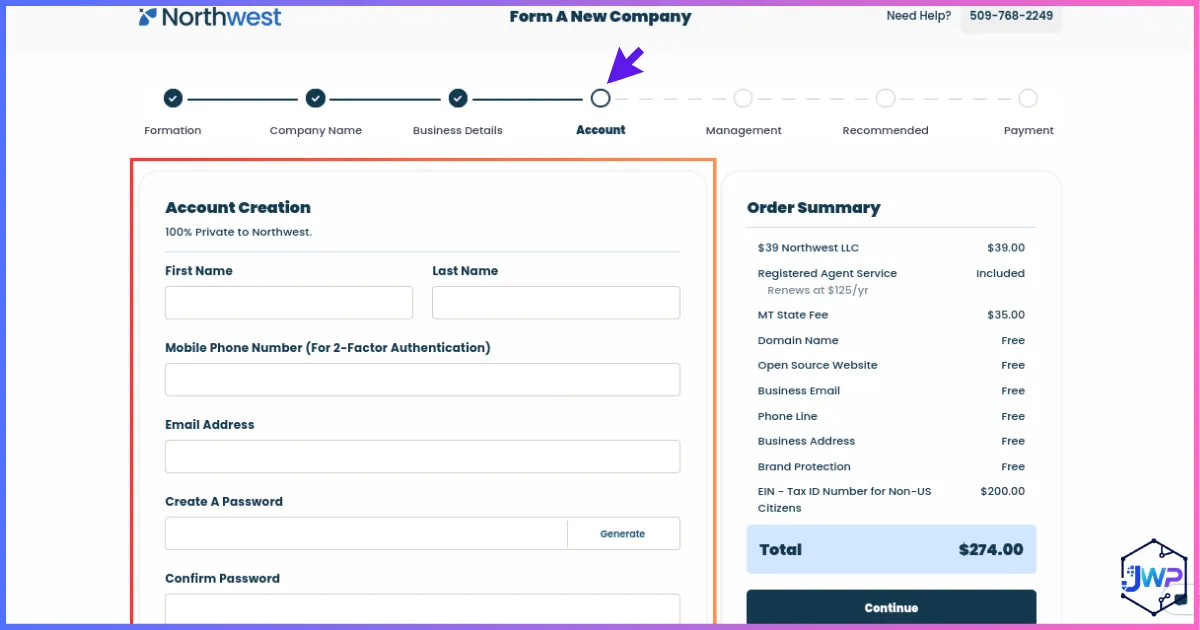
Create your formation account
Use an email you expect to control for years. Save the account credentials securely; the dashboard may hold formation documents, renewal notices and scanned registered-agent mail. Set calendar reminders independently of service emails.
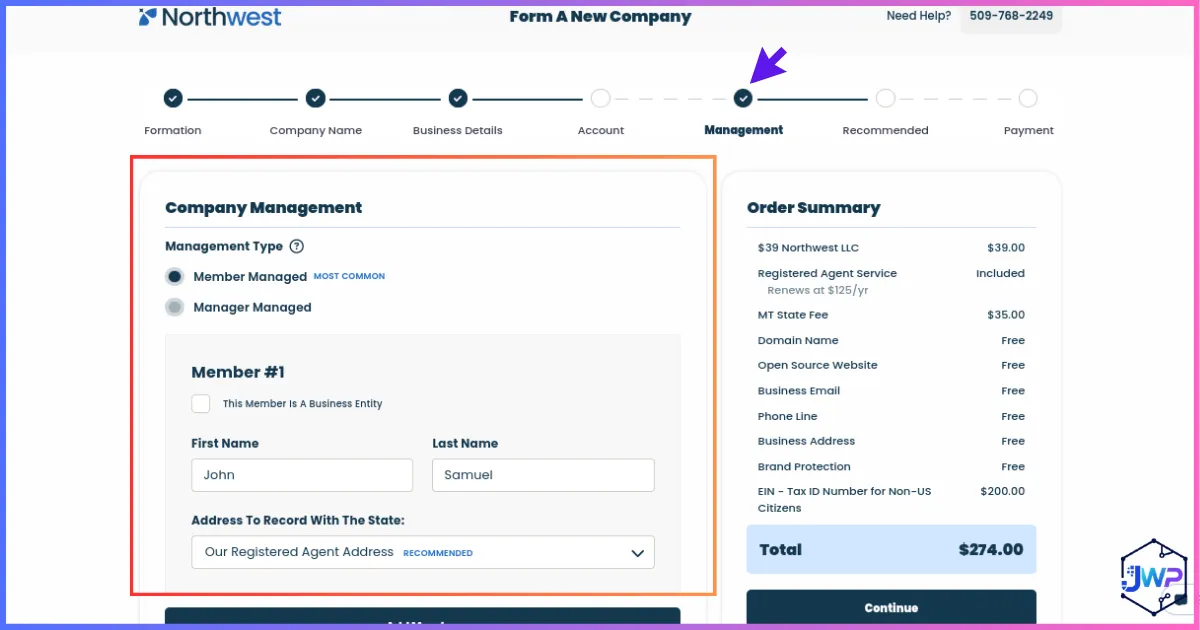
Enter management and owner details
Choose member-managed when members themselves control the business; choose manager-managed only when that reflects reality. Give all requested owner details exactly as identity documents show. If there are multiple members, finish their agreement on contributions and authority before a bank application.
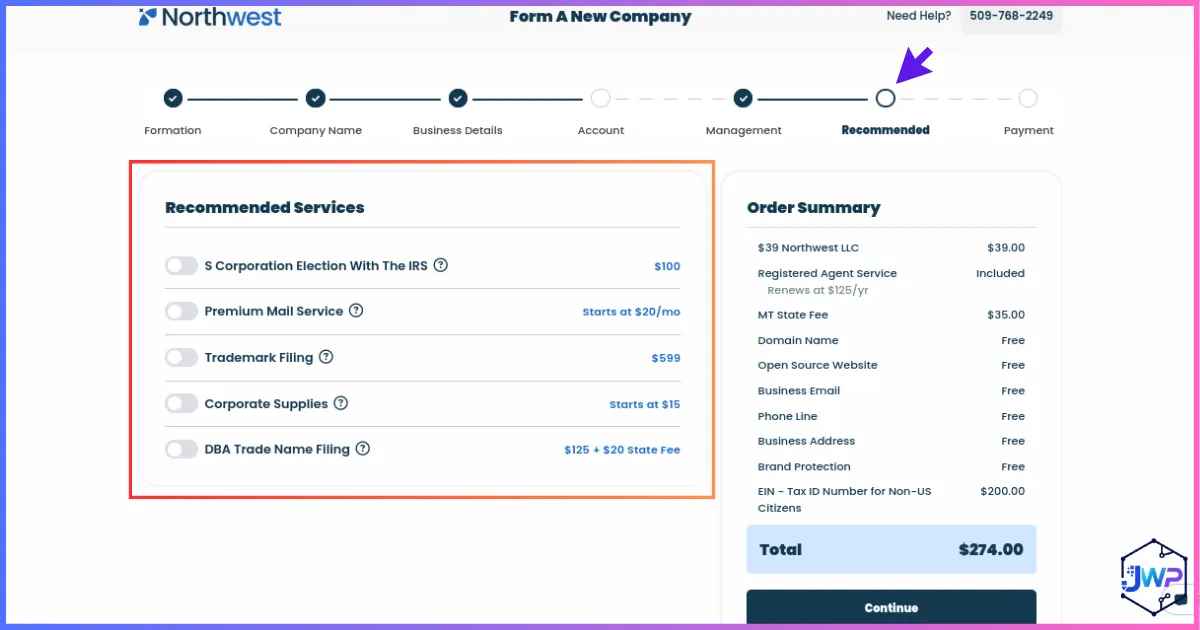
Review optional extras
Consider whether you need paid EIN handling, mail forwarding, certified copies, or other compliance services. Ask what is one-time and what renews. A founder with a straightforward remote services business may need fewer extras than one applying for regulated licenses or managing several states.
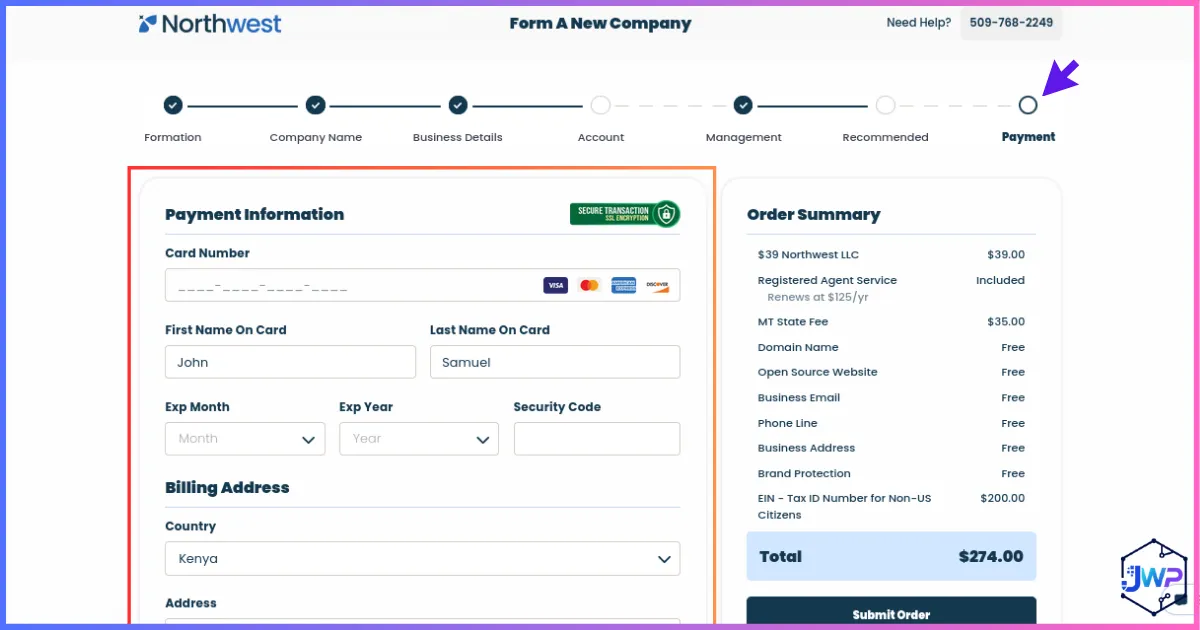
Check the order and pay
Read the line items before payment: state fee, formation assistance, agent, optional services and tax. Save the receipt. Once the state approves, download the stamped formation document and check every name and date. Correct an error before it spreads into an EIN or bank record.
How to get an EIN as a founder living in Africa
The EIN is the LLC’s federal identification number. The IRS does not charge for one. International founders often need it for a bank account or tax return. The key distinction is the principal place of business. Under current IRS Form SS-4 instructions, applicants without a US legal residence, principal place of business, or principal office or agency cannot use the standard online EIN application. Eligible international applicants may apply by phone, fax or mail.
- Wait for state approval. The legal entity name, formation date and state on SS-4 must match the approved record.
- Complete Form SS-4. Identify a real responsible party. The IRS says to put “foreign” or “N/A” on line 7b if the responsible party has no SSN or ITIN and is ineligible for one; do not leave that required entry blank.
- Choose the international channel. The IRS provides a phone route for eligible international applicants and separate fax and mail instructions. Read the live IRS page for the current number, hours and return details.
- Keep proof. Save the completed application, fax confirmation or mail tracking, and EIN assignment notice.
- Use one number consistently. Do not submit duplicates because one provider asks for the number before the IRS response arrives.
IRS instructions say a faxed application with a return fax number is generally handled in about four business days and mailed applications in roughly four weeks, but backlogs and incomplete forms can change timing. The state LLC may exist before the EIN arrives. That does not mean you should invent an EIN for bank onboarding.
An ITIN is a personal tax identification number and is a different matter. You do not automatically need one just to form an LLC or request its EIN. Your personal US tax filing facts may later create an ITIN need. A qualified preparer can distinguish that from the initial company application.
Banking and payment processing: the real bottleneck
Many founders choose a US LLC because they hope it will make receiving dollars easier. Treat account approval as a separate project. US banks and fintechs screen ownership, residence, actual trading location, industry, customer geography, expected transactions, and source of funds. A provider may support one African country but not another, or support a country for personal accounts but not business accounts. These policies change faster than LLC statutes.
Before filing, ask a prospective provider five questions: Do you serve a US LLC whose beneficial owner resides in my country? Do you accept a real operating address there? Do you support my industry? Can you receive the payment types I need? Can funds reach my local bank or suppliers lawfully and at what cost? Keep a written response when possible. Do not buy an LLC solely on an unverified claim that a platform will approve it.
| Document or fact | Why a provider asks | How to prepare |
|---|---|---|
| Approved formation document | Proves legal existence. | Use the stamped state copy, not just an order receipt. |
| EIN confirmation | Matches the entity to tax records. | Keep the original assignment notice. |
| Operating agreement | Shows ownership and authority. | Sign and date it; update for ownership changes. |
| Passport and residential proof | Identifies beneficial owners. | Use genuine, current documents matching the application. |
| Website, contracts and invoices | Explains commercial activity. | Describe real customers and services or goods. |
| Trading address | Shows where the business operates. | Distinguish it from the registered agent’s service address. |
Wise’s business-address policy says a business trading from an unsupported country needs a physical trading address in a supported country. That illustrates why a US registration alone does not settle eligibility. The same caution applies to providers often mentioned in founder forums: check their own current rules, not a screenshot from someone in another country.
Also distinguish an account that receives ACH or wires from a merchant processor that takes customer cards. A marketplace may pay a US bank account but ban your product category. A processor may approve the LLC but place reserves on high-chargeback sales. A multicurrency account may offer USD balances yet lack US local account details or a card at your location. Choose the full payment chain rather than one attractive feature.
Our guides to opening Wise and opening Payoneer can help compare workflows. Check both providers’ current support for your residence and business before acting.
US taxes: distinguish formation, source and activity
The US does not impose one universal tax outcome on every African-owned LLC. For a single-member disregarded entity, the owner’s status and activities matter. A nonresident individual is generally taxed on US-source income and income effectively connected with a US trade or business, subject to detailed rules and treaty provisions where applicable. Other classifications have different return and tax regimes.
Where services are performed
The IRS states that personal-service income is generally sourced where the work is performed, regardless of the customer’s residence, payment destination, or contract location. A designer working wholly from Kigali for a Chicago client is not doing US-performed work merely because the client pays in dollars to a US account. If the designer later works in Chicago for part of the contract, allocation may be needed. The IRS source-of-income table sets out the general rules.
Goods, platforms, royalties and US property
Inventory is different. Sourcing can depend on where purchased or produced goods are sold, and a US warehouse, employees, or agents may support a US trade or business and other state obligations. Royalties generally look to where intellectual property is used. US real estate has its own rules. Dividend and interest income follow separate source and withholding rules. Calling all of these “online income” hides the facts that determine the return.
Withholding forms and treaty claims
A payer might ask for a W-8 or W-9 series form. The correct form depends on the beneficial owner, entity classification, the payment, and whether a treaty reduction is available. Do not assume the same form suits a disregarded LLC, a partnership and a corporation. Likewise, do not claim a treaty rate because a neighboring African country has a treaty or because an LLC has a US address. Confirm your own tax residence and the current treaty text.
Form 5472: the overlooked filing for foreign-owned LLCs
A foreign-owned US single-member LLC is generally a disregarded entity for federal income tax, but it is treated as a corporation for limited section 6038A information-reporting purposes. If it has a reportable transaction with a related party, it generally files Form 5472 attached to a pro forma Form 1120. Owner contributions, distributions, loans, and certain formation or dissolution transactions can be reportable. A zero-revenue year may still involve owner funding.
The IRS Form 5472 instructions state an initial $25,000 penalty for a required filing that is late or materially incomplete, with further penalties possible after IRS notice. The form uses special mailing or fax rules for foreign-owned US disregarded entities. It is not filed as an ordinary electronic corporate return. For a calendar-year entity, the deadline normally follows the Form 1120 April due date, with an extension route through Form 7004 if filed on time.
Compliance stakes: illustrative dollars
Scale shows how a missed required information return can dwarf state fees; it does not mean every LLC must file Form 5472 every year. Source: IRS instructions and state schedules.
Whether a specific transaction is reportable is technical. Keep a ledger that distinguishes income from customers, payments to suppliers, owner contributions, draws, reimbursements, and loans. Give a US cross-border tax preparer the ledger, not just the year-end bank balance. A multi-member LLC normally starts under partnership rules, and a corporate election changes the return path; do not reuse a single-member checklist after ownership changes.
Beneficial-ownership information in 2026
FinCEN’s current BOI FAQs say that an August 2026 final rule exempts US-created companies from federal BOI reporting, while certain foreign-formed companies registered to do business in the US remain in scope. Check the rule again when you file because reporting requirements have changed repeatedly. The federal BOI exemption does not remove bank customer-identification checks or state-level disclosure requirements.
Your African country may still tax or regulate the business
Creating a US LLC does not teleport your work to the United States. Your home country may tax residents on worldwide income, tax business carried on locally, require registration, impose VAT or similar consumption tax, regulate foreign-currency receipts, or require employer payroll compliance. The details vary by country and can turn on residence, the owner’s legal status, customers, and how the US entity is classified locally.
Ask a local tax professional how the US LLC is viewed under your domestic law. Some jurisdictions may look through it; others may treat it as a foreign company. If you manage it daily from home, the country may consider its effective management or activity local. That can affect corporate filings, personal income, withholding and transfer documentation. The answer is not determined by a US EIN.
There is no single “African tax rule.” Kenya, Nigeria, South Africa, Ghana, Egypt, Mauritius and Mauritania have different systems, and each changes over time. Your citizenship may also differ from where you live. If you reside in Europe or the Gulf as part of the African diaspora, analyze that residence country too.
Read country detail where it applies: Kenya, Nigeria, South Africa, Ghana, Egypt, and Mauritania. These links are practical starting points; a local adviser should apply current law to your facts.
Treaties, sanctions and country differences
Africa contains many legal and financial jurisdictions, so country-wide claims are unreliable. The United States has income-tax treaties with some African countries and not others. A treaty benefit usually depends on tax residence under that treaty, the particular income article, beneficial ownership, documentation and anti-abuse rules. It is not granted because an owner holds a passport from the treaty country. Check the IRS’s current income-tax treaty list and texts before claiming relief.
Sanctions also need a fact-specific check. Some restrictions target particular countries or regions; others target named persons, companies, sectors or transactions. A bank may adopt policies stricter than the legal minimum. Owners and counterparties should use the official OFAC Sanctions List Search where relevant and obtain legal advice for a transaction with sanctions concerns. A business should never hide a customer, owner or destination to bypass screening.
Foreign-exchange rules are another local distinction. The ability to pay formation fees, convert US revenue into local currency, or repatriate export proceeds varies substantially. A US bank account does not negate domestic reporting rules. Plan the documented flow of funds before opening sales channels, especially if you pay local contractors or suppliers.
How the answer changes by business model
Remote freelancer or agency
If all work is performed from an African country, the IRS generally sources personal-service income where the work is done. The founder still needs to assess US information returns, local tax, payment-provider eligibility and client forms. The useful value of an LLC may be contracts and liability separation, not a promise of zero tax. Keep time and location records when work requires US travel.
Software product or subscription business
Software revenue can include services, licenses, royalties, sales or other arrangements. Contract terms and customer location matter. Card processing, chargebacks, consumer rules, data protection and sales tax may matter as much as formation. The founder should decide who owns the intellectual property before transferring it into an LLC; a cross-border transfer can have tax consequences.
Marketplace and physical-goods seller
Stock held in a US warehouse or fulfilled by a marketplace changes the analysis. Inventory location, title passage, US sales, state sales-tax nexus and import responsibilities may arise. An LLC in New Mexico does not make goods stored in California a New Mexico-only business. Model the full warehouse and marketplace footprint before choosing a state.
Creator, publisher or educator
Advertising, sponsorship, courses and licensing are not interchangeable tax categories. Platforms may ask for tax forms and apply withholding based on source and beneficial-owner details. The LLC can organize contracts and records, but it cannot turn all US viewers or US platform payments into one tax treatment. A creator may also need to separate personal name, brand, and intellectual-property ownership.
Founder raising US investment
Some investors favor a Delaware corporation rather than an LLC because of familiar stock and financing documents. If external equity is a near-term objective, ask prospective investors and counsel about entity choice before paying to form an LLC you may soon convert. Formation costs are small beside a conversion, cap table cleanup, and cross-border tax advice.
Multiple founders across countries
With cofounders in several countries, default partnership classification, owner-level filings, withholding, profit allocations and banking identity checks become more involved. Sign a carefully drafted operating agreement before money arrives. Decide which jurisdiction’s courts and dispute process apply, who can move funds, and what happens if a founder exits or loses access to an account.
An annual compliance calendar that actually works
Put these obligations in a shared calendar as soon as the LLC is approved. The example dates are not universal; use the entity’s own tax year, formation state, local residence and current law. Delegate a task only after confirming who will complete it and where the resulting filing receipt will be stored.
| Timing | Task | Evidence to retain |
|---|---|---|
| At formation | Download approval, sign operating agreement, record initial capital and agent contract. | State approval, signed agreement, payment receipt. |
| Monthly | Reconcile customer invoices, bank transactions, owner transfers and expenses. | Ledger, invoices, statements, FX records. |
| Quarterly | Review state footprint, platform terms, contractor locations and estimated tax or sales-tax needs. | Short review memo and adviser questions. |
| Calendar-year April deadline, generally | Assess Form 5472/pro forma 1120 and other US returns; extend by the original due date if eligible and needed. | Filed forms, fax or mail evidence, extension confirmation. |
| Wyoming anniversary month | File annual report and pay the license tax by the first day of that month. | State filing confirmation. |
| Delaware June 1 | Pay the annual LLC tax, if formed there. | State payment confirmation. |
| Agent renewal date | Renew agent or arrange a proper replacement. | Current agent acceptance and receipt. |
| Local statutory dates | Complete income tax, VAT, payroll, exchange-control or other filings where applicable. | Local returns and payment records. |
When the company no longer serves a purpose, close it deliberately. Stopping work or emptying the bank account does not necessarily cancel state fees or filing duties. Formally dissolve, settle accounts, address final tax returns, and keep records for the required period. Ask the registered agent how its renewal aligns with dissolution.
DIY filing, formation service or professional counsel?
Filing directly with a state is often possible, but a founder outside the US still needs a registered agent and must understand the filing form. A formation service can streamline the order and provide an agent. Neither route replaces a tax adviser, gives a visa, or guarantees bank approval. Professional counsel is more valuable when investors, several owners, US employees, stock, regulated activity, or complex tax residence are involved.
| Route | Suitable when | Tradeoff |
|---|---|---|
| File directly with the state | You can navigate the official portal and independently arrange the registered agent. | Lowest service spend, but you own the form and follow-up. |
| Formation service | You want a guided order, agent bundle and document dashboard. | Service fee and optional renewals; still manage tax and bank questions. |
| US lawyer plus cross-border tax team | There are investors, unusual ownership, US operations, IP transfers or regulatory issues. | Higher up-front cost can prevent an expensive restructure. |
Our comparison of formation services for non-US residents goes deeper into service choices. For Northwest specifically, see the registered-agent review. Compare actual checkout totals, support terms and renewals rather than headline prices alone.
Have a state and business plan in mind? Check the guided formation quote against direct state filing and your ongoing compliance budget.
Check Northwest’s LLC Order →Common mistakes African founders can avoid
What goes wrong
- Choosing Wyoming solely because a video says “tax-free.”
- Buying the LLC before checking bank eligibility.
- Using a registered-agent address as a fictional office.
- Ignoring owner contributions when assessing Form 5472.
- Assuming US-client receipts are all the same kind of income.
- Choosing an entity before asking an investor what it wants.
- Allowing state or agent renewal to lapse.
- Ignoring tax, VAT, currency or payroll duties where work occurs.
What to do instead
- Map physical operations, income type and owners first.
- Get current provider eligibility for your residence and trade.
- Use accurate separate addresses for service, mail and operations.
- Record capital, loans, draws and reimbursements distinctly.
- Classify services, goods, royalties and US activities separately.
- Plan investors and ownership before filing.
- Calendar every state, agent and tax deadline.
- Coordinate US and home-country advisers early.
Another common mistake is treating an affiliate article, a state filing website, and a bank’s underwriting policy as equivalent authority. State and IRS sources govern their own requirements. A bank governs its eligibility. Your local revenue authority governs domestic reporting. Use each source for the question it can answer.
Frequently asked questions
Can I form a US LLC from any African country?
Do I need to travel to the United States?
Do I need a US partner, visa or Social Security number?
Which state is best for an Africa-based online business?
How much is the IRS EIN?
Can I get a US business bank account with an African passport?
Will a US LLC eliminate tax in my African country?
Does having a US client make my service income US-source?
Does every foreign-owned single-member LLC file Form 5472?
Is federal beneficial-ownership reporting required?
Is there one US tax treaty for all of Africa?
Can I use my registered agent’s address as my US office?
What if I add a second owner later?
Can I close the LLC if the business does not work?
The complete formation checklist
- ☐ State the concrete business reason for a US entity.
- ☐ Map owners, residence, work locations, customers, inventory, staff and funds.
- ☐ Check payment-provider eligibility for the actual owner and trading address.
- ☐ Ask a local adviser about home-country treatment and FX rules.
- ☐ Select a state based on operations, state costs and future plans.
- ☐ Search name availability and appoint a registered agent.
- ☐ File the LLC document and download the state-approved copy.
- ☐ Sign an operating agreement and record initial contributions.
- ☐ Apply to the IRS for an EIN using the eligible international channel.
- ☐ Assemble passport, address proof, contracts, website and entity records for banking.
- ☐ Start bookkeeping before the first customer or owner transaction.
- ☐ Review US source, trade or business, Form 5472 and other return obligations.
- ☐ Calendar state, agent, US tax and local-country deadlines.
A US LLC can be a useful business tool for an entrepreneur in Africa. It works best when it is attached to a real commercial need, a bankable and truthful operating profile, and records that cover both sides of the border. The filing is one step in that plan. Begin with the business facts, choose the state deliberately, and make the recurring obligations part of your budget from day one.
Sources & Research Notes
Primary sources reviewed September 2026. Fees, IRS procedures, FinCEN rules, bank eligibility, treaties and country rules can change. Charts are illustrative comparisons based on the cited figures, not forecasts.
- IRS, Instructions for Form SS-4 — international EIN methods, line 7b and timing.
- IRS, Instructions for Form 5472 — foreign-owned disregarded entities, reportable transactions, pro forma return, special filing method and penalty.
- IRS, Nonresident aliens: sourcing of income — services, goods, royalties and other source rules.
- IRS, Publication 515 — withholding and payment characterization for nonresident owners.
- IRS, US income tax treaties A–Z — bilateral treaty list and texts.
- FinCEN, BOI FAQs — August 2026 final-rule status for US and foreign-created entities.
- Wyoming Secretary of State, LLC Articles instructions and fee schedule — formation and annual license tax.
- New Mexico Secretary of State, domestic LLC information — formation process and state cost.
- Delaware Division of Corporations, tax FAQ — $300 annual LLC tax and no LLC annual report.
- Wise, business-address verification — provider trading-address requirements.
- US Treasury OFAC, Sanctions List Search — screening named parties where relevant.