ExpressVPN vs Proton VPN
ExpressVPN vs Proton VPN is a contest between premium simplicity and privacy-first depth. ExpressVPN is the easier all-purpose service: polished apps, automatic Lightway obfuscation, shipped post-quantum key protection, RAM-only TrustedServer infrastructure, and unusually good router and living-room support. Proton VPN counters with public annual no-logs audits, open-source apps, a much larger disclosed fleet, Secure Core, port forwarding, Moderate NAT, and the best permanent free plan of the two.
After comparing equivalent core tiers—ExpressVPN Basic and Proton VPN Plus—across pricing, privacy, network design, protocols, streaming, torrenting, gaming, travel, apps, and support, Proton VPN wins narrowly, 9.3/10 to 9.2/10. That does not make ExpressVPN the wrong purchase: it remains the better fit if low-friction streaming, post-quantum tunnel protection, split routing, or router-wide coverage matter more than Proton’s specialist tools.
Is Proton VPN Better Than ExpressVPN?
Proton VPN is better for privacy-focused users, torrenting, technical control, and value. VPN Plus costs $71.76 for the first 24 months in the checkout we verified, renews at $83.88 for 12 months, publishes yearly no-logs audits, supports VPN-side port forwarding, and gives paid users 20,798 disclosed servers across 149 countries. Its Free plan offers unlimited data without ads, although it limits you to one device and app-selected servers in 10 countries.
ExpressVPN is better for beginners, routers, streaming devices, split tunneling, and forward-looking tunnel security. Basic costs $83.72 for the first 28 months and renews at $99.95 per year. Lightway includes hybrid post-quantum protection, the entire server estate uses RAM-only TrustedServer, and its 214 selectable locations, TV apps, MediaStreamer, and integrated router controls make it especially convenient for households.
Table of Contents
- ExpressVPN vs Proton VPN overview
- 12-round scorecard
- Pricing and value
- Free plan and refund policy
- Privacy and audits
- Security and protocols
- Servers, speed and reliability
- Apps, devices and split tunneling
- Streaming and smart TVs
- Torrenting and port forwarding
- Gaming
- Travel and restrictive networks
- Which VPN should you choose?
- Frequently asked questions
- Final verdict
- Sources and methodology
At a glanceExpressVPN vs Proton VPN Comparison
The fairest comparison is ExpressVPN Basic versus Proton VPN Plus. Both unlock the complete everyday VPN network and allow 10 simultaneous connections. ExpressVPN’s Advanced and Pro plans bundle password, email, identity, eSIM, AI, and Dedicated IP extras; Proton Unlimited bundles Mail, Calendar, Drive, Pass, and other Proton products. Those suites may be useful, but they do not make the underlying VPN tunnel faster or more private, so they are not used to inflate this verdict.
| Category | ExpressVPN Basic | Proton VPN Plus | Winner |
|---|---|---|---|
| Overall score | 9.2 / 10 | 9.3 / 10 | Proton VPN |
| Intro price | $83.72 / first 28 months ($2.99/mo equivalent) | $71.76 / first 24 months ($2.99/mo equivalent) | Proton VPN |
| Verified renewal | $99.95/year | $83.88/year at checked checkout | Proton VPN |
| Free version | None | Unlimited data; 1 device; app-selected servers in 10 countries | Proton VPN |
| Network | 113 countries; 214 selectable locations; server total undisclosed | 20,798 servers; 149 countries; 196 locations | Proton VPN |
| Simultaneous devices | 10 | 10 | Tie |
| Primary protocol | Lightway; WireGuard on selected apps | WireGuard UDP/TCP; Smart Protocol | ExpressVPN |
| Post-quantum protection | Shipping with Lightway and WireGuard on supported apps | Planned groundwork; not shipping at time checked | ExpressVPN |
| Advanced privacy route | No consumer multi-hop route | Secure Core via owned/provisioned entry servers | Proton VPN |
| Server storage | Entire VPN estate uses RAM-only TrustedServer | No whole-fleet RAM-only claim; Secure Core hardware controlled by Proton | ExpressVPN |
| Port forwarding | No VPN-side port forwarding | Paid plans on Windows, macOS, Linux and manual configs | Proton VPN |
| Money-back period | 30 days for eligible new users | 30 days for eligible direct purchases | Tie |
Prices are USD snapshots verified September 19, 2026. Long-term plans are prepaid; tax, region, cookies, account state, and promotions can change checkout totals.
12-round comparison scorecard
Round wins do not all carry equal weight; the final ratings also reflect the practical importance of each category.
Proton: price, free plan, privacy, network, P2P, gaming, travel. Express: security implementation, apps/split routing, streaming, usability. Speed/reliability: tie.
Round 1 · Proton VPN winsPricing and Value
Both comparison tiers advertise the same $2.99 monthly equivalent, but the billing math is different. ExpressVPN charges $83.72 for 24 paid months plus four promotional months; Proton VPN charges $71.76 for 24 months. Express therefore costs $11.96 more upfront but covers four additional months. Normalize the first term and the headline rate is a tie.
Renewal breaks the tie. ExpressVPN Basic renews at $99.95 per year. The Proton checkout we verified disclosed $83.88 for the next 12 months, or $6.99 per month equivalent—$16.07 less per renewal year. Proton also had a $47.88 first-year offer and a $9.99 month-to-month plan. Pricing pages can be dynamic, so treat the checkout total and renewal notice—not a banner—as the binding numbers.
Verified first charge and annual renewal
USD before applicable tax. Introductory terms cover different lengths; annual renewals are directly comparable.
first charge
first charge
renewal/year
renewal/year*
*Proton renewal from the checked USD acquisition route; confirm the figure shown in your own checkout.
What about the higher tiers?
ExpressVPN Advanced raises the device limit to 12 and adds tracker blocking, ExpressKeys, larger MailGuard allowances, an eSIM, and eligible identity features. Express Pro raises the limit to 14 and includes Dedicated IP plus expanded extras. These plans can make sense if you need the bundle, but Basic contains the core VPN.
Proton Unlimited combines VPN Plus with paid Proton Mail, Calendar, Drive, Pass, and productivity tools. Buy it for the wider Proton ecosystem—not because it unlocks a faster VPN network. If price is the deciding factor, compare more long-term options in our best cheap VPN guide.
Value winner: Proton VPN. The introductory monthly equivalent ties, but Proton asks for less upfront and had the lower verified annual renewal.
See Proton VPN’s Current Deal →Round 2 · Proton VPN winsFree Plan, Trial Options, and Refunds
ExpressVPN does not offer a permanent free plan. Its practical trial is the 30-day money-back window for eligible new customers. Proton VPN also has a 30-day refund window for eligible direct purchases, then goes much further with a genuinely usable Free tier: unlimited data, no advertising, one device, and servers in 10 countries.
Proton Free is deliberately constrained. The app chooses the fastest free server initially; when you request a change, the next country/server is random. The first change has a 45-second cooldown and later changes use 10-minute intervals. Free users do not receive the full paid network, Plus streaming support, P2P, Secure Core, NetShield, or port forwarding. It is excellent for secure everyday browsing, but not a substitute for Plus if you need specific countries or specialist features.
Round 3 · Proton VPN wins narrowlyPrivacy, Ownership, Jurisdiction, and Audits
Proton VPN is operated from Switzerland and builds its trust case around public verification. Its production apps are open source, its app-security reviews are published, and its 2026 Securitum assessment was the fifth consecutive annual no-logs infrastructure audit. Proton publishes the full reports for anyone to inspect and says its no-logs position has been tested in more than 400 legal matters.
ExpressVPN operates from the British Virgin Islands and is owned by Kape Technologies. That ownership deserves disclosure, but the technical evidence is substantial: the Trust Center lists more than 23 assessments spanning privacy controls, TrustedServer, Lightway, apps, and routers. KPMG’s 2025 ISAE 3000 Type 1 work examined TrustedServer and privacy controls as of February 28, 2025 and reported no identified exceptions in the tested safeguards. ExpressVPN’s H1 2026 transparency report also said it had no retained VPN activity or connection records to produce in response to requests.
Proton gets the narrow win because yearly infrastructure reviews, public full reports, open-source clients, and Swiss jurisdiction create a particularly legible trust model. ExpressVPN wins on breadth of assessments and full-fleet RAM-only design. Neither jurisdiction nor an audit is a magic shield: audits are point-in-time evidence, and open source makes code inspectable rather than automatically safe. Our VPN logging-policy guide explains what these claims do—and do not—prove.
ExpressVPN privacy strengths
- Full TrustedServer RAM-only estate
- Broad portfolio of independent assessments
- BVI operating jurisdiction
- Public transparency reporting
Proton VPN privacy strengths
- Five consecutive annual no-logs audits
- Full reports published publicly
- Open-source production apps
- Swiss base and Secure Core controls
Round 4 · ExpressVPN winsSecurity, Encryption, and VPN Protocols
Both services use modern cryptography, private DNS, and kill switches, but their protocol strategies differ. ExpressVPN’s default Lightway protocol has been rewritten in Rust and remains open source. It adds hybrid ML-KEM post-quantum protection, while a post-quantum WireGuard implementation is available on iOS, Android, and Windows at the time checked. OpenVPN and IKEv2 remain available on selected platforms and locations.
Proton VPN broadly supports WireGuard UDP/TCP, Stealth, and Smart Protocol. OpenVPN remains available through the Linux GUI and manual configurations; IKEv2 is being phased out, and Proton Protocols is a developing 2026 architecture on selected apps. Proton’s published roadmap lays groundwork for post-quantum encryption, but it was not a shipping Proton VPN feature when we verified the comparison.
That gives ExpressVPN the round. Its post-quantum key establishment is deployed now, not merely planned. This distinction matters because NIST FIPS 203 standardizes ML-KEM for establishing shared secrets believed resistant to quantum attackers. It does not make every website, device, or application “quantum-proof”; it protects a specific layer of tunnel key establishment.
| Security feature | ExpressVPN | Proton VPN |
|---|---|---|
| Kill switch | Internet Kill Switch default-on on major desktops; stricter modes vary by platform | Standard/advanced behavior varies; conflicts with split tunneling on most platforms except Windows |
| Ad/malware filtering | Lite Protection blocks ads, malicious and adult sites; higher tiers add tracker blocking | NetShield on paid plans blocks malware, ads and trackers at DNS level |
| Obfuscation | Automatic behavior with Lightway | Explicit Stealth protocol plus Smart Protocol fallback |
| Multi-hop | No comparable consumer privacy multi-hop | Secure Core routes through controlled entry infrastructure |
| Post-quantum | Shipping on supported Lightway/WireGuard apps | Planned; not shipping when checked |
| App source | Lightway core open source; apps not all open source | Production apps open source |
For background on WireGuard, OpenVPN, IKEv2, and proprietary transports, read our VPN protocols explainer.
Secure Core vs TrustedServer: different defenses
TrustedServer is ExpressVPN’s default infrastructure model. The entire VPN estate runs from volatile memory and reloads a controlled software image on reboot, reducing persistent state and configuration drift. ExpressVPN advertises 10-Gbps and selected up-to-40-Gbps capacity; those are server-link specifications, not guaranteed subscriber speeds.
Secure Core is an optional Proton multi-hop route. Traffic first enters infrastructure owned or provisioned by Proton in Iceland, Sweden, or Switzerland, then exits through the selected country. The live directory listed 125 Secure Core servers serving 68 exit countries. This can improve resistance to a compromised exit or hostile local network, but the extra hop adds latency, so it is not the normal choice for streaming or gaming.
Rounds 5–6 · Proton network, speed tieServer Network, Speed, and Reliability
Proton publishes the larger fleet: 20,798 servers across 149 countries and 196 locations, including 17,984 Plus servers. ExpressVPN publishes 113 countries and 214 selectable locations but does not disclose a dependable current server-unit total. Do not repeat the old “3,000+ servers” figure as if it were current.
The numbers are not perfectly comparable. One provider’s “location” may be a city, state, or virtual endpoint; server totals say nothing about load, peering, hardware generation, or how many users share each machine. Proton clearly wins disclosed fleet and country breadth. ExpressVPN wins selectable-location count and offers exceptional US granularity with all 50 states.
Published network breadth
Countries and selectable locations are separate measures. Server units are omitted for ExpressVPN because it does not publish a current total.
countries
countries
locations
locations
Which VPN is faster?
There is no honest universal winner without same-device, same-route, same-time testing. ExpressVPN’s Lightway and Proton’s WireGuard are both fast enough for 4K streaming, video calls, and large downloads on healthy connections. Distance, server load, ISP peering, Wi-Fi quality, operating system, and protocol selection can reverse the result.
ExpressVPN’s Windows-only Lightway Turbo can distribute traffic across multiple tunnels under suitable conditions, but its “up to” performance claims are internal and conditional. Proton VPN Accelerator also carries an “up to” claim. Neither marketing maximum predicts your line. We score real-world speed and reliability as a tie and recommend testing three nearby and three distant endpoints during the refund period.
Capability profile (editorial assessment)
Relative scores summarize documented capabilities, not laboratory throughput.
ExpressVPN: strongest in ease, streaming workflow, and deployed security architecture.
Proton VPN: strongest in privacy transparency, network breadth, and P2P tooling.
Round 7 · ExpressVPN winsApps, Devices, Routers, and Split Tunneling
Both core paid plans allow 10 simultaneous connections and cover Windows, macOS, Linux, Android, iOS, Android TV, and Apple TV. Proton’s apps expose more specialist controls and publish their source. ExpressVPN focuses on consistent interfaces and a simpler “Automatic” connection experience across desktops, phones, televisions, browser extensions, and routers.
A polished ecosystem with unusually strong router controls

ExpressVPN Basic covers 10 devices. A compatible ExpressVPN router connection can cover every attached device while using one subscription slot, and Device Groups can send different household devices through different VPN locations. The current first-party-integrated retail path is Fortify, the GL.iNet Flint 2–based router introduced after Aircove and Aircove Go sales ended. Existing Aircove hardware continues receiving critical security updates for its published support period.
Split tunneling is unusually broad: ExpressVPN documents app plus IP/subnet rules on Windows, macOS, and Linux, Android app routing, limited single-IPv4 exclusions on iOS, and router Device Groups. DNS queries continue through ExpressVPN while connected. Platform capabilities still differ, so check the exact client you use.
Open-source clients and deeper specialist controls
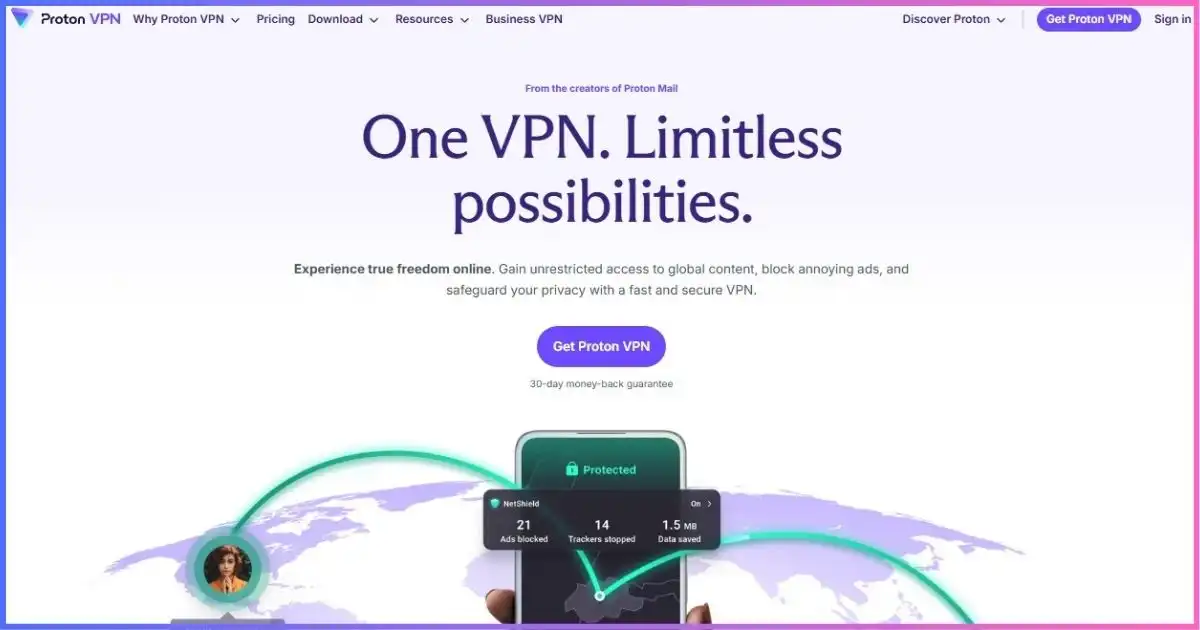
Proton VPN Plus also covers 10 devices and provides native apps for the major desktop, mobile, and TV platforms. Its paid split tunneling reaches Windows, Linux GUI, macOS, Android, browser extensions, and Android TV. That breadth looks better on paper, but important caveats remain: macOS support is experimental, WebKit/Safari exclusions can be unreliable, and split tunneling conflicts with the kill switch on most platforms. Windows can use both together.
Proton supports routers through manual configurations, but it does not offer a consumer router ecosystem as integrated as ExpressVPN’s. Proton wins if open-source clients and advanced privacy routes are your priority; Express wins the overall app round for routing maturity, iOS coverage, and home-network usability.
Round 8 · ExpressVPN winsStreaming, Smart TVs, and Media Devices
Both paid services support major streaming platforms and provide native Apple TV apps for tvOS 17+, Android TV support, and Fire TV pathways. Proton Plus offers access to an extensive country map and labels streaming-capable servers. Proton Free does not include paid streaming support, and Secure Core is a poor default for video because the extra hop adds latency and not every exit is streaming-enabled.
ExpressVPN wins for living-room flexibility. Its Apple TV and Fire TV/Vega apps are polished, its 214 locations make city-level switching easy, and router Device Groups let a TV, console, and laptop use separate locations. MediaStreamer covers selected devices that cannot run a VPN app, but it is important to understand the trade-off: MediaStreamer is DNS, not a VPN. It does not encrypt traffic, provide ordinary privacy, or offer full location selection.
Streaming access changes as platforms block VPN addresses, so neither provider can promise permanent access to a specific library. If TV access is your primary need, compare the broader field in our best VPNs for streaming guide and test the exact services you pay for.
Streaming winner: ExpressVPN. Choose it for easier TV apps, flexible router routing, and a DNS fallback for incompatible devices.
Get ExpressVPN for Streaming →Round 9 · Proton VPN winsTorrenting, P2P, and Port Forwarding
ExpressVPN permits P2P broadly and provides the essential basics: a kill switch, private DNS, and fast Lightway connections. The missing feature is VPN-side port forwarding. Port forwarding configured on an ExpressVPN router sits outside the VPN tunnel and should not be described as protected inbound forwarding.
Proton VPN Plus supports P2P on labeled servers and offers port forwarding on Windows, macOS, and Linux apps plus supported manual WireGuard/OpenVPN configurations. The service assigns a port that usually changes after reconnecting, so you must update your torrent client’s listening port. Port forwarding and Moderate NAT cannot run together.
That makes Proton the clear P2P winner, especially for users who seed torrents or need inbound peer reachability. Bind the torrent client to the VPN interface, enable the kill switch, and remember that an open port exposes the listening application—keep it patched and do not expose services you do not understand. Our best VPNs for torrenting comparison covers additional port-forwarding options.
Round 10 · Proton VPN wins narrowlyGaming and NAT Behavior
ExpressVPN is excellent for consoles through a router: Lightway connects quickly, 214 locations help you choose a nearby route, and Device Groups simplify console coverage. It is the easier setup for a household that wants a console, TV, and phones protected without installing clients on every device.
Proton VPN gets a narrow technical win because paid plans include Moderate NAT across Windows, macOS, Android, iOS, Linux, and supported manual connections. Moderate NAT can resolve peer-to-peer matchmaking, voice, or hosting problems caused by strict NAT, but Proton explicitly notes a small privacy trade-off. It cannot run alongside port forwarding.
Neither service can guarantee lower ping, an open console NAT type, protection from every DDoS scenario, or better matchmaking. A VPN adds a route and usually adds some latency; it helps only when the alternate path avoids poor ISP routing or shields your home IP. See our gaming VPN guide for a latency-first selection process.
Round 11 · Proton VPN wins narrowlyTravel and Restrictive Networks
Proton combines 149-country coverage, Stealth, Smart Protocol, Secure Core, and an emergency-use Free plan. Stealth is explicit and easy to select when a hotel, campus, ISP, or national firewall fingerprints ordinary VPN traffic. Proton also supports guest-style access pathways in censored environments on selected apps.
ExpressVPN remains an outstanding travel VPN. Lightway obfuscation is automatic, network handoffs are polished, the service covers 113 countries, and router options can protect devices that do not run apps. Users who want the VPN to make most protocol decisions for them may still prefer ExpressVPN despite Proton’s round win.
Buying decisionShould You Choose ExpressVPN or Proton VPN?
Choose ExpressVPN if you want
- The easiest premium experience
- Shipping post-quantum tunnel protection
- Full-fleet RAM-only infrastructure
- Better router and TV workflows
- Mature split routing, including iOS and routers
- Automatic obfuscation with fewer settings
Choose Proton VPN if you want
- Public annual no-logs reports and open-source apps
- A permanent unlimited-data free tier
- Lower verified first charge and renewal
- More countries and disclosed servers
- Secure Core multi-hop routing
- Port forwarding and Moderate NAT
Best for privacy: Proton VPN
Proton’s combination of public annual audit reports, open-source production apps, Swiss operation, and Secure Core makes its privacy case easier to inspect. ExpressVPN remains a strong privacy service and has the better default infrastructure design through universal TrustedServer.
Best for beginners: ExpressVPN
ExpressVPN presents fewer consequential choices and keeps the experience consistent across phones, laptops, TVs, and routers. That simplicity is a real feature if a VPN that needs tweaking will simply stay disconnected.
Best for torrenting and gaming: Proton VPN
Port forwarding gives Proton a decisive P2P advantage, while Moderate NAT can help with peer connectivity in games and WebRTC applications. These are specialist tools; leave strict NAT enabled unless you have a concrete connectivity problem.
Best for streaming and routers: ExpressVPN
Native TV apps, MediaStreamer, 214 locations, and integrated router Device Groups give ExpressVPN the cleanest whole-home workflow. Proton Plus streams well, but Secure Core and the Free tier are not designed for this job.
FAQsExpressVPN vs Proton VPN: Frequently Asked Questions
Is Proton VPN better than ExpressVPN?
Which is faster, ExpressVPN or Proton VPN?
Does Proton VPN have a better free plan?
Which VPN is better for Netflix and smart TVs?
Which VPN is safer?
Is ExpressVPN or Proton VPN better for torrenting?
Do ExpressVPN and Proton VPN keep logs?
Can I use both VPNs on a router?
Proton VPN Wins—But Only by a Fraction
Proton VPN wins this ExpressVPN vs Proton VPN comparison, 9.3/10 to 9.2/10. It delivers the stronger overall value through a lower verified first charge and renewal, an unlimited-data free tier, public yearly no-logs audits, open-source apps, 149-country coverage, Secure Core, port forwarding, and Moderate NAT. It is our recommendation for privacy-focused users, torrenters, technical users, and anyone who wants a capable free fallback.
ExpressVPN remains the smarter buy for people who value convenience over feature density. It offers deployed post-quantum protection, a full TrustedServer RAM-only estate, better split-routing maturity, excellent TV apps, and the strongest router experience of the pair. For a family that wants streaming and whole-home protection with minimal configuration, we would still choose ExpressVPN.
Disclosure: This article contains affiliate links. If you purchase through them, we may earn a commission at no extra cost to you. The ranking reflects documented capabilities, pricing, trust evidence, and editorial judgment—not commission rates. Prices and live network totals were verified September 19, 2026 and can change by region, promotion, tax, and checkout route.
Sources & Comparison Methodology
We compared the equivalent core paid products—ExpressVPN Basic and Proton VPN Plus—across 12 decision areas. Weighted emphasis was placed on security implementation, privacy evidence, price, and network quality; streaming, apps, P2P, gaming, travel, and support completed the score. We did not treat bundled email, password, cloud-storage, identity, eSIM, or AI products as improvements to the VPN tunnel.
- 25% — Security, protocols, infrastructure
- 20% — Privacy, audits, transparency
- 20% — Price, free access, refunds
- 15% — Network breadth, speed, reliability
- 10% — Streaming, P2P, gaming, travel
- 10% — Apps, devices, support, usability
Official provider material checked:
- ExpressVPN pricing and renewal disclosures; subscription-tier and simultaneous-connection documentation.
- ExpressVPN server directory, TrustedServer, Trust Center, KPMG 2025 assessment, and H1 2026 transparency report.
- ExpressVPN Lightway, post-quantum WireGuard, kill switch, split tunneling, router, TV, MediaStreamer, and P2P documentation.
- Proton VPN pricing and checked USD checkout; live server directory and Free-plan server-change documentation.
- Proton VPN’s 2026 Securitum no-logs report, open-source/app-audit materials, Secure Core, Stealth, and protocol lifecycle documentation.
- Proton VPN split tunneling, port forwarding, Moderate NAT, NetShield, P2P, streaming, and TV support documentation.
Live snapshot: Proton VPN listed 20,798 servers, 149 countries, 196 locations, 17,984 Plus servers, and 125 Secure Core servers serving 68 exits. ExpressVPN listed 113 countries and 214 app-selectable locations but no current global server total. Capacity claims such as “up to 40 Gbps,” “up to 10 Gbps,” Lightway Turbo gains, and VPN Accelerator gains were treated as architecture or provider-controlled results—not guaranteed user speeds.
Audit findings are point-in-time evidence. Streaming access, censorship resistance, latency, server counts, and promotional pricing can change. Readers should verify the final charge, renewal, tax, device/platform requirements, and local VPN law before purchase.