9 Best VPN Providers: Features, Prices & Privacy Compared
This article gives extra weight to affordability, so CometVPN takes the top position on value. Price is not the only consideration, though: a dependable VPN still needs well-designed apps, a reliable kill switch, modern protocols, transparent privacy practices, useful locations, fair terms, and enough connections for your devices.
We compared nine consumer VPN services using current pricing, server directories, feature documentation, audit disclosures, app support, and refund policies. This guide ranks the strongest options for privacy, streaming, travel, torrenting, families, and tight budgets—and shows the real upfront cost behind each “monthly” rate.
What Is the Best VPN Provider?
CometVPN is #1 in this article’s value-focused ranking because its provider-quoted $1.89 monthly equivalent is the lowest price here, while one plan covers unlimited devices and includes WireGuard, AES-256 encryption, a kill switch, DNS leak protection, and free obfuscation. Its optional residential and dedicated residential IP products also stand out at this price.
That recommendation is price-led: CometVPN has a shorter track record and less public independent audit evidence than established leaders. Choose NordVPN for the strongest full-featured package, ExpressVPN for premium simplicity, Surfshark for mature unlimited-device value, or Proton VPN for privacy and a strong free tier.
Table of Contents
At a glanceBest VPN Providers Compared
Prices below are the lowest observed introductory web rates converted to monthly equivalents. Long plans are billed upfront; taxes, regional offers, coupons, and renewals can change the total. Country figures may include virtual locations.
| Rank / provider | Best for | Network snapshot | Devices | Lowest observed rate* | Refund | Score |
|---|---|---|---|---|---|---|
| 1. CometVPN | Best low-cost value | Global list; totals unpublished | Unlimited | $1.89/mo; $45.36/24 months + 3 free | 30 days | 9.5 |
| 2. NordVPN | Best full-featured | 8,027 servers / 150 countries | 10 | $3.49/mo; $94.23/27 months | 30 days | 9.4 |
| 3. ExpressVPN | Premium simplicity | 113 countries; count unpublished | 10–14 | $2.99/mo; $83.72/28 months | 30 days | 9.2 |
| 4. Surfshark | Families | 4,500+ / 100 countries | Unlimited | $2.49/mo; $67.23/27 months | 30 days | 9.0 |
| 5. Proton VPN | Privacy / free tier | 20,798 / 149 countries | 10 paid; 1 free | $2.99/mo; $71.76/24 months | 30 days | 8.9 |
| 6. PIA | Customization | 91 countries / 154 locations | Unlimited | $2.03/mo; $79/39 months | 30 days | 8.5 |
| 7. CyberGhost | Beginners | 100 countries / 125 locations | 7 | $1.99/mo; $51.74/26 months | 45 days† | 8.3 |
| 8. IPVanish | US households | 3,400+ / 150 locations / 55 countries | Unlimited | $2.19/mo; $52.56/24 months | 30 days† | 8.1 |
| 9. SafeShell | App-specific streaming | 10,000+ nodes / 40+ countries | 5 | $79.99/year via US App Store | 7 days | 7.8 |
*USD snapshot verified September 18, 2026. Confirm total, renewal, tax, free months, and refund terms at checkout. †Applies to eligible long plans.
Network reachVPN Country Coverage Compared
A nearby exit usually matters more than raw server count. We chart vendor-published country coverage; totals can include virtual locations and do not prove physical hardware in every country.
Advertised country coverage
Provider-published snapshot, September 18, 2026
Detailed reviewsThe 9 Best VPN Services, Ranked
CometVPN — low-cost fundamentals and unusual IP add-ons
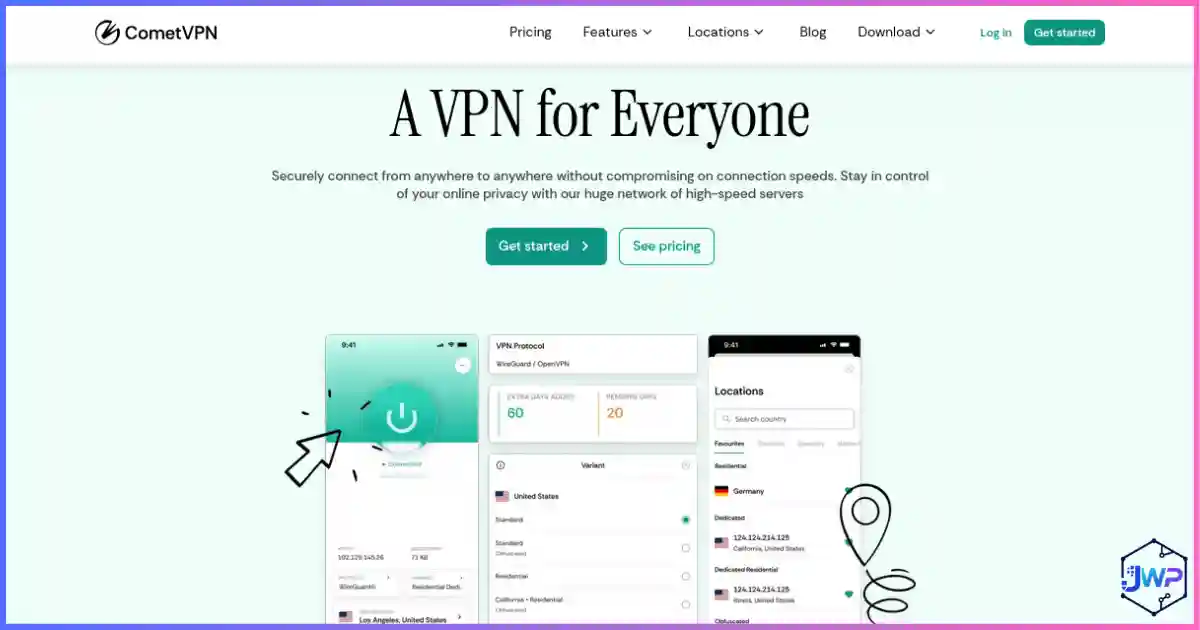
CometVPN takes the #1 position in this article because its $1.89 provider-quoted rate delivers the lowest-cost entry among the nine services. It offers unlimited devices, WireGuard, AES-256, a kill switch, DNS leak protection, and free obfuscation. Its differentiator is optional IP infrastructure: residential VPN from $1.74/month, dedicated residential IP from $2.79/month, and native residential traffic from $0.70/GB.
The tradeoff: no simple current network total, fewer TV/router apps than mature rivals, and less independent audit history. Its 3-day trial needs payment details and auto-renews unless canceled; paid plans have a 30-day refund promise.
Pros
- Lowest listed rate
- Unlimited devices
- Free obfuscation
- Residential IP options
Cons
- Shorter track record
- No clear network totals
- Limited audit/TV evidence
NordVPN — the strongest all-round balance
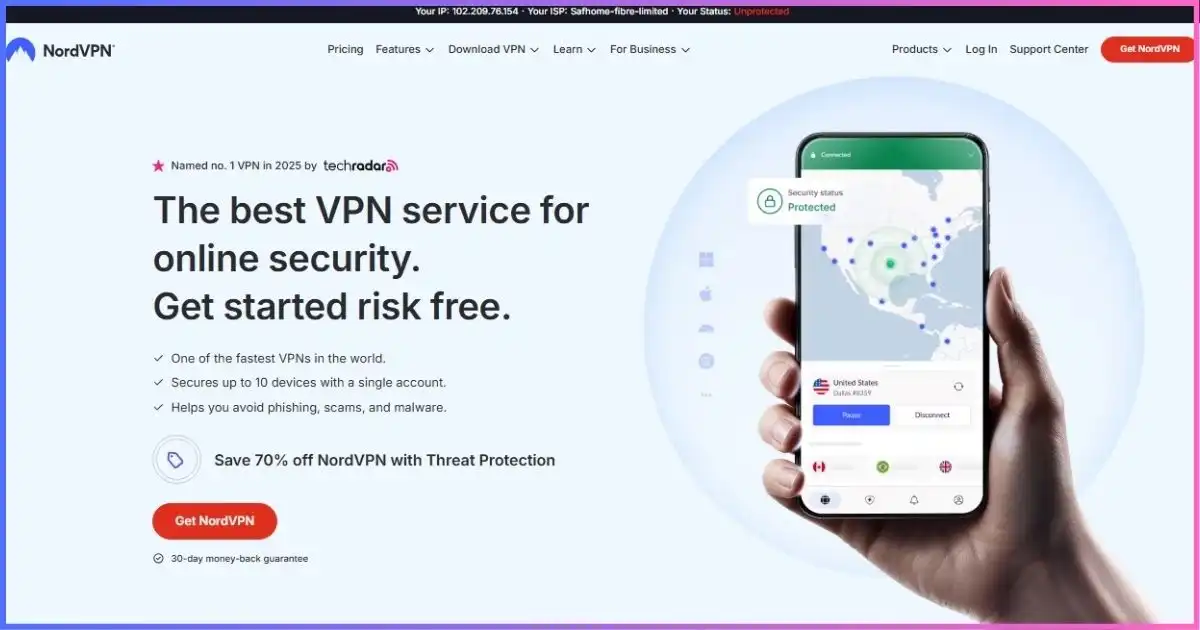
NordVPN is hard to fault. Its live directory showed 8,027 servers in 150 countries; NordLynx supplies a fast WireGuard-based protocol, while NordWhisper targets restrictive local networks. Specialty routes include Double VPN, Onion Over VPN, P2P, dedicated IP, and obfuscated servers.
The tool once called Threat Protection Pro is now Scam, phishing, and malware protection. On supported desktop apps and plans it scans downloads and blocks dangerous sites without an active tunnel; lighter DNS protection is available more broadly. Its no-logs claim has undergone repeated outside assurance engagements.
Pros
- Excellent coverage and apps
- Fast NordLynx protocol
- Many specialty routes
- Repeated privacy assessments
Cons
- Ten-device cap
- Advanced protection varies by plan/platform
- Intro price is paid upfront
Best for: privacy, streaming, torrenting, travel, and everyday use.
ExpressVPN — polished, fast, and easy to use
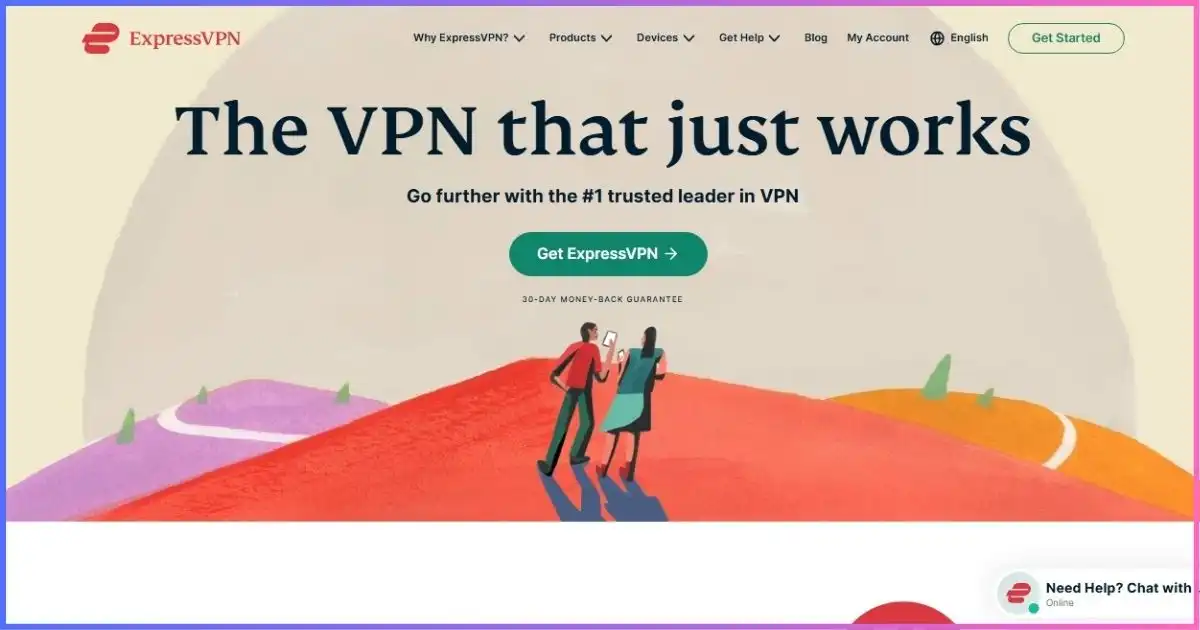
ExpressVPN is ideal when a VPN should disappear into the background. Lightway connects quickly, TrustedServer runs on RAM-only infrastructure, and apps cover mainstream computers, phones, browsers, TVs, and routers. Its network spans 113 countries, although no live total server count is published.
Basic, Advanced, and Pro cover 10, 12, and 14 devices. Higher tiers add tracker blocking, a password manager, dedicated IP, and identity extras, but some identity tools are region-limited.
Pros
- Excellent apps/router support
- Lightway with post-quantum protection
- 113 countries
- RAM-only infrastructure
Cons
- Higher renewal cost
- No public server total
- Some extras are US-only
Best for: beginners, travelers, routers, and a clean cross-platform experience.
Surfshark — unlimited connections without a stripped-down app
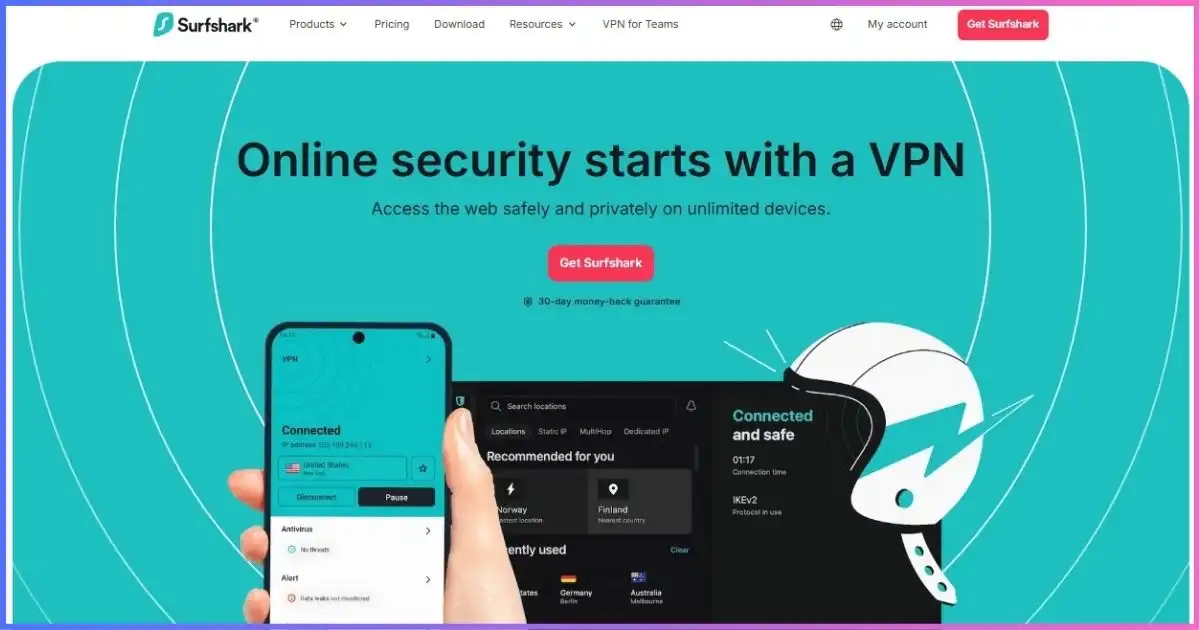
Surfshark is the household value leader. One paid subscription supports unlimited devices, while 4,500+ servers in 100 countries provide broad coverage. WireGuard, CleanWeb, Dynamic MultiHop, Rotating IP, Camouflage Mode, NoBorders, and Bypasser cover the mainstream toolkit.
The low equivalent requires an upfront long-term payment and renewal terms shown at checkout. Its free trial, unlike paid plans, is limited to three devices.
Pros
- Unlimited connections
- 100-country network
- Obfuscation and MultiHop
- Strong long-term value
Cons
- Long upfront commitment
- Renewal needs checking
- Higher tiers may be unnecessary
Best for: families and people with many phones, laptops, tablets, and TVs.
Proton VPN — open-source apps, Secure Core, and a real free plan
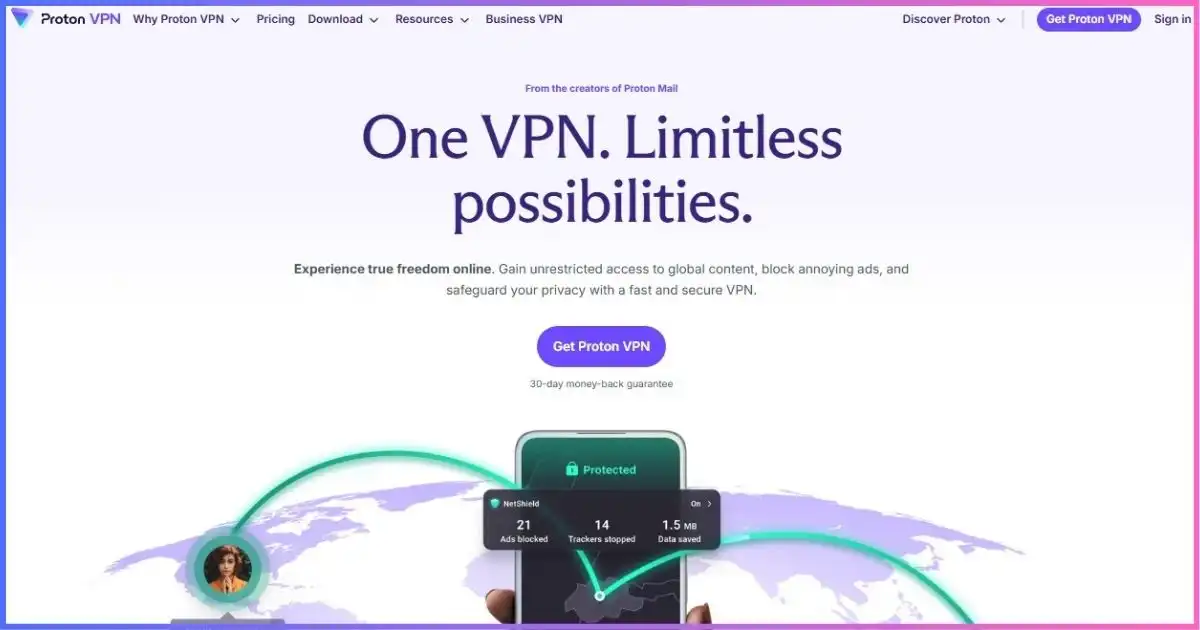
Proton VPN prioritizes transparency: open-source apps, outside no-logs assessments, and a Swiss base. Its live directory displayed 20,798 servers in 149 countries, including Secure Core routes through Proton-controlled infrastructure.
VPN Plus covers 10 devices and adds NetShield, streaming, P2P, Tor over VPN, Stealth, and Secure Core. Proton Free has unlimited data, one connection, and app-selected servers in 10 countries, but omits the full paid network and paid-only features.
Pros
- Open-source apps
- 20,000+ servers
- Secure Core and Stealth
- Best free tier here
Cons
- Secure Core adds latency
- One free-plan device
- Promos can vary by route
Best for: privacy-conscious users, Linux users, journalists, and safe free VPN use.
Want the lowest-cost pick? CometVPN is #1 here for its $1.89 provider-quoted rate, unlimited devices, and core VPN protections. NordVPN remains the stronger full-featured alternative.
Get CometVPN at the Lowest Listed Rate →Private Internet Access — advanced controls at a budget rate
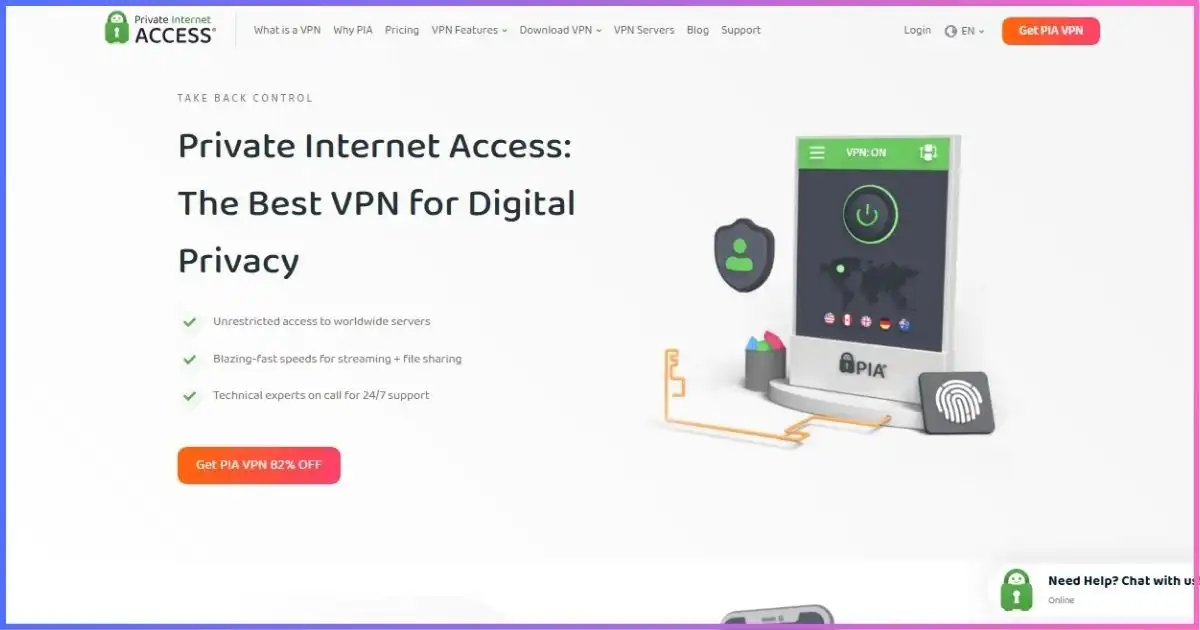
PIA lets users tune OpenVPN, choose WireGuard, use split tunneling and an advanced kill switch, block ads with MACE, and forward ports in supported regions. Its open-source apps connect to 91 countries and 154 locations, including all 50 US states. PIA no longer publishes a reliable total server count, so old “35,000 server” claims should not drive a purchase.
Pros
- Deep configuration
- Unlimited connections
- Open-source apps
- Every US state
Cons
- Very long commitment
- US jurisdiction
- No live server total
Best for: power users, Linux users, and P2P users who want adjustable settings.
CyberGhost — friendly apps and a generous refund window
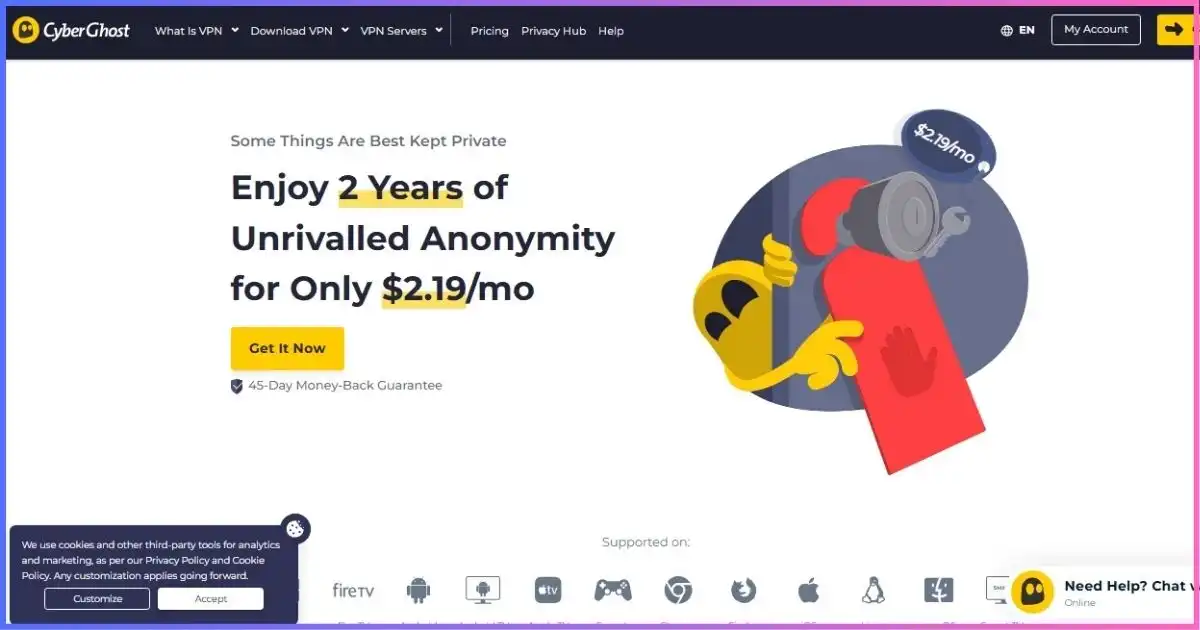
CyberGhost labels servers by task, removing guesswork. Its network spans 100 countries and 125 locations with streaming-, P2P-, and gaming-optimized choices. Plans include WireGuard, OpenVPN, IKEv2, a kill switch, leak protection, Content Blocker, Wi-Fi rules, and seven devices.
Plans of six months or longer get a 45-day guarantee; the monthly plan gets 14 days. It is approachable, but seven connections trail unlimited rivals and it is not our first choice for networks that aggressively block VPNs.
Pros
- Clear server labels
- 100 countries
- Long refund window
- Low intro rate
Cons
- Seven-device cap
- No leading stealth mode
- Monthly refund only 14 days
IPVanish — unlimited devices and granular locations
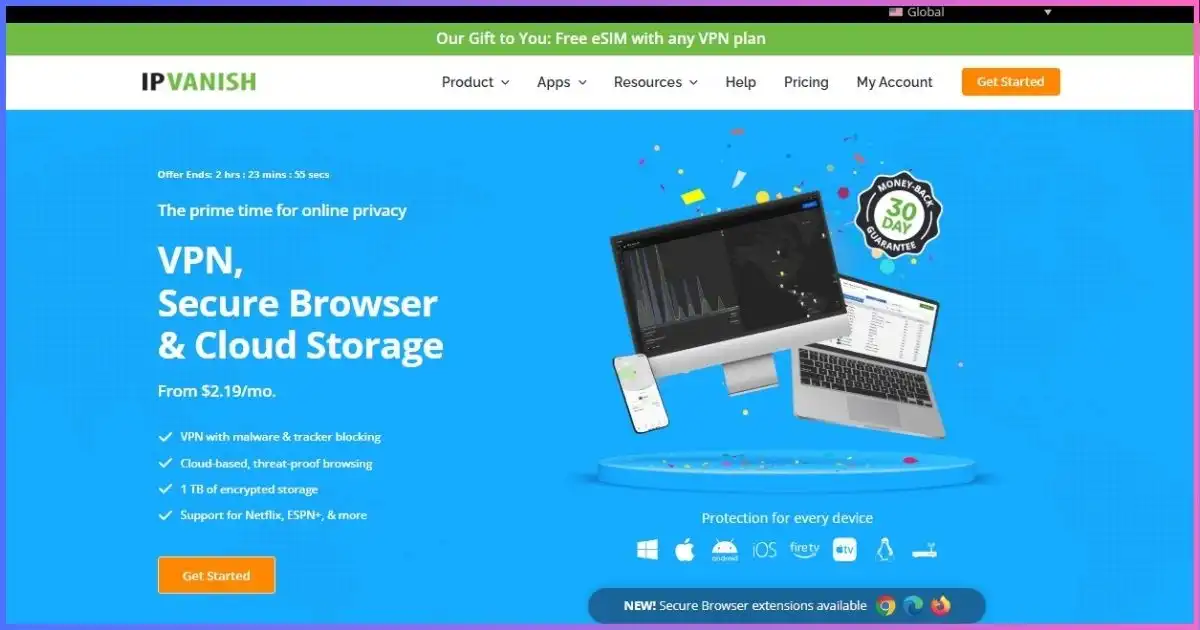
IPVanish combines unlimited connections with 3,400+ servers across 150 locations in 55 countries. The current directory distinguishes countries from its larger location count. Apps support WireGuard, OpenVPN, selected split tunneling, a kill switch, threat protection, and OpenVPN Scramble.
IPVanish is moving more infrastructure to RAM-only servers and permits detailed city/server selection. Its US jurisdiction will not fit every threat model, while Essential’s $2.19 intro renews at $89.99 annually.
Pros
- Unlimited connections
- 3,400+ servers
- Server-level choice
- Outside no-logs assessment
Cons
- Only 55 countries
- US jurisdiction
- Sharp renewal increase
SafeShell VPN — different apps, different regions
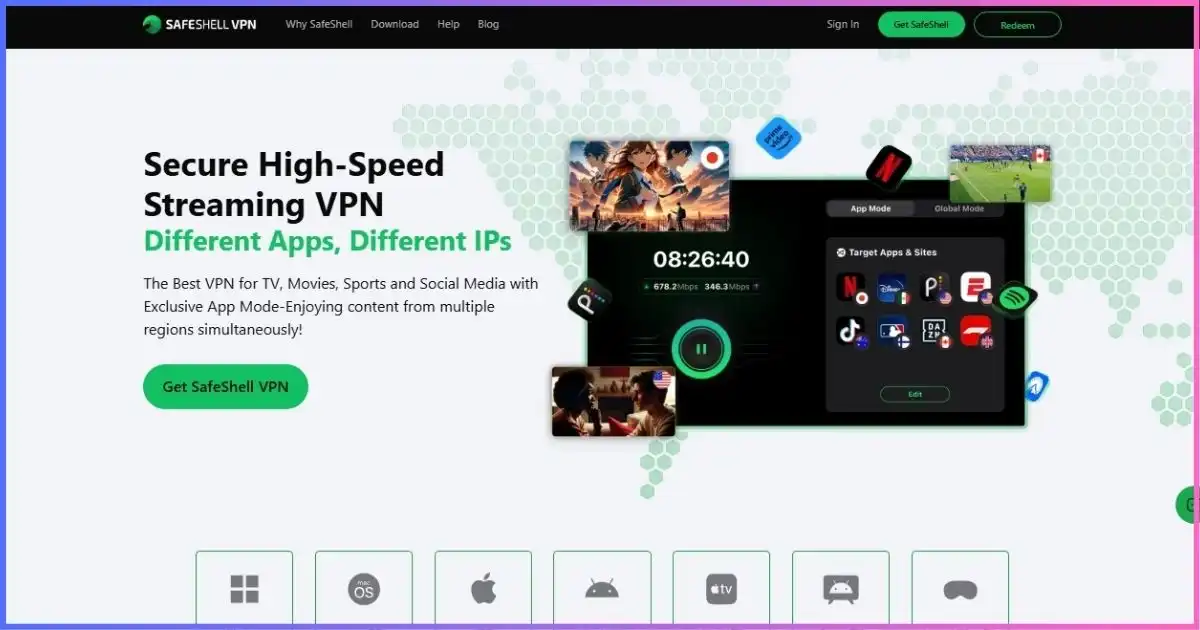
SafeShell is a specialist. App Mode can route different supported apps through different locations simultaneously. It advertises 10,000+ nodes in 40+ countries, ShellGuard, AES-256 encryption, P2P support, and apps for computers, phones, Apple TV, Google/Android TV, Fire TV, and Apple Vision Pro.
One account covers five devices and the refund window is seven days. The US App Store listed $79.99/year, but web and in-app offers can differ. Public third-party audit evidence is thinner than our top privacy picks, so we recommend SafeShell for streaming workflow, not a high-risk privacy threat model.
Pros
- App-by-app regions
- Strong TV support
- 10,000+ nodes
- Streaming-first interface
Cons
- Five-device limit
- Short refund window
- Limited audit evidence
Security toolkitVPN Features Compared
All nine encrypt traffic between your device and the VPN server. Meaningful differences are leak handling, advanced routes, outside verification, and platform coverage.
| Provider | Fast protocol | Multi-hop | Stealth | Open-source apps | Threat blocking |
|---|---|---|---|---|---|
| NordVPN | NordLynx | Double VPN | Obfuscated / NordWhisper | Selected components | Yes; plan varies |
| ExpressVPN | Lightway | No | Automatic | Lightway core | Yes; tier varies |
| Surfshark | WireGuard | Dynamic MultiHop | Camouflage / NoBorders | No | CleanWeb |
| Proton VPN | WireGuard | Secure Core | Stealth | Yes | NetShield |
| PIA | WireGuard | Via proxy | Shadowsocks | Yes | MACE |
| CyberGhost | WireGuard | No | No dedicated mode | No | Content Blocker |
| IPVanish | WireGuard | No | OpenVPN Scramble | No | Threat Protection |
| SafeShell | ShellGuard | App Mode* | Streaming bypass | No | Limited docs |
| CometVPN | WireGuard | No | Obfuscated servers | No | DNS protection |
*App Mode is per-app routing, not a two-server privacy hop. Every provider lists a kill switch, but behavior and platform support vary.
The real costVPN Pricing and Renewal Costs
VPN ads compress multi-year payments into monthly-looking numbers. You usually pay the full term today, free months may apply once, and renewal may switch to an annual cycle.
Lowest observed introductory equivalent
USD snapshot; long plans paid upfront
| Provider | Intro payment | Known renewal | Key caution |
|---|---|---|---|
| CometVPN | $45.36 / 24 paid months | Page says same term total | Trial auto-renews |
| NordVPN | $94.23 / 27 months | At checkout | Extra months promotional |
| ExpressVPN Basic | $83.72 / 28 months | $99.95/year | Higher after intro |
| Surfshark | $67.23 / 27 months | Annual; at checkout | Compare renewal |
| Proton VPN Plus | $71.76 / 24 months | Offer-dependent | Pricing may vary |
| PIA | $79 / 39 months | $79 / 3 years* | Longest commitment |
| CyberGhost | $51.74 / 26 months | $51.74/year* | Annual renewal |
| IPVanish | $52.56 / 24 months | $89.99/year | Large increase |
| SafeShell | $79.99/year* | Annual | App/web rates differ |
*Observed page/storefront terms; confirm on your checkout screen.
Match the toolBest VPN by Use Case
| Use case | Best choice | Why | Runner-up |
|---|---|---|---|
| Everyday value | CometVPN | Lowest listed rate, unlimited devices, and core protection | NordVPN |
| Streaming | ExpressVPN | Excellent TV/device support | SafeShell |
| Many devices | Surfshark | Unlimited + 100 countries | PIA |
| Privacy | Proton VPN | Open source + Secure Core | NordVPN |
| Gaming | NordVPN | Fast protocol + Meshnet | Surfshark |
| P2P | PIA | Controls + port forwarding | NordVPN |
| Beginners | CyberGhost | Labeled servers | ExpressVPN |
| Free VPN | Proton Free | No data cap | None here |
| Lowest entry rate | CometVPN | $1.89 quoted rate | CyberGhost |
Buying frameworkHow to Choose the Right VPN
- Define your threat model.Travel, streaming, remote work, and high-risk reporting require different controls.
- Check useful locations.One reliable nearby city can matter more than thousands of distant servers.
- Verify platform feature parity.Kill switch, split tunneling, and protocols vary across Windows, macOS, iOS, Android, Linux, and TVs.
- Calculate the first bill and renewal.Do not mistake a monthly equivalent for monthly billing.
- Prefer modern protocols and leak controls.Start with WireGuard, NordLynx, or Lightway; use stealth when needed.
- Test during the refund period.Try your ISP, devices, router, and services because performance is route-specific.
For more detail, read how to choose a VPN, how VPNs work, VPN protocols explained, how kill switches work, and DNS leak prevention.
No-cost optionsFree VPN vs Paid VPN
A free VPN is not automatically unsafe, but its business model matters. Proton VPN Free is our exception: no data cap and funding from paid subscriptions. It limits you to one device and app-selected servers in 10 countries; streaming, P2P, NetShield, Secure Core, and complete location control need a paid plan.
Unknown free apps may cap data, inject ads, collect excess data, or ship under-maintained software. Read are free VPNs safe? before installing one.
First-day checklistSet Up Your VPN Properly
- Download from the provider or official app store.Avoid clone downloads.
- Enable the system-wide kill switch.This stops accidental traffic when the tunnel fails.
- Start with a modern protocol.Use WireGuard, NordLynx, or Lightway; switch only when blocked.
- Auto-connect on untrusted Wi-Fi.Protect silent joins to hotel, café, and airport networks.
- Run DNS, IPv6, and WebRTC leak checks.Also force a network change to test recovery.
- Record refund and renewal dates.Set reminders before both deadlines.
The US FTC’s public Wi-Fi guidance notes that HTTPS makes ordinary hotspot browsing safer than it once was. A VPN still hides DNS and destination metadata from the local network and ISP, but cannot make a fraudulent HTTPS site trustworthy.
Honest caveatsWhat a VPN Cannot Do
- Stop phishing: it cannot make the recipient of your data legitimate.
- Remove existing malware: blocking tools are not a substitute for patched software or endpoint protection; see VPN vs antivirus.
- Prevent account tracking: logged-in services still know who you are.
- Erase cookies or browser fingerprints: an IP change is only one signal.
- Change law or contracts: local rules and platform terms still apply.
- Guarantee anonymity: the VPN becomes a trusted intermediary; compare Tor vs VPN.
How we rankedComparison Methodology
This article uses a value-first scoring model, giving affordability and device value enough weight to place CometVPN at #1. We also reviewed checkout terms, platform support, protocols, network transparency, privacy evidence, and usability. Scores are editorial judgments—not vendor claims or universal speed tests. Price and network data were captured September 18, 2026.
Value-first editorial scoring weights
- 20% Privacy/security
- 15% Speed/reliability
- 15% Network/access
- 10% Apps/usability
- 30% Price/device value
- 10% Transparency/support
We penalized unclear network totals, missing audit evidence, short refund periods, feature gaps, and prices that hide long commitments. Affiliate commission did not determine rank.
CISA’s remote-user guidance describes VPNs as secure communications across public or unprotected networks. That is the proper scope: a VPN protects a network path; it is one security control, not the whole program.
FAQsBest VPN Providers: Frequently Asked Questions
Which VPN provider is best overall?
Which VPN is fastest?
What is the best cheap VPN?
Which VPNs allow unlimited devices?
Is using a VPN legal?
Does a VPN make me anonymous?
Should I leave a VPN on?
Why do VPN prices change?
The Best VPN Provider, in One Paragraph
Choose CometVPN if low price is the priority: its $1.89 provider-quoted long-term rate, unlimited devices, WireGuard, kill switch, DNS leak protection, free obfuscation, and residential IP options make it the #1 value pick in this article. Its shorter track record and thinner public audit evidence remain important caveats. Choose NordVPN for the strongest full-featured package, ExpressVPN for simplicity, Surfshark for a more established unlimited-device service, or Proton VPN for privacy and the best free tier.
Affiliate disclosure: We may earn a commission if you buy through our links, at no extra cost to you. Rankings follow the methodology above, not commission rates. Prices, networks, streaming access, and features change; verify live terms.
Sources & Comparison Methodology
Research date: September 18, 2026. We checked provider pricing pages, server directories, device documentation, feature guides, refunds, and audit statements. Monthly equivalents retain their upfront context; virtual locations are not treated as physical hardware.
- NordVPN: live server directory, pricing, features, device limits, and audit disclosures.
- ExpressVPN: pricing/tier documentation, network, Lightway, TrustedServer, and device policy.
- Surfshark: pricing, 4,500+/100-country directory, unlimited devices, CleanWeb, MultiHop, and stealth documentation.
- Proton VPN: live 20,798/149-country directory, plans, open-source, Secure Core, NetShield, and Stealth pages.
- PIA: checkout, 91-country/154-location directory, unlimited devices, MACE, open-source, and protocol pages.
- CyberGhost: server directory, checkout, seven-device policy, optimized servers, and refund terms.
- IPVanish: current pricing/network disclosures, unlimited devices, RAM migration, and audit materials.
- SafeShell: homepage, pricing/features, refund page, and US App Store annual listing.
- CometVPN: official pricing, features, locations, trial, refund, devices, and residential-IP pages.
Performance is route- and time-specific. Test your finalists during their refund periods.