ExpressVPN vs Surfshark: Which VPN Is Better?
ExpressVPN vs Surfshark is a close contest between premium polish and household value. ExpressVPN offers wider country/location coverage, exceptionally simple apps, an open-source Lightway protocol and the strongest consumer router experience. Surfshark costs less, permits unlimited connections and supplies more granular privacy tools, including Dynamic MultiHop, Rotating IP, Bypasser, NoBorders and post-quantum WireGuard protection.
ExpressVPN wins narrowly; Surfshark is the better large-household value
Choose ExpressVPN for the easiest premium experience across computers, TVs and routers. Basic costs $83.72 for 28 months, supports ten devices and includes TrustedServer, Lightway and Lite Protection. Choose Surfshark if you want unlimited connections and more adjustable privacy tools for less: Starter costs $67.23 for 27 months, although its public page does not expose one stable dollar renewal price.
Table of Contents
- Quick comparison
- Pricing and refunds
- Privacy and audits
- Security and protocols
- Server networks
- Speed and reliability
- Apps and devices
- Split tunneling and routing
- Streaming and TVs
- Torrenting and P2P
- Gaming and routers
- Travel and censorship
- Support and usability
- Which should you choose?
- FAQs
- Final verdict
- Sources and methodology
At a glanceExpressVPN vs Surfshark: Quick Comparison
| Category | ExpressVPN Basic | Surfshark Starter | Winner |
|---|---|---|---|
| Overall score | 9.2/10 | 9.1/10 | ExpressVPN |
| Longest introductory term* | $83.72 / 28 months ($2.99/mo) | $67.23 / 27 months ($2.49/mo) | Surfshark |
| Renewal disclosure | $99.95/year published | Annual at applicable price; no stable public USD amount | ExpressVPN clarity |
| Refund/trial | 30-day eligible new-user refund | 30-day eligible refund + selected 7-day trial | Surfshark |
| Simultaneous devices | 10 | Unlimited paid plan | Surfshark |
| Network | 113 countries / 214 locations; no current server count | 4,500+ servers / 100 countries | Different strengths |
| Protocols | Lightway, WireGuard, OpenVPN, selected IKEv2 | WireGuard, OpenVPN, IKEv2; Dausos beta | Different strengths |
| RAM-only | TrustedServer across network | 100% RAM-only claim | Tie |
| Privacy evidence | 2025 KPMG plus 23+ audit portfolio | 2023/2025 Deloitte plus infrastructure reviews | Tie |
| Advanced privacy tools | Router groups, automatic obfuscation, Dedicated IP add-on | Dynamic MultiHop, Rotating IP, NoBorders, FastTrack | Surfshark |
| VPN-side port forwarding | No | No | Tie |
*USD pricing checked September 19, 2026. Long plans are prepaid; taxes, currencies, bonus months and checkout routes can change. Surfshark’s eligible trial is capped at three devices before the paid unlimited plan begins.
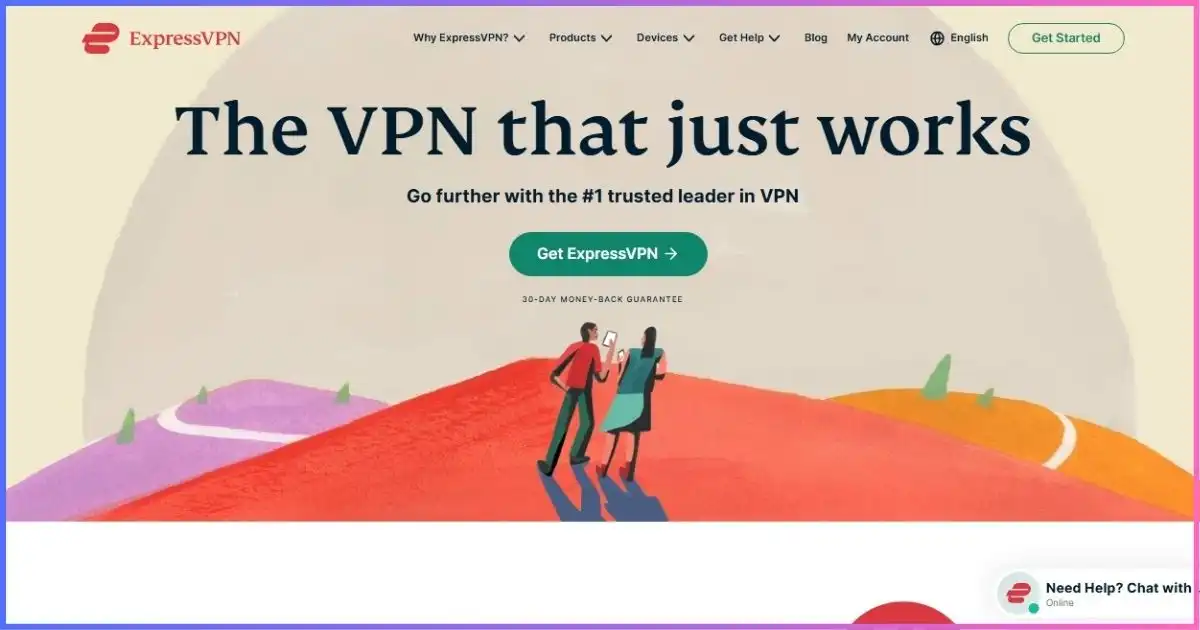
ExpressVPN: polished premium use
TrustedServer, Lightway, broad location choice and the strongest purpose-built home-router workflow.
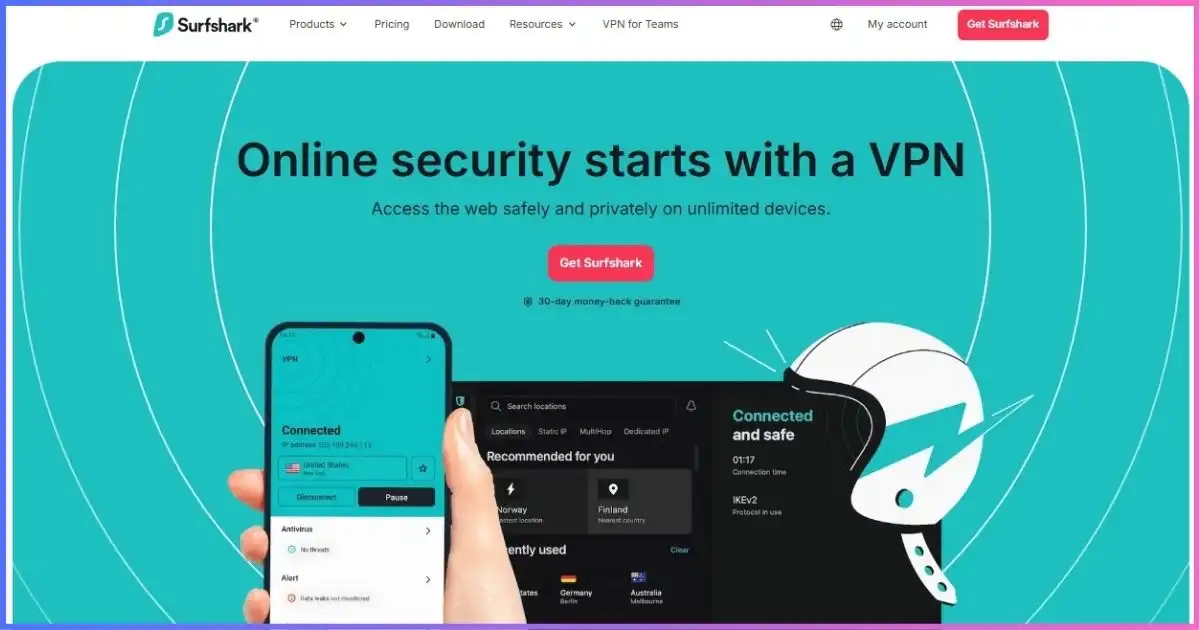
Surfshark: flexible household value
Unlimited connections, rich privacy controls, a large RAM-only network and lower first-term cost.
Round 1 · Surfshark winsPricing, Renewals, Trials and Refunds
Surfshark Starter costs $67.23 for the first 27 months, equivalent to $2.49 per month. ExpressVPN Basic costs $83.72 for the first 28 months, equivalent to $2.99. Surfshark is $16.49 cheaper initially; Express includes one additional bonus month.
Renewal transparency complicates the long-term comparison. ExpressVPN publishes $99.95 per year after its first term. Surfshark says the two-year subscription renews annually at the applicable price but its public page did not expose one stable USD renewal amount. Record the displayed renewal at checkout rather than assuming the $2.49 promotional rate continues.
| Billing comparison | ExpressVPN Basic | Surfshark Starter | Takeaway |
|---|---|---|---|
| Longest offer | $83.72 / 28 months | $67.23 / 27 months | Surfshark saves $16.49 |
| Equivalent rate | $2.99/month | $2.49/month | Both are prepaid |
| 12-month reference | Market/checkout-dependent | $3.39/month equivalent | Verify total and tax |
| Monthly reference | Market/checkout-dependent | $16.45 | Long terms offer much lower rates |
| Renewal | $99.95/year disclosed | Applicable annual price | Express is clearer |
| Refund/trial | 30 days; no core trial highlighted | 30 days + eligible 7-day trial | Channel and add-on exclusions apply |
First charge and included months
Surfshark is cheaper; ExpressVPN includes one more first-term month.
first charge
first charge
first term
first term
Compare core plans. Express Advanced/Pro and Surfshark One/One+ add security, identity, password, monitoring, storage, email, eSIM, AI or data-removal products without changing the ordinary VPN network. Surfshark’s seven-day trial is available only through eligible signup routes and allows three devices until conversion.
Round 2 · TiePrivacy, Ownership and Independent Audits
ExpressVPN operates from the British Virgin Islands and is owned by Kape Technologies. Surfshark B.V. is based in the Netherlands and is part of Nord Security. Jurisdiction and ownership are context, not shortcuts: the meaningful questions are what data exists, how servers work, what independent assessors inspected and what providers could produce when legally compelled.
ExpressVPN’s 2025 KPMG ISAE (UK) 3000 Type 1 engagement examined TrustedServer and privacy controls as of February 28, 2025 and reported no identified issues with the assessed safeguards against activity logging. Its Trust Center lists more than 23 published assessments across privacy, servers, Lightway, apps, extensions and Aircove routers.
Surfshark completed Deloitte no-logs assurance engagements in 2023 and 2025. The latter covered standard, static and multiport server types plus configuration and deployment processes. SecuRing assessed infrastructure in 2025, while Cure53 reviewed infrastructure and the limited Dausos protocol in 2026. The full 2025 Deloitte PDF is publicly downloadable.
Surfshark’s August 2026 policy says it does not store browsing history, traffic, bandwidth, visited IPs or connection timestamps. Servers temporarily process a user ID/source IP and connection time, deleting them within 15 minutes after termination. Its April 2026 transparency example says a binding warrant yielded account-existence and payment information, not online activity. Express’s H1 2026 disclosure similarly said retained VPN activity/connection records were unavailable.
Assurance under ISAE 3000 (Revised) is point-in-time evidence, not a permanent guarantee. See our VPN logging policies guide for how to interpret scope.
Round 3 · Surfshark wins narrowlySecurity, Protocols and Privacy Controls
ExpressVPN’s open-source Lightway core was rewritten in Rust and includes hybrid ML-KEM post-quantum protection. Express also offers post-quantum WireGuard on iOS, Android and Windows, plus OpenVPN and selected IKEv2. Its Internet Kill Switch, private DNS, automatic Lightway obfuscation and Lite Protection cover the essential security stack.
Surfshark offers WireGuard, OpenVPN and IKEv2, with a post-quantum layer on WireGuard in supported apps. Manual WireGuard configurations do not receive that layer. Dausos is a proprietary, Cure53-assessed beta limited to the macOS App Store build at the research cutoff, so it should not be treated as cross-platform production parity.
Surfshark wins sheer control depth: Dynamic MultiHop, Rotating IP, NoBorders, OpenVPN Camouflage, Everlink self-healing, FastTrack route evaluation, Multi IP and Alternative ID. ExpressVPN is easier because Lightway handles obfuscation automatically and its fewer controls require less interaction.
Post-quantum protection strengthens VPN key exchange; it does not make every application or destination quantum-safe. NIST’s finalized post-quantum standards provide context. Our VPN protocol guide explains the conventional options.
Round 4 · ExpressVPN wins narrowlyServer Coverage, Locations and Infrastructure
ExpressVPN publishes 113 countries and 214 app-selectable locations, including every US state, but no current global server count. Do not repeat the stale “3,000+” figure. Most locations place physical servers and registered IPs in the selected country, while virtual locations are labeled.
Surfshark publishes 4,500+ servers across 100 countries. Every server is described as using at least a 10-Gbps port, with selected high-traffic infrastructure up to 100 Gbps. The entire network is described as RAM-only. Express TrustedServer is also RAM-only and reloads a controlled signed software image on restart.
Surfshark wins known fleet size and disclosed maximum port capacity; Express wins usable geographic breadth. Server counts and port speeds do not independently predict the best route for one user.
Round 5 · TieSpeed, Lightway Turbo, FastTrack and Reliability
Lightway and WireGuard are both low-overhead choices. Lightway reconnects quickly as a device changes networks. Surfshark’s WireGuard implementation combines broad app support with Everlink, designed to repair a VPN path without exposing the user’s IP, and FastTrack, which evaluates multi-server routes in real time.
Lightway Turbo on Windows can establish multiple Lightway UDP tunnels to improve throughput under supported conditions. Its packet-filter driver can hide the normal TUN adapter; torrent users who bind to the VPN interface should disable Turbo. Surfshark’s 100-Gbps selected infrastructure and ExpressVPN’s selected 40-Gbps capacity are shared ceilings—not individual speeds.
Test three or more runs on the same device, ISP, endpoints and time window. Compare median download, upload, latency, reconnect behavior and stability after Wi-Fi/mobile changes. Provider multipliers or isolated results should not be presented as universal.
Round 6 · Surfshark winsApps, Device Limits and Router Support
Surfshark allows unlimited simultaneous paid-plan connections; ExpressVPN Basic allows ten. Surfshark’s eligible trial is limited to three devices, but that cap disappears after conversion. Both offer apps for Windows, macOS, Linux, Android, iOS, Apple TV, Android TV and Fire TV, plus browser options.
ExpressVPN’s advantage is router quality. Its own firmware and Aircove hardware expose device groups and location control in a friendly interface. Surfshark works on compatible routers through manual configuration and can protect unlimited native devices without making router setup necessary for most homes.
Read our standalone ExpressVPN review and Surfshark review for platform-by-platform detail.
Round 7 · TieSplit Tunneling, MultiHop and IP Rotation
ExpressVPN documents application plus IP/subnet routing on Windows, macOS and supported Linux systems, Android support, single-IPv4 exclusions on iOS and location/device groups on routers. DNS remains through ExpressVPN while connected.
Surfshark Bypasser is available on Windows, macOS, Android, iOS and browser extensions, with platform-specific choices to route traffic outside or through the VPN. Dynamic MultiHop lets users select entry and exit locations, while Rotating IP changes the public address every five to ten minutes without dropping the tunnel. These features do not work in every combination with Dedicated IP, static routes or one another.
Round 8 · ExpressVPN winsStreaming, Smart TVs and Smart DNS
ExpressVPN wins the living-room round through 214 locations, polished Apple TV and Fire TV/Vega OS apps, Aircove/router location groups and MediaStreamer for selected legacy devices. MediaStreamer is unencrypted DNS, not a VPN, and offers limited location choice.
Surfshark has native Apple TV, Android TV and Fire TV apps, plus unlimited household connections and Bypasser. However, Surfshark discontinued SmartDNS on February 2, 2026. Users with an old SmartDNS setup should restore automatic DNS or the television may lose connectivity. Surfshark Public DNS is not a streaming replacement and does not create a VPN tunnel.
No provider guarantees permanent access to every catalog. Test the exact account, device and region during the refund window. Our best streaming VPN guide compares more options.
Round 9 · TieTorrenting, P2P and Port Forwarding
Both support P2P, modern protocols, automatic connection options and kill switches. Surfshark’s unlimited connections suit homes with several download devices, while ExpressVPN’s Lightway and consistent general-server policy simplify endpoint choice.
Neither provides VPN-side inbound port forwarding. Express router forwarding outside the VPN tunnel is not protected inbound forwarding. Surfshark users must ensure Bypasser does not accidentally exclude the torrent client; Express Lightway Turbo users who bind to an adapter should disable Turbo.
Use authorized files, verify the visible IP and enable failure protection. See our torrenting VPN guide if inbound forwarding is important.
Round 10 · TieGaming, Consoles and Route Optimization
ExpressVPN combines Lightway, 214 locations, Windows Turbo and the easiest router/Aircove setup for consoles. Surfshark counters with WireGuard, 4,500+ servers, FastTrack route selection, Everlink tunnel repair and unlimited gaming devices.
A VPN normally adds latency. It can improve a route only when it bypasses poor ISP peering; neither provider can guarantee open NAT, repair congested Wi-Fi or protect the game publisher’s infrastructure from an attack. Port forwarding is unavailable in both VPN tunnels.
Our gaming VPN guide explains router and NAT tradeoffs.
Round 11 · ExpressVPN wins narrowlyTravel, Public Wi-Fi and Restrictive Networks
ExpressVPN covers 113 countries, and Lightway’s automatic obfuscation behavior reduces the need to locate a specialty setting on filtered Wi-Fi. Fast handoffs help when moving between airport, hotel and mobile networks. Ten device slots are enough for most travelers.
Surfshark covers 100 countries and provides NoBorders plus OpenVPN Camouflage. Dausos may help on strict networks but remained beta and limited to the macOS App Store build at the cutoff, so it should not be scored as a universal fallback. Surfshark’s unlimited devices are excellent for families.
Neither guarantees operation against every national firewall. Install and sign in before departure, save alternate connection methods and check local law. See our travel VPN guide and restrictive-country VPN guide.
Round 12 · ExpressVPN wins narrowlyCustomer Support and Everyday Usability
Both offer 24/7 live chat, searchable documentation and polished mainstream apps. Surfshark exposes more switches and combinations, which power users will appreciate. Unlimited connections also remove household device management.
ExpressVPN is more consistent for beginners. Automatic protocol selection, an uncluttered server workflow and purpose-built router software reduce setup and troubleshooting. Its published renewal figure also makes long-term budgeting easier.
Decision guideShould You Choose ExpressVPN or Surfshark?
Strength profile
- ExpressVPN: premium consistency and reach.
- Surfshark: exceptional household value and controls.
- Scores describe comparative fit, not measured Mbps.
Choose ExpressVPN if you…
- Want the easiest premium VPN
- Need the best consumer router setup
- Prioritize TV and legacy-device flexibility
- Value 113-country/214-location reach
- Want extensive published audit coverage
- Prefer simple automatic obfuscation
Choose Surfshark if you…
- Want the lower introductory price
- Need unlimited simultaneous devices
- Use Dynamic MultiHop or Rotating IP
- Want broader mobile/browser Bypasser
- Prefer manual censorship controls
- Need maximum large-household value
Round outcome
ExpressVPN wins 4 rounds, Surfshark wins 3, and 5 are ties. The large tie share reflects two excellent but differently optimized services.
Round-by-round scorecard
ExpressVPN wins by a fraction; Surfshark offers better household value
ExpressVPN earns 9.2/10. Its 113-country/214-location map, extensive independent assessment portfolio, open-source Lightway, TrustedServer, automatic obfuscation and best-in-class router/TV workflow make it the slightly stronger all-purpose service.
Surfshark earns 9.1/10. It costs $16.49 less initially, allows unlimited connections and offers deeper privacy-routing controls. Choose Surfshark when household scale and customization matter more than ExpressVPN’s router polish, wider location reach and renewal clarity.
FAQsExpressVPN vs Surfshark FAQs
Is ExpressVPN better than Surfshark?
Which is cheaper, ExpressVPN or Surfshark?
Which is faster?
Which is better for streaming?
Which allows more devices?
Does either support port forwarding?
Which has better privacy?
Which is better for restrictive networks?
Sources & comparison methodology
Research cutoff: September 19, 2026. Prices, promotions, server totals and platform features can change.
- ExpressVPN official pricing/renewal, plan comparison and new-user guarantee.
- ExpressVPN server-location material: 113 countries, 214 locations and physical/virtual labels.
- ExpressVPN Trust Center, 2025 KPMG TrustedServer/privacy work and current audit library.
- ExpressVPN Lightway, post-quantum WireGuard, Turbo, kill switch, split routing, TV, router/Aircove, MediaStreamer and P2P documentation.
- Surfshark official pricing and September 2026 plan guide, subscription/refund/trial documentation and device terms.
- Surfshark Trust Center, 2023/2025 Deloitte no-logs materials, 2025/2026 infrastructure assessments, privacy policy and transparency reporting.
- Surfshark WireGuard/Dausos, Bypasser, Dynamic MultiHop, Rotating IP, NoBorders/Camouflage, Everlink/FastTrack, TV and SmartDNS-discontinuation documentation.
- Contextual standards: IAASB ISAE 3000 (Revised) and NIST’s finalized post-quantum cryptography standards.
Scoring method: We compared ExpressVPN Basic with Surfshark Starter and weighted current price/value, refund/trial terms, privacy evidence, protocols/security depth, network reach, speed-oriented reliability, device/app/router support, split routing, streaming, P2P, gaming, travel and support. We excluded unrelated higher-tier bundle benefits and did not invent universal speed or streaming-success percentages.
Disclosure: This article contains affiliate links. We may earn a commission if you buy through them, at no additional cost to you. That does not alter the comparison or verdict. A VPN protects traffic only between your device and its VPN server; it does not legalize infringement, eliminate phishing or replace device and account security.