ExpressVPN Review: Premium Simplicity, Powerful Privacy, and Higher Renewal Costs
This ExpressVPN review finds a polished premium VPN that remains easiest to recommend to travelers, households with mixed devices, and anyone who values reliable apps over endless configuration. Its Lightway protocol is fast, open source, and post-quantum protected; TrustedServer runs the fleet from RAM; apps now cover everything from iPhone and Linux to Apple TV, Fire TV, routers, and browsers; and the network has expanded to 214 selectable locations in 113 countries.
The service has also become more complicated commercially. ExpressVPN now sells Basic, Advanced, and Express Pro tiers, bundling private email relay, password management, identity protection, eSIM data, dedicated IP, and private AI features around the same core VPN. Introductory prices are competitive, but annual renewals jump sharply. Our conclusion: ExpressVPN is excellent, but most buyers should resist the bundle upsell and choose Basic unless they can name the higher-tier extras they will use.
Our verdict in 30 seconds
ExpressVPN is the best premium VPN for simplicity, travel, routers, and TV devices. It combines excellent protocol engineering, broad geographic reach, clear virtual-location labels, audited RAM-only infrastructure, and unusually consistent app design. NordVPN offers more specialist tools, Proton VPN is more transparent and has a real free tier, and Surfshark covers unlimited devices for less. ExpressVPN wins when friction matters most.
Table of Contents
At a glanceExpressVPN Review Snapshot
| Category | What ExpressVPN offers | Our assessment |
|---|---|---|
| Jurisdiction | British Virgin Islands; owned by Kape Technologies | Privacy-friendly operating jurisdiction; ownership deserves disclosure, not automatic dismissal |
| Network | 113 countries, 214 selectable locations; total server count undisclosed | Excellent geographic reach and honest virtual-location labeling |
| Plans | Basic, Advanced, Express Pro | Same core VPN; higher tiers add devices and bundle products |
| Devices | 10 / 12 / 14 simultaneous connections by tier | Generous, but not unlimited |
| Protocols | Lightway UDP/TCP, WireGuard, OpenVPN UDP/TCP, IKEv2 where supported | Modern, broad, and post-quantum capable; availability differs by platform |
| Infrastructure | TrustedServer RAM-only design; 10 and selected 40 Gbps servers | Strong operational security with repeated external assessment |
| Refund | 30 days for eligible first-time users | Competitive, with channel and eligibility terms |
| Best for | Travel, TV devices, routers, beginners, mixed-platform homes | The easiest premium VPN to deploy broadly |
ExpressVPN category scores
Editorial scores reflect current documentation, privacy evidence, feature depth, app consistency, pricing, and limitations.
Costs explainedExpressVPN Pricing: Basic vs Advanced vs Express Pro
All three tiers use the same VPN network, Lightway protocol, TrustedServer infrastructure, post-quantum protection, and apps. Paying more does not unlock a faster class of VPN server. The meaningful VPN differences are connection limits, tracker blocking, and dedicated IP inclusion; most other upgrades are separate privacy and identity products.
| Feature | Basic | Advanced | Express Pro |
|---|---|---|---|
| First 28 months | $83.72 | $111.72 | $167.72 |
| Annual renewal* | $99.95 | $119.95 | $199.95 |
| VPN devices | 10 | 12 | 14 |
| Protection | Ads, malicious sites, adult sites | Adds tracker blocking | Same Advanced Protection |
| Dedicated IP | Paid add-on | Paid add-on | Included |
| ExpressMailGuard | 10 MB/mo; 10 shared aliases | 100 MB/mo; 50 shared aliases; 1 custom domain | Unlimited relay/shared aliases; up to 20 custom domains |
| ExpressKeys | — | Included | Included with larger file storage |
| Identity Defender | — | 5 ID alerts, data removal, eligible insurance | 11 alerts, expanded monitoring, higher eligible insurance |
| Travel eSIM | — | 3 GB / 3 days | 3 GB / 5 days |
| ExpressAI | — | — | 500 credits/day, 7 models, web search, 2 GB storage |
*Renewal rates observed September 18, 2026 and subject to change. Tax may apply. Identity insurance, monitoring, eSIM, and other bundled benefits have geographic and eligibility restrictions.
Which ExpressVPN plan is best?
Basic is best for most people. Ten devices already cover a typical household, and it includes the complete VPN plus core domain blocking. Advanced makes sense if you will actually replace another password manager, use its private email relay, or qualify for the identity tools. Pro is defensible if a dedicated IP and ExpressAI are already on your shopping list; buying it merely for two extra VPN slots is poor value.
The 30-day guarantee applies to eligible first-time users. Purchases through app stores can follow the store’s rules, and canceling auto-renewal is separate from asking for a refund.
First-term cost vs annual renewal
The columns compare the upfront 28-month charge with the listed one-year renewal. A shorter renewal term can still cost more.
first term
renewal
first term
renewal
first term
renewal
Trust and evidencePrivacy, No-Logs Evidence, and Kape Ownership
ExpressVPN is operated by Express Technologies Ltd. in the British Virgin Islands and has been owned by Kape Technologies since 2021. The BVI is outside the 5/9/14 Eyes intelligence alliances and does not impose a broad VPN activity-retention mandate. Jurisdiction is helpful context, but technical design and actual retained data matter more.
ExpressVPN says it does not retain browsing history, traffic destinations, data content, DNS queries, connection timestamps, session duration, or the VPN IP assigned to a user. TrustedServer supports that claim by booting a consistent signed software image into RAM rather than using ordinary persistent server disks. A reboot clears the runtime state and restores the approved stack.
The detailed KPMG assurance report is publicly accessible after its use terms. ExpressVPN’s H1 2026 transparency report disclosed 1,361,382 DMCA notices and three warrants, while stating it had no retained VPN activity or connection records to produce.
Does Kape ownership change our verdict?
Kape’s earlier corporate history in ad-tech has been controversial, and it now owns several VPN brands. That concentration deserves scrutiny. We weigh the current privacy policy, jurisdiction, audit reports, open-source Lightway code, infrastructure design, and transparency reporting more heavily than guilt by association. ExpressVPN’s present evidence is strong, but privacy-sensitive buyers who prefer organizational independence may still feel more comfortable with Proton VPN.
No audit is a lifetime guarantee. It covers a defined system and date, and a transparency report is a provider disclosure rather than independent verification. Learn how to evaluate the difference in our guide to VPN logging policies.
Technical protectionSecurity Features and Protocols
ExpressVPN combines secure transport protocols, private encrypted DNS on every VPN server, leak protection, automatic obfuscation on supported routes, and an Internet Kill Switch. The apps default to Automatic mode, which generally favors Lightway while adapting to the network.
Lightway
ExpressVPN’s open-source default protocol, available over UDP and TCP. It was rewritten in Rust, reconnects quickly across network changes, and incorporates post-quantum protection.
WireGuard
A separate post-quantum implementation with ephemeral credentials, dynamic IPs, and short-lived authentication. Current support covers Windows, Android, and iOS; macOS was still forthcoming.
OpenVPN / IKEv2
OpenVPN UDP/TCP remains available where compatibility demands it. IKEv2 is limited to selected iOS, macOS, Windows, and router environments. Availability varies by app and location.
You can inspect the Lightway core source code on GitHub. Open source makes review possible; it does not independently prove what every production server is running, which is why TrustedServer audits and reproducible deployment controls remain important.
Post-quantum protection explained
ExpressVPN’s post-quantum layer is designed to protect tunnel key establishment against “harvest now, decrypt later” attacks. It does not make every website, app, account, or destination post-quantum secure. Your traffic still leaves the VPN server and relies on destination encryption such as HTTPS. The feature is meaningful, but the scope should not be exaggerated.
Internet Kill Switch
The Internet Kill Switch—formerly most commonly called Network Lock—blocks IPv4, IPv6, and DNS traffic outside the tunnel when a connection fails. It is enabled by default on Windows, macOS, and Linux and permanently active on ExpressVPN routers. Android provides an in-app mode plus stricter system-level blocking. iOS offers Standard and Advanced modes; the Advanced option still allows essential Apple DNS requests.
Keep it enabled for public Wi-Fi, file sharing, and sensitive work. A kill switch cannot protect apps deliberately excluded with split tunneling or traffic sent before the VPN starts. See how VPN kill switches work for the failure modes worth testing.
Automatic obfuscation
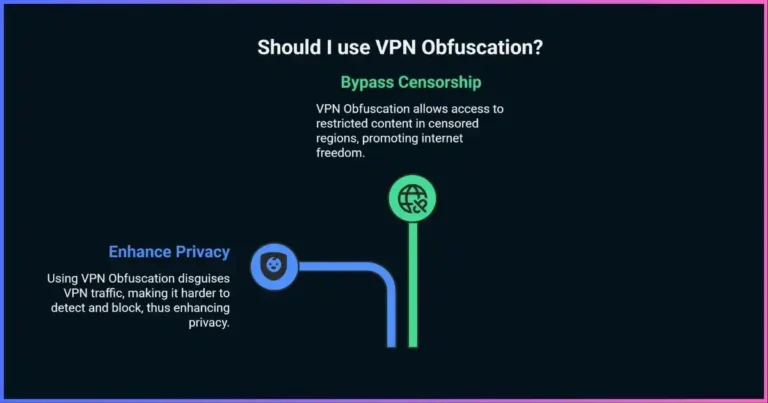
ExpressVPN automatically applies obfuscation where supported instead of requiring a separate “stealth server” category. That simplicity is valuable for hotel networks and restrictive environments, but no provider can guarantee access in every country or network. Install and sign in before traveling, keep Automatic/Lightway TCP as fallback options, and check local law. Our VPN obfuscation guide explains what this hides—and what it does not.
Global reachServer Network: 113 Countries and 214 Locations
ExpressVPN lists 214 app-selectable locations across 113 countries. It does not publish a dependable current total server count, so older “3,000+ servers” claims should not be treated as current fact. Country and city coverage, capacity, routing, and congestion are more useful than a fleet number that providers count differently.
The network uses 10 Gbps infrastructure with selected 40 Gbps servers. ExpressVPN clearly labels virtual locations: the IP appears in the selected country while the physical server is elsewhere, usually nearby. Most listed locations keep physical hardware and registered IP in the same country. Virtual routing is not inherently unsafe, but buyers should know where hardware actually sits when jurisdiction or latency matters.
Country coverage among major VPNs
Provider-published figures checked September 18, 2026. Countries and server totals are separate metrics.
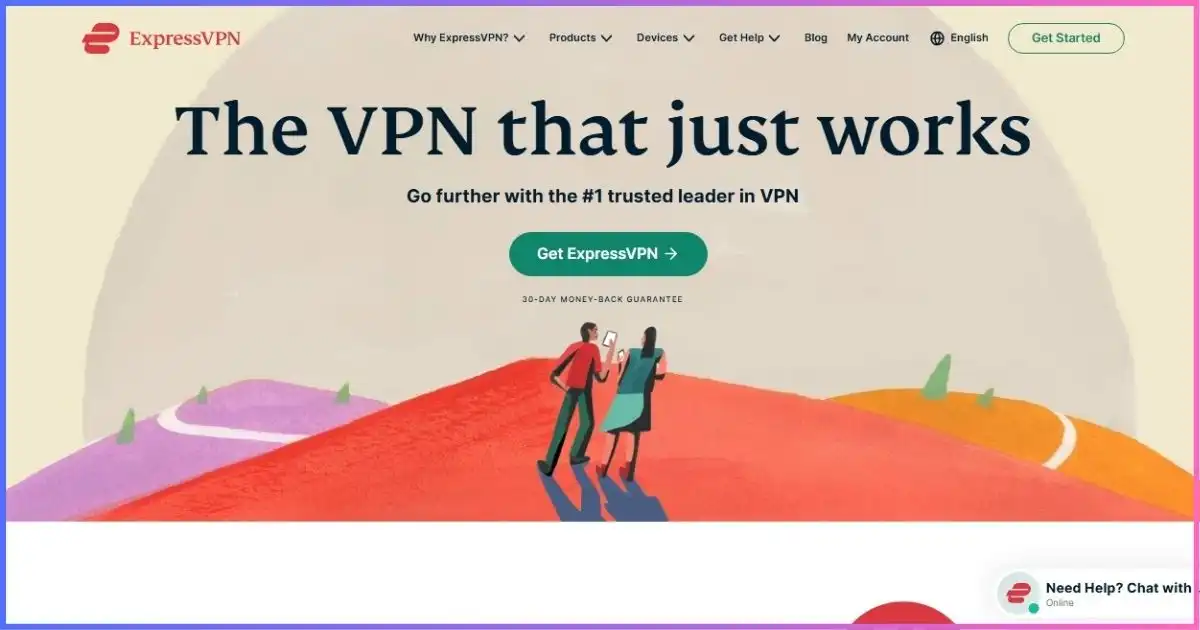
ExpressVPN emphasizes a consistent interface across computers, phones, TVs, browsers, and routers.
PerformanceSpeed, Reliability, and Lightway Turbo
ExpressVPN is built for low-friction performance. Lightway establishes connections quickly, maintains them while moving between Wi-Fi and mobile data, and uses Smart Location to choose a nearby route based on distance and load. The expanded location map also reduces the odds of routing to a distant country merely to find capacity.
We do not publish one universal “speed loss” percentage. VPN throughput changes with the baseline connection, device CPU, Wi-Fi, server load, protocol, route, ISP peering, and time. Test a nearby Lightway UDP server, a second nearby city, and the long-distance location you actually need. That reveals far more than a single lab number.
What Lightway Turbo changes
Lightway Turbo uses multiple tunnels in parallel to increase available throughput. ExpressVPN advertises internal improvements of up to 330%, but that maximum is conditional and should not be read as a normal result. Turbo is currently documented for Lightway UDP on Windows and uses a packet-filter driver instead of a visible TUN/TAP adapter.
| Activity | Start with | Fallback | Reason |
|---|---|---|---|
| Daily browsing | Automatic / Lightway UDP | WireGuard | Fast connection and seamless network switching |
| Streaming | Lightway UDP; nearby server in needed country | Automatic, second city | Low latency and broad app compatibility |
| Restrictive network | Automatic | Lightway TCP or OpenVPN TCP | Obfuscation and TCP can survive more interference |
| Torrenting with binding | Lightway UDP, Turbo off | OpenVPN UDP | Exposes a conventional bindable interface |
| Gaming | Closest server, Lightway UDP | WireGuard where available | Minimizes extra distance and overhead |
| Legacy network | OpenVPN TCP/UDP | IKEv2 where supported | Compatibility when newer protocols fail |
TV and entertainmentStreaming, Apple TV, Fire TV, and MediaStreamer
Streaming is one of ExpressVPN’s strongest use cases because it supports the devices around the television—not just phones and laptops. Native apps cover Apple TV with tvOS 17+, Android/Google TV, Fire TV, and newer Amazon Vega OS devices. The Apple TV app includes favorite locations, protocol choice, and a TV-side speed test.
Older smart TVs, consoles, and devices without a VPN client can use an ExpressVPN router or MediaStreamer. The router encrypts and changes location for connected devices. MediaStreamer is only a DNS service: it does not encrypt traffic, hide the public IP like a VPN, or provide ordinary country selection. It is a compatibility convenience, not a privacy substitute.
Streaming access changes with the service, country, account, device, DNS behavior, server IP, and time. Use the native VPN app where possible, connect to a server in the catalog’s country, and test the exact service during the refund period. Review broader options in our best VPNs for streaming guide.
ExpressVPN is strongest beyond the laptop
Basic includes the full server network and native TV/router support; you do not need Advanced or Pro merely to stream.
P2PIs ExpressVPN Good for Torrenting?
ExpressVPN permits P2P traffic across its ordinary network, so users do not need to hunt for a specialty server. Lightway, private DNS, the Internet Kill Switch, and broad coverage make it a simple choice for casual torrenting.
The limitation is significant for power users: ExpressVPN does not provide VPN-side port forwarding. Port forwarding configured on an ExpressVPN router applies outside the VPN tunnel and does not create an inbound port through the VPN. Buyers who seed heavily or require inbound peer reach should consider Proton VPN or PIA.
- Connect to a nearby location.Use Lightway UDP and compare two low-load cities.
- Keep the Internet Kill Switch enabled.This blocks ordinary traffic during unexpected tunnel drops.
- Bind your client if supported.Disable Lightway Turbo on Windows so the conventional VPN interface is visible, then bind qBittorrent or another client to it.
- Verify the torrent IP.Check the address reported inside the torrent swarm—not only a browser IP checker—before transferring files.
For port-forwarding alternatives and P2P feature details, see our top VPNs for torrenting comparison.
Latency and consolesGaming With ExpressVPN
ExpressVPN is a strong gaming VPN because Lightway is lightweight, the location picker is extensive, and Aircove/router support protects consoles that cannot run VPN clients. A VPN masks the residential IP from direct peers and can improve an inefficient ISP route. It cannot protect a game company’s servers, guarantee lower ping, fix weak Wi-Fi, or bypass a line-rate limit.
Choose the geographically closest server to you or to the game region, then compare latency with no VPN. Avoid distant routes and TCP unless blocking makes them necessary. MediaStreamer can change DNS behavior on a console but provides no VPN encryption or IP masking, so it is not a DDoS-oriented solution.
Our best gaming VPNs guide covers router setup, NAT, throttling, and realistic DDoS protection.
Platform coverageApps, Routers, and Split Tunneling
ExpressVPN’s best product is arguably its app system. Windows, macOS, Linux, Android, iPhone/iPad, ChromeOS, browser extensions, Apple TV, Android TV, Fire TV, Vega OS, Kindle Fire, and routers share a recognizable connection model. Basic supports 10 simultaneous devices, Advanced 12, and Pro 14.
| Platform | Useful features | Important limitation |
|---|---|---|
| Windows | Lightway Turbo, WireGuard, app/IP split tunneling, kill switch, CLI | Turbo hides the conventional adapter needed for client binding |
| macOS | Lightway, app/IP split tunneling, kill switch | WireGuard support was still forthcoming when checked |
| Linux | GUI and CLI, app/IP/subnet split tunneling, Network Lock | Distribution and architecture support requirements apply |
| Android | WireGuard, per-app split tunneling, in-app/system kill switch | Exact OS-level behavior varies by device vendor |
| iOS/iPadOS | WireGuard, Standard/Advanced kill switch, limited split tunneling | Split exclusions use single IPv4 addresses rather than normal per-app rules |
| Apple TV | Native app, favorites, protocol choice, speed test | Requires tvOS 17+ |
| Aircove/router | Whole-home VPN, device groups, per-device locations, permanent kill switch | Router price and hardware throughput are separate considerations |
| Browser extension | Controls the full desktop VPN and blocks WebRTC leaks | Requires the desktop app; not a standalone proxy-only tunnel |
Split tunneling is broader than older reviews suggest
Current documentation covers Windows 10/11, macOS 11+, supported 64-bit Linux distributions, Android 7+, iOS, and ExpressVPN routers. Desktop apps can route applications and IP/subnet rules inside or outside the tunnel. Android is app-based. iOS is more limited, excluding single IPv4 addresses rather than ordinary apps or domains.
ExpressVPN says DNS queries continue through its resolvers while connected even when split tunneling is configured. That reduces one leak class, but any bypassed application still exposes its traffic and public address outside the VPN. Read split tunneling vs full tunneling before excluding sensitive apps.
Why ExpressVPN is unusually good on routers
Aircove and ExpressVPN’s router software let different device groups use different VPN locations while other devices bypass the tunnel. One router connection covers devices behind it and gives consoles, smart TVs, and IoT hardware protection they cannot install themselves. This is simpler than flashing generic firmware, although hardware speed and Wi-Fi placement still determine results. See our best VPN routers guide for alternatives.
Beyond the tunnelAdvanced Protection, Dedicated IP, and Bundle Extras
Lite and Advanced Protection
Basic blocks known advertising, malicious, and adult domains. Advanced and Pro add tracker blocking. This protection works at the network/domain layer; it is not antivirus and cannot scan arbitrary downloads, inspect every encrypted payload, or remove malware already installed. The adult-site filter is a useful household option, not a tamper-proof parental-control system.
Dedicated IP
A dedicated IP is available as an add-on for Basic and Advanced and is included with Pro. Supported apps include Windows, macOS, Linux, Android, iOS, and browser extensions. ExpressVPN describes a zero-knowledge allocation design intended to prevent the company from linking the assigned address to the user during allocation and renewal.
The privacy trade-off remains: a unique, stable address has less crowd anonymity than a shared VPN exit. Buy it for business allowlists, consistent remote access, or fewer CAPTCHA/banking challenges—not as an automatic security upgrade.
ExpressMailGuard, ExpressKeys, Identity Defender, eSIM, and ExpressAI
ExpressMailGuard is a private email relay with increasing bandwidth, alias, recipient, and custom-domain limits by tier. ExpressKeys is a password manager with passkeys, a built-in authenticator, secure notes, and item sharing. Advanced and Pro also advertise Identity Defender monitoring, automated data removal, and insurance, but availability, underwriting, covered events, and monitoring features are geographically restricted.
The holiday.com eSIM requires an unlocked compatible phone and allows one redemption per account when the paid term begins. Pro’s ExpressAI provides 500 daily credits across seven models, web search, and 2 GB of file storage when checked. These may be valuable products, but they should not inflate the VPN score: the same core tunnel is available on Basic.
Buying decisionExpressVPN vs NordVPN, Proton VPN, and Surfshark
| VPN | Best reason to choose it | Countries | Devices | Long-term entry* | Main trade-off |
|---|---|---|---|---|---|
| ExpressVPN | Simplicity, travel, routers, TV support | 113 / 214 locations | 10–14 | $2.99/mo | Higher renewals; no VPN port forwarding |
| NordVPN | Broadest mature feature toolkit | 150 / 225 locations | 10 | $3.49/mo | Complex tiers; ordinary servers lack forwarding |
| Proton VPN | Transparency, free tier, Secure Core, P2P | 149 / 196 locations | 10 paid | $2.99/mo | More feature variation by platform |
| Surfshark | Unlimited-device household value | 100 | Unlimited | $2.49/mo | No port forwarding; less audit depth |
*Introductory monthly equivalent on the longest checked prepaid offer. Bonus months, tax, eligibility, and renewal pricing differ.
Simultaneous device allowances
ExpressVPN varies by tier. Surfshark and PIA are shown as 20 only to visualize “unlimited”; they do not have a 20-device cap.
Basic
Advanced
Pro
Proton
/ PIA
ExpressVPN editorial profile
Usability is the standout; renewal pricing and bundle complexity reduce the value score.
- Privacy evidence9.3
- Security controls9.6
- Network reach9.4
- Apps & usability9.7
- Price & value8.2
Choose ExpressVPN if…
- You want the simplest high-quality VPN across phones, computers, TVs, and routers.
- You travel frequently and value 214 selectable locations, automatic obfuscation, eSIM options, and rapid reconnects.
- You want mature router software instead of manual generic firmware.
- You prefer post-quantum Lightway and broad external audit coverage.
Choose another provider if…
- You want the deepest all-purpose toolkit: compare our ExpressVPN vs NordVPN guide.
- You prioritize open-source app transparency, a free tier, or port forwarding: read ExpressVPN vs Proton VPN.
- You need unlimited connections: see ExpressVPN vs Surfshark.
- You want advanced low-cost P2P controls: compare ExpressVPN vs PIA.
How the 9.2/10 score is weighted
Privacy and security make up half the rating; bundle quantity cannot compensate for weak fundamentals.
- Privacy evidence25%
- Security25%
- Network & uses20%
- Apps & usability15%
- Value & support15%
Best configurationHow to Set Up ExpressVPN Properly
- Install from ExpressVPN or an official app store.Update every device before travel and sign in while you still have unrestricted internet access.
- Start with Automatic protocol selection.It generally chooses Lightway. Benchmark Lightway UDP and WireGuard separately only when your platform supports both.
- Leave the Internet Kill Switch enabled.Use the stricter Android or iOS mode for sensitive work, understanding that internet access can stop when the VPN is intentionally disconnected.
- Enable the protection filters you need.Ads, malicious sites, and adult-site blocking are available on Basic; tracker blocking requires Advanced or Pro. Keep real endpoint security.
- Use Smart Location for ordinary browsing.Choose a specific country only for work, streaming, banking consistency, or testing.
- Keep split tunneling narrow.Exclude only apps that genuinely fail behind a VPN, because bypassed traffic exposes the normal IP.
- Test IP, DNS, and kill-switch behavior.Repeat after changing protocols, adding split rules, or moving the VPN to a router.
Balanced assessmentExpressVPN Pros and Cons
Pros
- Excellent apps across desktop, mobile, TV, browsers, and routers
- 214 selectable locations in 113 countries
- Fast, open-source, post-quantum Lightway protocol
- Post-quantum WireGuard on Windows, Android, and iOS
- TrustedServer RAM-only infrastructure
- Strong audit history and biannual transparency reporting
- 10–14 simultaneous connections by tier
- Automatic obfuscation and very good travel usability
- Best-in-class router and living-room support
- Broad current split-tunneling support
Cons
- Large price jump at annual renewal
- Three tiers make a formerly simple product harder to compare
- Identity/eSIM benefits have geographic and eligibility limits
- No free plan
- No VPN-side port forwarding
- No published current total server count
- WireGuard and Lightway Turbo are not yet on every platform
- iOS split tunneling is limited to individual IPv4 exclusions
- Dedicated IP reduces shared-address anonymity
- Kape ownership may concern independence-focused buyers
Common questionsExpressVPN Review FAQs
Is ExpressVPN safe?
Yes. ExpressVPN combines audited TrustedServer RAM-only infrastructure, private DNS, leak protection, an Internet Kill Switch, open-source Lightway, post-quantum protection, and repeated third-party assessments. No VPN protects against unsafe downloads, account tracking, phishing, or a compromised device.
Does ExpressVPN keep logs?
ExpressVPN says it does not retain browsing history, traffic destinations, data content, DNS queries, connection timestamps, session duration, or assigned VPN IPs. KPMG assessed the relevant TrustedServer privacy controls as of February 28, 2025. Account, billing, app version, and support data are separate operational categories.
How much does ExpressVPN cost?
The checked two-year-plus-four-month offer cost $83.72 for Basic, $111.72 for Advanced, and $167.72 for Pro. The listed annual renewals were $99.95, $119.95, and $199.95 respectively. Prices, tax, and offers can change.
Which ExpressVPN plan should I choose?
Basic is best for most users because it includes the complete VPN, 10 devices, and core domain blocking. Choose Advanced only if you need its password manager, tracker blocking, email relay, eSIM, or eligible identity benefits. Pro is primarily justified by included dedicated IP and ExpressAI.
Does ExpressVPN work with Netflix and other streaming services?
ExpressVPN supports popular global and regional streaming platforms across phones, computers, Apple TV, Android/Google TV, Fire TV, and routers. Access varies by service, catalog, account, IP, device, and time, so test your exact combination during the refund period.
Is ExpressVPN good for torrenting?
It is good for simple P2P because ordinary servers allow torrent traffic and the apps include a kill switch and fast protocols. It does not offer VPN-side port forwarding. Windows users who bind a torrent client to the VPN interface should disable Lightway Turbo.
How many devices can use ExpressVPN?
Basic allows 10 simultaneous devices, Advanced 12, and Express Pro 14. A compatible ExpressVPN router can cover devices behind it while using one account connection.
What is the difference between MediaStreamer and the VPN?
MediaStreamer changes DNS behavior to help incompatible devices access supported services. It does not encrypt traffic, hide the public IP like a VPN, or provide normal VPN location selection. Use a native ExpressVPN app or router when privacy matters.
Is ExpressVPN better than NordVPN?
ExpressVPN is simpler and stronger for routers, mixed-device homes, and travel. NordVPN offers more specialty tools, wider country coverage, Meshnet, and a more feature-dense desktop security bundle. The best choice depends on whether you value ease or feature breadth.
Final Verdict: ExpressVPN Is the Best Premium VPN for Ease of Use
ExpressVPN earns 9.2/10. Lightway, TrustedServer, post-quantum protection, 214 locations, polished apps, automatic obfuscation, and excellent TV/router support create a service that works with unusually little babysitting. That reliability is especially valuable for travelers and households with many device types.
The weak point is value after the first term. Renewal prices rise sharply, the three-tier bundle adds decision noise, and P2P power users still lack VPN-side port forwarding. Buy Basic unless Advanced or Pro replaces products you already pay for, then set a renewal reminder. If you are comfortable paying for lower friction, ExpressVPN remains one of the most complete premium choices.
Affiliate disclosure: We may earn a commission if you purchase through a marked link, at no additional cost to you. Affiliate relationships do not change our scoring, caveats, or methodology. VPN use must comply with applicable law and service terms.
Sources & comparison methodology
Research date: September 18, 2026. We reviewed current product, pricing, network, privacy, protocol, app, support, legal, and transparency materials. Pricing and network claims are dated snapshots.
Primary ExpressVPN materials reviewed: pricing and tier comparison pages; server directory and August 19, 2026 location documentation; Privacy Policy and Terms; TrustedServer technical materials; 2025 KPMG ISAE 3000 report; H1 2026 transparency report; Trust Center and audit library; Lightway source and Rust/audit documentation; post-quantum Lightway and WireGuard materials; protocol and location matrix; Internet Kill Switch, split tunneling, Lightway Turbo, Advanced Protection, dedicated IP, Aircove, Apple TV, Fire TV/Vega OS, MediaStreamer, simultaneous-device, refund, and setup documentation.
Comparison materials: current official network, pricing, device, protocol, audit, refund, P2P, and platform disclosures for NordVPN, Proton VPN, Surfshark, and Private Internet Access. We do not repeat unpublished or obsolete server totals.
Scoring weights: privacy evidence 25%; security architecture and controls 25%; network and practical use cases 20%; apps and usability 15%; pricing, devices, support, and refund terms 15%. Bundle quantity does not raise the VPN’s core technical score.
Performance method: we do not publish a universal speed-loss or permanent streaming success percentage. Results depend on baseline speed, device, protocol, route, server load, distance, ISP peering, service, and time. Internal provider “up to” results are labeled as such and are not treated as independent benchmarks.
Pricing method: introductory monthly equivalents divide the upfront charge by every included month, including promotional months. Annual renewals are listed separately because bonus months and first-term discounts expire. Currency, tax, account state, market eligibility, and sales campaigns can change checkout.