Private Internet Access vs Proton VPN: Which Is Better?
Private Internet Access vs Proton VPN is one of the closest privacy-focused VPN comparisons. Both publish open-source apps, commission independent no-logs assessments, support port forwarding and expose unusually deep controls. PIA is cheaper over the long term and permits unlimited devices. Proton VPN provides a far larger global network, a genuinely useful free tier, Secure Core, Stealth and five consecutive annual infrastructure audits.
Proton VPN wins overall; PIA wins price, devices and desktop control
Proton VPN is the stronger privacy-first all-rounder. VPN Plus provides 20,798 servers across 149 countries, five consecutive public annual no-logs audits, Secure Core, Stealth, streaming support, port forwarding and Moderate NAT. PIA is the better long-term bargain: its current $69.81 offer covers 39 months and renews at $69.81 every three years, versus Proton VPN Plus at $71.76 for 24 months and a checked $83.88 annual renewal. PIA also allows unlimited connections and offers more granular desktop split-tunneling and DNS rules.
Table of Contents
At a glancePrivate Internet Access vs Proton VPN: Quick Comparison
| Category | Private Internet Access | Proton VPN Plus | Winner |
|---|---|---|---|
| Overall score | 8.8/10 | 9.3/10 | Proton VPN |
| Longest introductory offer* | $69.81 / 39 months ($1.79/mo) | $71.76 / 24 months ($2.99/mo) | PIA |
| Published renewal | $69.81 every 3 years | $83.88 for 12 months at checked checkout | PIA |
| Free plan | No ongoing free tier | Unlimited data, 1 device, 10 countries selected by app | Proton VPN |
| Devices | Unlimited | 10 paid; 1 free | PIA |
| Network | 91 countries / 154 locations; no current total | 20,798 servers / 149 countries / 196 locations | Proton VPN |
| Open-source apps | Yes | Yes | Tie |
| No-logs reviews | Three Deloitte engagements | Five consecutive annual Securitum audits | Proton VPN |
| RAM-only network | Whole fleet | Not claimed across the ordinary fleet | PIA |
| Multi-hop / stealth | Multi-Hop via Shadowsocks or SOCKS5 | Secure Core and Stealth | Proton VPN |
| Port forwarding | Supported non-US regions | Paid P2P servers across more app/manual paths | Proton VPN |
| Refund window | 30 days for eligible new subscribers | 30 days for eligible direct purchases | Tie |
*USD offers checked September 19, 2026. Proton pricing is dynamic and can vary by account, region and acquisition route. Long plans are prepaid; taxes and checkout terms may differ.
PIA: configurable value
Low renewal pricing, unlimited devices, RAM-only servers and exceptional desktop routing controls.
Proton VPN: privacy engineering
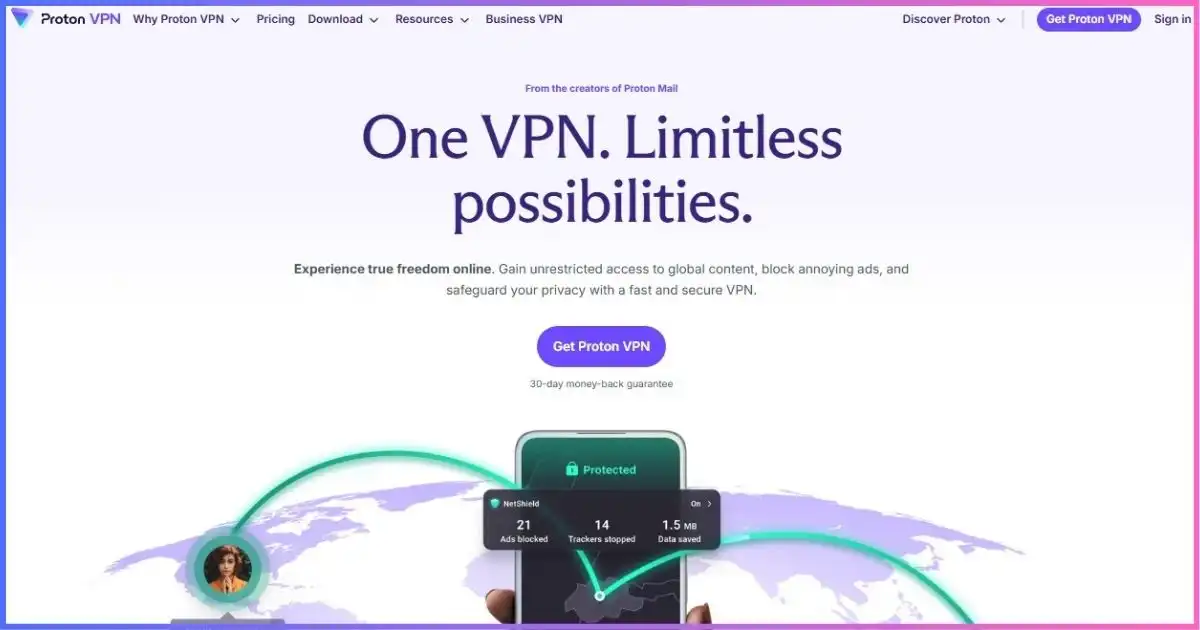
Swiss jurisdiction, annual audits, Secure Core, Stealth, global scale and a strong free service.
Round 1 · PIA winsPricing, Renewals and Money-Back Guarantees
PIA wins paid value decisively. Its current promotion costs $69.81 for 39 months, only $1.95 less than Proton VPN Plus at $71.76 for 24 months while covering 15 additional months. That works out to $1.79 versus $2.99 per month.
| Term | Private Internet Access | Proton VPN Plus | Takeaway |
|---|---|---|---|
| Monthly | $11.95 | $9.99 | Proton saves $1.96 without a long commitment |
| One year | $47.88 | $47.88 observed | Exact tie at checked promotional pricing |
| Longest offer | $69.81 / 39 months | $71.76 / 24 months | PIA costs less and includes 15 more months |
| Equivalent rate | $1.79/month | $2.99/month | PIA saves $1.20 per protected month |
| Renewal | $69.81 / 3 years | $83.88 / year at checked checkout | PIA has dramatically better long-term pricing |
| Guarantee | 30 days for eligible new subscribers | 30 days for eligible direct subscriptions | Read channel and refund conditions |
Current introductory and renewal charges (USD)
Column heights show the checkout amount, not equal service periods.
39 months
24 months
1 year
1 year
3-year renewal
1-year renewal
Proton’s $9.99 month-to-month price wins for a short project or trip. Over a year the checked offers tie. Beyond that, PIA’s renewal is exceptional: its published three-year renewal is lower than one year of Proton at the checked $83.88 renewal.
Compare PIA VPN with Proton VPN Plus. Proton Unlimited includes premium Mail, Pass, Drive, Calendar, Docs and Sheets; it does not unlock a different VPN fleet. PIA antivirus and Dedicated IP are optional add-ons. Both refund windows have eligibility and payment-channel rules, and turning off renewal does not itself request money back.
Round 2 · Proton VPN winsFree VPN Plans
PIA offers no permanent free tier. Proton Free provides unlimited data, no ads, one simultaneous device and access to servers in 10 countries. No payment card is required, and core protections include encryption, a kill switch and Stealth support.
The limitations matter. Proton initially picks the fastest free server, and requesting a change sends you to a random alternative rather than a chosen country. The first change has a 45-second cooldown; later changes use 10-minute intervals. Free users do not receive the full Plus network, paid streaming/P2P support, NetShield, Secure Core, port forwarding or 10-device access.
That makes Proton Free excellent for occasional private browsing and censorship emergencies, but not a substitute for Plus when location choice, streaming or torrenting matters. Unlike many free VPNs, it does not impose a data cap.
Round 3 · Proton VPN wins narrowlyPrivacy, Jurisdiction, Audits and Transparency
Proton VPN operates from Switzerland. PIA is US-based and owned by Kape Technologies. Swiss jurisdiction can be helpful because Proton says current law does not require its VPN service to retain activity logs, but location alone is not a privacy guarantee. The Swiss Federal Data Protection and Information Commissioner provides the authoritative framework behind that jurisdiction.
Proton VPN: annual public verification
Securitum completed Proton’s fifth consecutive annual no-logs infrastructure audit in 2026. Proton publishes the full reports for anyone to read, makes its production VPN apps open source and separately publishes app-security reviews. The latest assessment examined whether production systems retained browsing activity, DNS queries, destination services, traffic contents or user-identifiable connection metadata and found no persistent records connecting reviewed activity to a specific user.
Proton says its no-logs position has also been tested across more than 400 legal matters in which the requested VPN logs did not exist. That is provider-reported context, not an independent audit, but the annual cadence and public documents create a strong transparency record.
PIA: RAM-only design and court-tested history
PIA announced its third Deloitte Audit Romania assurance engagement in February 2026, covering 2025 after reviews in 2022 and 2024. The scope included server configurations, management systems, operational and incident processes, and the token-based Dedicated IP design. The engagement used ISAE 3000 (Revised), and PIA publishes the report.
PIA also makes its apps open source, publishes quarterly transparency data, runs its full network from RAM and has prior US court cases in which it said it had no activity logs to produce. Those are substantial strengths. Proton wins only narrowly because its annual infrastructure-review cadence is longer and its Swiss structure is cleaner for a privacy-first buyer.
Read our VPN logging policies guide for the distinction between activity logs, connection metadata, open-source clients and server-side audits.
Round 4 · Proton VPN winsSecurity, Protocols, Secure Core and Advanced Controls
Both services support WireGuard and OpenVPN, kill switches, private DNS and DNS-level filtering. Their philosophies differ: Proton builds high-risk privacy and anti-censorship workflows into guided features, while PIA exposes extensive manual network controls.
| Capability | Private Internet Access | Proton VPN Plus |
|---|---|---|
| Modern protocols | WireGuard and configurable OpenVPN | WireGuard UDP/TCP, Stealth and Smart Protocol; Linux OpenVPN/manual paths |
| Multi-hop | VPN preceded by Shadowsocks or SOCKS5 proxy | Secure Core through owned/provisioned Iceland, Sweden or Switzerland entry infrastructure |
| Kill switch | Kill Switch and Advanced Kill Switch | Standard and permanent/advanced modes by platform |
| Blocking | MACE for known ad, tracker and malware domains | NetShield for malware, ads and trackers on paid plans |
| Obfuscation | Proxy-based Multi-Hop may help on some networks | Dedicated Stealth protocol plus Smart Protocol fallback |
| Manual control | OpenVPN ports/ciphers, DNS, automation and extensive routing | Profiles, specialized servers and evolving protocol architecture |
| Post-quantum | No advertised consumer control | Planned groundwork only; not shipping when checked |
Secure Core sends traffic through a hardened entry in Iceland, Sweden or Switzerland before the chosen exit. The live directory listed 125 Secure Core servers serving 68 exit countries. Proton says the entry hardware and network are owned and provisioned by Proton. The extra hop improves resistance to exit-server observation but increases latency, so it is not the default for streaming or gaming.
PIA’s Multi-Hop routes through a Shadowsocks or SOCKS5 proxy before reaching the VPN. That can change the visible first-hop pattern, but it is not identical to two full VPN servers. PIA wins fine-tuning through its Advanced Kill Switch, OpenVPN cipher/port controls, extensive DNS choices and automation.
MACE and NetShield are network/domain filters, not antivirus scanners. Both can block known malicious or advertising domains, but neither inspects every downloaded file.
Round 5 · Proton VPN winsServer Network, Countries and Infrastructure
Proton’s live directory listed 20,798 servers, 149 countries and 196 locations, including 17,984 Plus servers. Counts change frequently, and some locations use Smart Routing rather than hardware physically inside the displayed country. PIA publishes 91 countries and 154 locations, including every US state, but no dependable current server total. Ignore older claims of 24,000 or 35,000 PIA servers.
PIA’s full NextGen network is RAM-only and uses 10-Gbps lines. Proton advertises up to 10-Gbps Plus servers and places special ownership and physical controls around Secure Core. Proton does not make the same whole-fleet RAM-only claim, so it would be inaccurate to award that architecture to its ordinary network.
Proton wins international reach and published scale. PIA remains unusually strong for US routing because it offers an endpoint in all 50 states. Server count does not directly determine speed; nearby location choice, peering and congestion matter more.
Round 6 · TieSpeed, Reliability and Testing Method
Both services use WireGuard and advertise up-to-10-Gbps server connectivity. Proton adds VPN Accelerator, which optimizes transport and routing, while its much larger country map improves the chance of a nearby endpoint. PIA offers mature WireGuard, extensive OpenVPN tuning and a compact fully RAM-only fleet with strong US coverage.
Secure Core and PIA Multi-Hop add an extra route and should be disabled for ordinary performance testing. Proton port forwarding and Moderate NAT affect connectivity rather than raw throughput. Likewise, a 10-Gbps uplink is shared infrastructure capacity—not a promise that a home connection will reach 10 Gbps.
Run three no-VPN baselines, three nearby VPN tests and three distant tests on the same device, ISP and time window. Compare median download, upload, latency, jitter and reconnection time. Either provider can win on a specific route.
Round 7 · PIA wins narrowlyApps, Devices and Split Tunneling
PIA allows unlimited simultaneous connections, while Proton VPN Plus permits 10 and Proton Free permits one. Both cover Windows, macOS, Linux, Android and iOS, plus major TV platforms and browser pathways. Router installation can cover more hardware, but feature behavior becomes router-dependent.
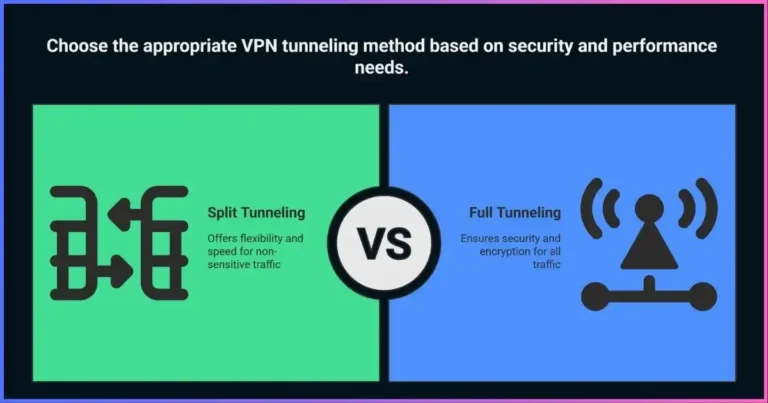
PIA’s desktop split tunnel is exceptionally granular. Windows, macOS and Linux can route apps and bypass IPv4/IPv6 addresses or subnets; Windows and Linux also control whether DNS follows app rules or always uses the VPN’s configured resolver. Android adds per-app controls.
Proton supports split tunneling on Windows, Linux GUI, macOS, Android, its browser extension and Android TV. That is wider browser/TV reach, but there are caveats: macOS support is experimental and does not reliably exclude WebKit/Safari traffic, while most platforms cannot combine split tunneling with the kill switch. Windows can use both together.
Any bypass rule deliberately exposes traffic outside the tunnel. Review changes after app updates and read our VPN protocols guide for platform differences. For standalone detail, see our PIA review and Proton VPN review.
Round 8 · Proton VPN winsStreaming, Smart DNS and TV Apps
Both paid products support Apple TV on tvOS 17+, Android TV and Fire TV routes. PIA adds streaming-optimized locations and Smart DNS for incompatible devices. Smart DNS is unencrypted, does not hide the public IP and is not a substitute for a full VPN.
Proton Plus wins through its 149-country map, explicit paid streaming support and current Apple TV, Android TV, Fire OS and Vega OS paths. Proton Free does not include paid streaming support. Secure Core is also the wrong mode for video: the extra hop can reduce quality and not every Secure Core exit supports streaming.
Catalog access changes by service, IP, region, title and time. Neither provider can promise permanent access. Test the exact device and subscription during the refund window, and see our best streaming VPN guide.
Round 9 · Proton VPN winsTorrenting, P2P and Port Forwarding
Unlike many mainstream VPNs, both services offer VPN-side port forwarding. PIA provides an assigned port in supported non-US regions and locations. Proton makes forwarding available on all paid plans through Windows, macOS, Linux GUI/CLI and supported manual OpenVPN/WireGuard configurations. A Proton P2P server is required.
Both normally assign a port that can change after reconnecting, so the torrent client’s listening port must be updated. Forwarding improves inbound peer reachability and seeding potential; it does not guarantee high speeds. It also opens a controlled path to the selected application, so only forward a port you need and keep that application patched.
Proton Moderate NAT cannot operate at the same time as port forwarding. PIA users must avoid US endpoints when forwarding is required. With either service, enable the kill switch, bind the torrent client to the VPN interface where supported and use only authorized material. See our torrenting VPN guide for safe setup details.
Round 10 · Proton VPN wins narrowlyGaming, NAT and Latency
Proton paid plans expose Moderate NAT on Windows, macOS, Android, iOS and Linux, plus supported manual configurations. This can improve direct peer connectivity and solve some multiplayer or voice-chat problems, though Proton explicitly warns of a small privacy tradeoff. Moderate NAT and port forwarding cannot run together.
PIA counters with 154 locations, excellent US-state coverage, WireGuard and forwarding in supported regions. Its unlimited-device allowance is attractive for gaming households. Neither product guarantees an open NAT on every console, lower ping or protection of a game company’s servers.
A VPN usually increases latency. It helps only when it bypasses poor ISP routing or masks the home IP from direct attacks. Keep the VPN endpoint close to the game server, then measure ping, jitter and packet loss. Our gaming VPN guide explains console and router limitations.
Rounds 11–12 · Proton VPN winsTravel, Restrictive Networks and Everyday Usability
Proton covers 149 countries and offers Stealth across Windows, macOS, Android, iOS and Android TV, with Linux access through the Proton Protocols beta. Smart Protocol automatically tries suitable connection methods. Secure Core offers a hardened multi-hop route for higher-risk work, while the free and guest-access paths can help users establish basic protection without payment.
PIA covers 91 countries and can put a Shadowsocks or SOCKS5 proxy before the VPN through Multi-Hop. That may help on some networks, but it is not as clearly positioned as a dedicated cross-platform censorship-resistant protocol. PIA’s simpler everyday connection screen is good, although the advanced settings require more networking knowledge.
Proton’s interface organizes profiles, Secure Core and special-server types clearly, but its evolving protocol lifecycle can confuse advanced users: IKEv2 is departing, OpenVPN availability is narrower and Proton Protocols is still beta. For ordinary paid use, both provide extensive guides and live support.
Neither guarantees access against every national or workplace firewall. Install before departure, save recovery codes and check local law. See our travel VPN guide and restrictive-country VPN guide.
Decision guideShould You Choose Private Internet Access or Proton VPN?
Strength profile
- PIA: paid value, unlimited devices and desktop control.
- Proton: privacy, security, reach, free access and streaming.
- Scores show relative fit, not measured Mbps.
Choose PIA if you…
- Want the lowest long-term and renewal cost
- Need unlimited simultaneous connections
- Prioritize granular desktop split tunneling
- Want full RAM-only infrastructure
- Need US endpoints in all 50 states
Choose Proton VPN if you…
- Want the strongest overall privacy package
- Need a trustworthy unlimited-data free tier
- Travel and need broad country coverage
- Want Secure Core and Stealth
- Need broadly supported port forwarding or Moderate NAT
Round-by-round scorecard
Who won the 12 rounds?
Eight Proton VPN wins, three PIA wins and one tie.
- Proton VPN: 8 — free, privacy, security, network, streaming, P2P, gaming, travel
- PIA: 3 — pricing, devices and app customization
- Tie: 1 — speed and route reliability
Proton VPN is the better privacy VPN; PIA is the better long-term bargain
Proton VPN wins with 9.3/10. Five consecutive public audits, Swiss jurisdiction, open-source apps, a 149-country network, Secure Core, Stealth, excellent P2P support, Moderate NAT and a genuinely useful free tier make it the stronger overall service.
Private Internet Access scores 8.8/10 and is the rational value choice. Its 39-month and renewal pricing is far lower, it supports unlimited connections, the entire network is RAM-only, and its desktop routing/DNS controls are more mature. Buyers who do not need Proton’s free tier, Secure Core or extreme global reach can save substantially without giving up core privacy fundamentals.
FAQsPrivate Internet Access vs Proton VPN FAQs
Is Proton VPN better than Private Internet Access?
Which is cheaper, PIA or Proton VPN?
Does PIA or Proton VPN have a free plan?
Which has more servers?
Which is better for torrenting?
Which is safer for privacy?
Which is faster?
Can Secure Core improve streaming?
Sources & comparison methodology
Research cutoff: September 19, 2026. Pricing, renewals, server totals, location availability and application features can change.
- Proton VPN current pricing presentation and verified USD checkout: Plus monthly, one-year, two-year and renewal figures, plus Free/Unlimited plan distinctions.
- Proton VPN live server directory: 20,798 servers, 149 countries, 196 locations, 17,984 Plus servers and 125 Secure Core servers serving 68 countries.
- Proton VPN 2026 fifth consecutive Securitum no-logs audit announcement/report, open-source app and separate app-assessment materials.
- Proton VPN support for Free server selection, Secure Core, protocols/product lifecycle, Stealth, split tunneling, port forwarding, Moderate NAT, NetShield and streaming/TV platforms.
- PIA current US pricing/coupon response, refund terms, 91-country/154-location directory and NextGen RAM-only infrastructure materials.
- PIA third Deloitte engagement, open-source and transparency materials, plus split-tunneling, DNS, MACE, Multi-Hop, streaming/Smart DNS and port-forwarding documentation.
Scoring method: We compared equivalent core VPN plans across price and renewal, refund eligibility, free access, privacy evidence, security architecture, geographic reach, expected route reliability, apps, devices, split tunneling, streaming, P2P, gaming and travel. We did not reuse stale PIA fleet counts, describe Proton’s entire network as RAM-only, or convert 10-Gbps capacity into a guaranteed subscriber speed.
Disclosure: This page contains affiliate links. We may earn a commission if you purchase through them, at no additional cost to you. That does not alter the pricing caveats or verdict. A VPN protects the path to its server; it does not legalize unlawful activity, eliminate malware or replace account security.