Private Internet Access vs SafeShell VPN: Which Is Better?
Private Internet Access vs SafeShell VPN is not a conventional like-for-like contest. PIA is a mature privacy VPN with open-source apps, audited no-logs infrastructure, unlimited connections, detailed network controls and port forwarding. SafeShell is a streaming specialist whose App Mode can route different apps through different countries at the same time, with additional gaming and censorship-focused tools.
PIA is the better VPN; SafeShell is the better multi-region streaming tool
Private Internet Access is the safer recommendation for most people. It combines a documented $69.81/39-month offer, unlimited connections, 91-country coverage, WireGuard and OpenVPN, a clearly documented kill switch, fully RAM-only infrastructure, open-source apps, three Deloitte assessments and supported-region port forwarding. Choose SafeShell for its specialist workflows: App Mode can assign separate apps or domains to different VPN regions simultaneously, while Game Mode and Stealth target gaming stability and restrictive networks. SafeShell’s weaker public audit evidence, five-device limit, short refund window and inconsistent network/pricing disclosures keep it behind overall.
Table of Contents
At a glancePrivate Internet Access vs SafeShell VPN: Quick Comparison
| Category | Private Internet Access | SafeShell VPN | Winner |
|---|---|---|---|
| Overall score | 8.8/10 | 7.8/10 | PIA |
| Current long offer* | $69.81 / 39 months ($1.79/mo) | Web price not stably exposed; US App Store $79.99/year | PIA |
| Refund | 30 days for eligible new subscribers | 7 days on eligible first direct website purchase | PIA |
| Devices | Unlimited | 5 | PIA |
| Network | 91 countries / 154 locations | Live page: 61 regions / 2,000+ servers; other totals conflict | PIA |
| Protocols | WireGuard and OpenVPN | Proprietary ShellGuard and Stealth | PIA for transparency |
| Kill switch | Standard plus Advanced Kill Switch | Cross-platform behavior not clearly documented | PIA |
| Independent no-logs review | Three Deloitte engagements | No clearly surfaced audit found | PIA |
| RAM-only | Whole network | No comparably detailed public architecture | PIA |
| Multi-region app routing | No; one VPN route plus bypass rules | App Mode assigns apps/domains to different regions | SafeShell |
| Port forwarding | Supported non-US regions | No documented VPN-side forwarding workflow | PIA |
| Gaming specialty tools | WireGuard and supported-region forwarding | Game Mode, Server Lock, Dual Assurance | SafeShell |
*PIA USD offer and SafeShell US App Store snapshot checked September 19, 2026. SafeShell website, store, country and currency prices can differ.
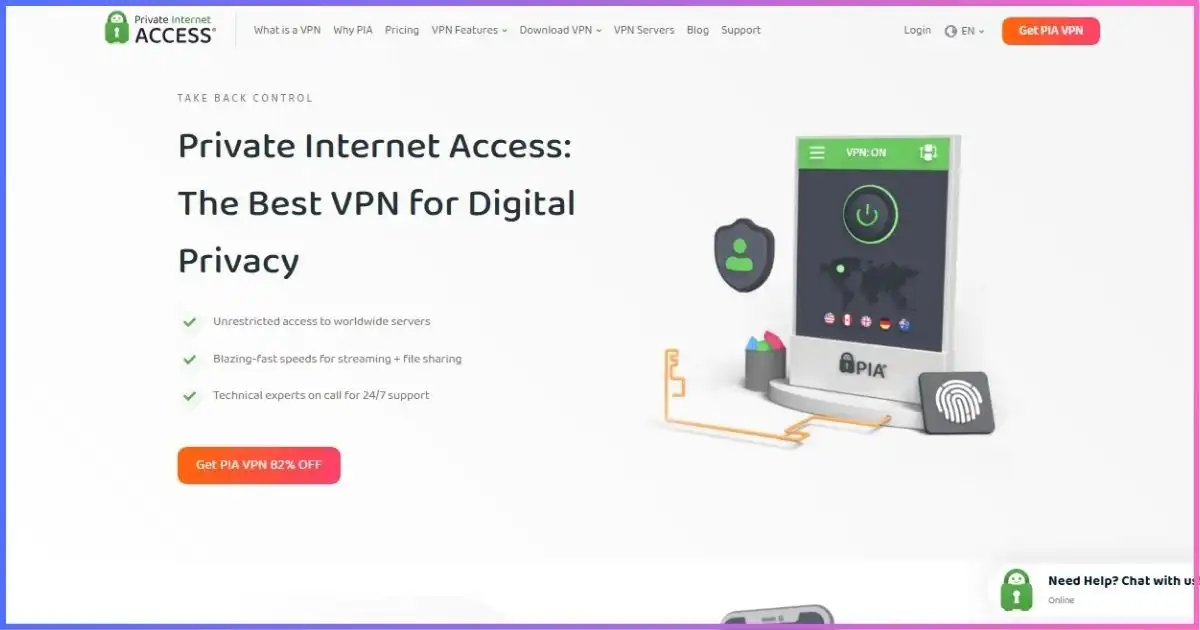
PIA: privacy and control
Unlimited devices, conventional protocols, audited no-logs systems, RAM-only servers and advanced routing.
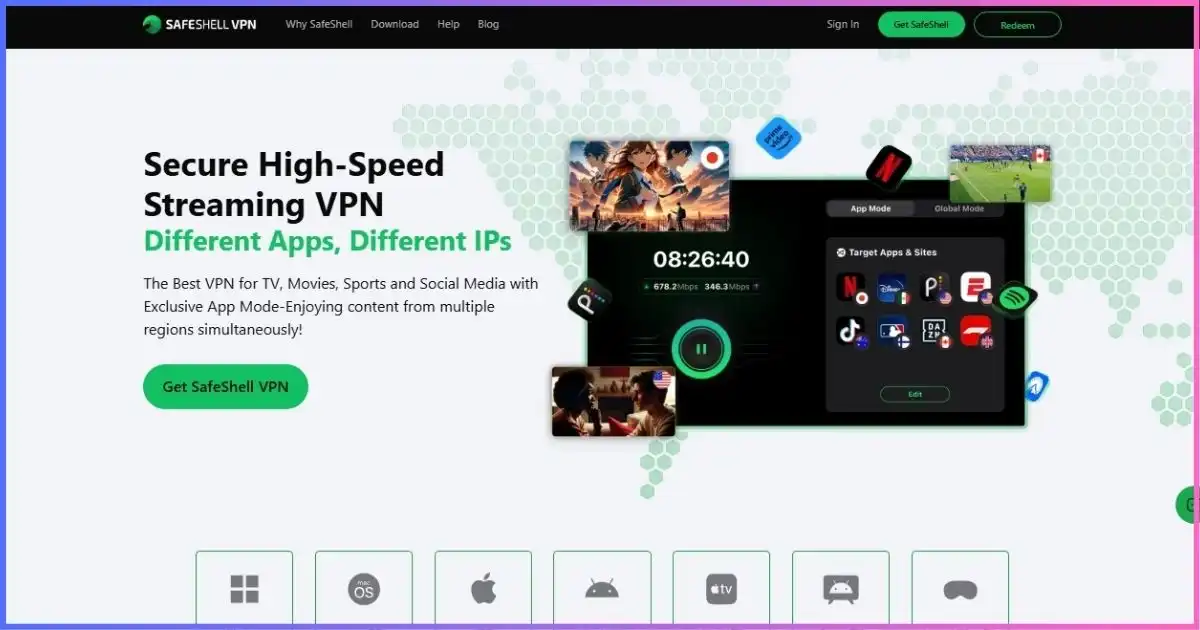
SafeShell: streaming specialization
Different apps on different regions, TV-first clients, subtitle tools and specialized gaming routes.
Rounds 1–2 · PIA winsPricing, Renewals and Refund Protection
PIA’s pricing is easier to verify. The current US offer costs $69.81 for 39 months, equivalent to $1.79 per month, and renews at $69.81 every three years. One year costs $47.88 and monthly service costs $11.95.
SafeShell’s live web checkout renders dynamically and did not expose stable USD amounts to the research tool. The US Apple App Store showed $79.99 per year ($6.67 equivalent), $12.99 monthly and $5.99 weekly. Older provider blog articles quote other annual and two-year figures, but those articles also conflict with current formal device terms. They are not reliable universal checkout prices.
| Price/term | PIA | SafeShell | Interpretation |
|---|---|---|---|
| Monthly | $11.95 | $12.99 US App Store | PIA is $1.04 lower |
| Annual | $47.88 | $79.99 US App Store | PIA saves $32.11 at these channels |
| Longest verified offer | $69.81 / 39 months | Dynamic web price not reliably visible | Do not treat store price as universal |
| Renewal | $69.81 every 3 years | Depends on web/store plan | PIA has clearer disclosure |
| Refund | 30 days for eligible new direct buyers | 7 days for eligible first direct web purchase | SafeShell excludes renewals |
Comparable current one-month and one-year charges
PIA website pricing versus SafeShell US App Store pricing; channels and tax treatment can differ.
1 month
1 month
1 year
1 year
39 months
PIA also offers the better safety net. Its 30-day guarantee covers eligible new direct subscribers. SafeShell provides seven days only for an eligible first purchase made on its website; renewals are excluded, direct processing can take up to 10 business days, and Apple/Google purchases follow the store’s decision. Canceling renewal does not automatically request a refund.
Round 3 · PIA winsPrivacy, Ownership, Logging and Independent Audits
PIA is US-based and owned by Kape Technologies. That jurisdiction is not ideal in isolation, but the service backs its claims with inspectable technical and legal evidence: open-source apps, a fully RAM-only network, quarterly transparency reports and court matters in which PIA said it had no activity logs to provide.
Deloitte Audit Romania completed PIA’s third ISAE 3000 (Revised) engagement covering 2025, following reviews in 2022 and 2024. The latest public report examined server configuration, management and incident processes, plus the token-based Dedicated IP system. Every assessment remains point-in-time evidence, but three reviews establish a meaningful cadence.
SafeShell is operated by GearUp Portal Pte Ltd in Singapore. Its marketing promises no online activity or connection logs. However, the April 2025 GearUp-wide privacy policy broadly describes collection that can include account and purchase data, approximate location, IP/MAC/device identifiers, ISP, timestamps, diagnostics, ping/performance and usage preferences. The policy does not clearly reconcile every category with the simplified no-logs slogan.
No clearly surfaced independent SafeShell no-logs or infrastructure audit was found in its public materials. That does not prove logging, but it leaves buyers with less third-party evidence. Our VPN logging policies guide explains why precise scope matters.
Round 4 · PIA winsSecurity, Protocols, Kill Switches and Filtering
PIA uses recognizable, broadly analyzed protocols: WireGuard for efficient everyday connections and OpenVPN for compatibility and detailed control. Users can select ports and encryption behavior, choose private or custom DNS, enable the Kill Switch or stricter Advanced Kill Switch, and put a Shadowsocks or SOCKS5 proxy before the VPN with Multi-Hop.
SafeShell documents two proprietary protocols. ShellGuard is based around TLS 1.3 for ordinary performance, while Stealth wraps traffic using QUIC to make VPN use harder to identify. QUIC is a legitimate modern transport standardized in RFC 9000. SafeShell also advertises AES-256-GCM, forward secrecy and DNS leak protection; AES-GCM is defined by the authoritative NIST SP 800-38D.
Those building blocks are credible, but names do not independently prove implementation quality. SafeShell has not surfaced a comparable public protocol/infrastructure assessment, does not document WireGuard or OpenVPN selection, and its current feature/help pages do not clearly establish a consistent system-wide kill switch across platforms. That is a material drawback for sensitive use and unattended P2P.
| Security area | PIA | SafeShell |
|---|---|---|
| Protocols | WireGuard and OpenVPN | ShellGuard and Stealth |
| Kill switch | Standard and Advanced modes | Cross-platform behavior not clearly documented |
| Multi-hop/obfuscation | Shadowsocks/SOCKS5 before VPN | QUIC-based Stealth |
| DNS protection | Private DNS, leak controls, custom options | DNS leak protection claim |
| Filtering | MACE blocks known ad/tracker/malware domains | SafeNet filtering on supported routes/platforms |
| App/server assurance | Open source plus repeated infrastructure review | No comparable public audit found |
MACE and SafeNet require an active VPN connection and operate mainly through domain/network filtering. They are not complete antivirus scanners. SafeNet is not available everywhere and cannot remove advertising embedded directly in Netflix or Disney+ video streams.
For protocol fundamentals, read our VPN protocol guide.
Round 5 · PIA winsServer Network and Conflicting SafeShell Totals
PIA publishes 91 countries and 154 selectable locations, including all 50 US states. It no longer publishes a dependable global server total, so old 24,000/35,000 claims should be removed. Some locations are virtual and should be understood as IP geography rather than physical server placement.
SafeShell’s live directory lists 61 regions and 2,000+ servers, with up-to-10-Gbps connectivity in most locations. A separate FAQ says 10,000+ server nodes across 40+ countries, while the features page markets 100+ locations. These units are not interchangeable, and the provider does not reconcile them. “Node,” “server,” “region,” “location” and “country” can describe different layers of infrastructure.
*SafeShell’s 40+ country number comes from a separate FAQ and does not map cleanly to the live directory’s 61 regions.
PIA’s entire NextGen network is RAM-only and uses 10-Gbps lines. SafeShell’s live directory says most locations are up to 10 Gbps, while the feature page separately labels “Super Servers” at up to 2 Gbps. These are capacity categories, not guaranteed user throughput.
Round 6 · TieSpeed, Reliability and Honest Testing
PIA’s WireGuard implementation and 10-Gbps network can be fast, while SafeShell’s ShellGuard is designed for streaming-oriented stability and its live directory labels most endpoints as up to 10 Gbps. Neither capacity figure predicts the result on a specific ISP, device or route.
SafeShell markets low latency and route optimization, but provider testimonials and “up to” figures are not controlled benchmarks. PIA’s larger documented country map can provide a nearer endpoint; SafeShell’s dedicated media/game routes may perform better for a supported app. Stealth, Multi-Hop and any extra routing should be disabled in ordinary speed comparisons because they trade efficiency for a different goal.
Take three no-VPN baselines, three nearby runs and three distant runs on the same device and time window. Compare medians for download, upload, latency, jitter, connection time and reconnection after a Wi-Fi change.
Round 7 · PIA winsApps, Simultaneous Devices and Platform Coverage
PIA allows unlimited simultaneous connections. SafeShell’s current Subscription Terms and March 2026 support page state five devices. Older SafeShell travel posts that claim ten conflict with the formal current terms and should not be used. Apple and Google subscriptions are also independent, so a purchase may not transfer automatically between store ecosystems.
PIA supports Windows, macOS, Linux—including supported ARM builds—Android, iOS, Fire OS, Apple TV, Chrome and Firefox, plus manual/router paths. SafeShell’s download page lists Windows, macOS, iOS/iPadOS, Android, Apple TV, Android/Google TV and Vision Pro. Fire TV appears in some marketing/use-case pages but not as a separate current main-download option; Linux, browser-extension and router support are not comparably documented.
PIA is the more complete conventional platform product. SafeShell is unusually strong on Apple TV and Vision Pro, especially when App Mode matches a household’s viewing habits.
Read our standalone PIA review and SafeShell VPN review for platform-specific detail.
Specialist round · SafeShell winsSplit Tunneling vs Multi-Region App Mode
PIA offers classic split tunneling: Windows, macOS and Linux can route selected apps through or around the VPN and bypass IPv4/IPv6 addresses or subnets. Windows and Linux can control whether DNS follows those rules or remains VPN-only. Android supports per-app behavior. This is ideal for keeping a torrent client protected while a bank or local printer bypasses the tunnel.
SafeShell Global Mode follows a similar protect-everything model with Bypass Apps. App Mode is different and more specialized: it can assign Netflix to South Korea, Prime Video to the US and Disney+ to the UK at the same time. Current supported mobile/Apple builds can also route custom domains. Traffic is split into multiple regional exits rather than merely included or excluded.
PIA wins fine-grained security and DNS control; SafeShell wins multi-region entertainment automation. For the underlying concept, see our split tunneling guide.
Round 8 · SafeShell winsStreaming, Smart TVs and Subtitle Tools
SafeShell is built around streaming. App Mode preserves different country assignments for supported apps, dedicated routes target major services, and subtitle translation supports selected content and platforms. This is particularly useful on Apple TV, Android/Google TV and households switching between multiple regional catalogs.
PIA is a good conventional streaming VPN. It has streaming-optimized locations, native Apple TV (tvOS 17+), Android TV and Fire TV routes, unlimited devices and Smart DNS for incompatible hardware. Smart DNS is unencrypted and does not hide the device’s public IP, so a native VPN app or router tunnel is preferable.
Neither provider guarantees a permanent catalog. Access changes by platform, title, IP address, region, account and time. Test the exact setup during the refund window; SafeShell’s seven-day window is much shorter. Our streaming VPN guide compares broader options.
Round 9 · PIA winsTorrenting, P2P and Port Forwarding
PIA supports P2P and provides VPN-side port forwarding in eligible non-US regions. The assigned port and availability can change, so the torrent client may need updating after reconnecting. PIA also documents kill-switch behavior clearly and lets advanced users bind routing and DNS rules.
SafeShell’s live directory marks P2P-capable regions, but its public documentation does not establish an ordinary VPN-side inbound port-forwarding workflow or consistent cross-platform kill-switch behavior. That makes it harder to build a leak-resistant unattended torrent setup.
Port forwarding can improve inbound peer reachability and seeding, but it does not guarantee speed and exposes the listening application through a controlled path. Enable the kill switch, bind the client to the VPN interface where supported, confirm the torrent-facing IP and use only authorized material. See our torrenting VPN guide.
Round 10 · SafeShell winsGaming, Dual Assurance and Server Lock
SafeShell Game Mode includes Auto-select, Server Lock for supported titles and Dual Assurance on supported devices. Dual Assurance monitors Wi-Fi and mobile data, choosing the better path rather than duplicating every packet. Server Lock attempts to steer compatible matchmaking toward nearby regions; narrowing the pool can increase queue times and cannot eliminate distant placement.
PIA provides WireGuard, unlimited connections, wide US coverage and supported-region port forwarding. It is the more conventional choice, but it lacks SafeShell’s game-specific connection interface and dual-access-path workflow.
A VPN cannot guarantee lower ping, repair poor Wi-Fi, stop congestion inside a game server or defend the publisher’s infrastructure. It can mask the household IP from direct exposure and sometimes improve routing. Measure ping, jitter and packet loss on the exact game region. See our gaming VPN guide.
Round 11 · SafeShell wins narrowlyTravel, Public Wi-Fi and Restrictive Networks
PIA is better for ordinary travel coverage: 91 countries, unlimited devices and established desktop/mobile apps make it easier to find a nearby exit. SafeShell’s formal five-device limit and less consistent country reporting are disadvantages.
On restrictive networks, SafeShell has the more explicit transport. Stealth uses QUIC to disguise VPN traffic and improve resilience on unstable links. SafeShell acknowledges that some ISPs throttle QUIC, so Stealth can be slower. PIA Multi-Hop through Shadowsocks or SOCKS5 may help on some networks, but it is not presented as the same kind of dedicated cross-platform stealth mode.
Neither guarantees access through every national or workplace firewall. Install before departure, retain multiple connection methods and check local law. See our travel VPN guide and restrictive-country guide.
Decision guideShould You Choose PIA or SafeShell VPN?
Strength profile
- PIA: privacy, security, network clarity, value, apps and P2P.
- SafeShell: streaming, multi-region routing and specialist gaming.
- Scores show relative fit, not measured Mbps.
Choose PIA if you…
- Want the stronger general-purpose VPN
- Prioritize audits and open-source apps
- Need unlimited devices or Linux/router support
- Want granular split tunneling and DNS controls
- Need VPN-side port forwarding
Choose SafeShell if you…
- Route several streaming apps to different countries
- Primarily watch through Apple TV or Android TV
- Want supported subtitle-translation tools
- Need Game Mode or Dual Assurance
- Want a QUIC-based Stealth option
Round-by-round scorecard
Who won the 12 rounds?
Eight PIA wins, three SafeShell wins and one tie.
- PIA: 8 — price, refund, privacy, security, network, apps, P2P, support
- SafeShell: 3 — streaming, gaming and stealth
- Tie: 1 — speed and route reliability
Private Internet Access is the better VPN for most people
PIA wins with 8.8/10. It is cheaper on the comparable channels, offers a longer guarantee, allows unlimited devices, covers more clearly documented countries, uses standard protocols, runs a RAM-only network, publishes open-source apps and independent assurance reports, and supports VPN-side port forwarding.
SafeShell scores 7.8/10 but has a real specialist appeal. App Mode is excellent for households that want different streaming services in different countries without switching the whole VPN. Game Mode, Dual Assurance and Stealth add further niche value. Its limited audit evidence, unclear kill-switch parity, five-device cap and inconsistent price/network disclosures prevent it from becoming the default privacy recommendation.
FAQsPrivate Internet Access vs SafeShell VPN FAQs
Is PIA better than SafeShell VPN?
Which is cheaper, PIA or SafeShell?
How many devices do PIA and SafeShell support?
What makes SafeShell App Mode different?
Which is better for torrenting?
Which is better for privacy?
Which is better for streaming?
Does SafeShell support WireGuard or OpenVPN?
Sources & comparison methodology
Research cutoff: September 19, 2026. Prices, refunds, server totals, routes and application features can change.
- SafeShell live server directory: 61 regions, 2,000+ servers, region-specific P2P/streaming/SafeNet labels and up-to-10-Gbps categories.
- SafeShell subscription terms, refund policy, US Apple App Store listing, main download page and payment documentation.
- SafeShell App Mode, Global Mode, ShellGuard/Stealth, SafeNet, Game Mode, Dual Assurance and Server Lock support materials.
- SafeShell homepage, User Agreement and GearUp Portal privacy policy, including broad data-category disclosures and no-logs marketing.
- PIA current US pricing/coupon response, refund terms, 91-country/154-location directory, platform guide and NextGen RAM-only infrastructure materials.
- PIA third Deloitte engagement, open-source/transparency materials, WireGuard/OpenVPN, kill switch, split tunneling, MACE, Multi-Hop, streaming/Smart DNS and port-forwarding documentation.
Scoring method: We compared equivalent VPN subscriptions across price, refund terms, privacy evidence, protocols, kill-switch clarity, geographic disclosure, infrastructure, likely route reliability, apps, devices, streaming, P2P, gaming, travel and support. We kept SafeShell’s conflicting node/server/region/location claims separate and did not convert provider capacity or routing claims into guaranteed speed or ping results.
Disclosure: This page contains affiliate links. We may earn a commission if you purchase through them, at no additional cost to you. That does not alter the pricing caveats or verdict. A VPN protects the route to its server; it does not legalize unlawful activity, eliminate malware or replace account security.