Best VPN for Healthcare Organizations: Secure Remote Access & HIPAA Considerations
Healthcare is the most targeted industry for cyberattacks globally. For medical professionals, small private practices, and remote telehealth staff, a VPN is not a luxury — it is a critical component of the HIPAA Security Rule’s “Transmission Security” safeguard. The best VPN for healthcare organizations must provide verifiable no-logs architecture, robust encryption for Protected Health Information (PHI) in transit, and malware blocking to prevent ransomware from entering the clinic network via remote devices.
We evaluated eight major VPN providers against healthcare compliance requirements, endpoint security features, and enterprise scalability. While large hospital networks require full Zero Trust/SASE architectures, the providers below offer the best secure transit layers for remote doctors, traveling specialists, and small-to-medium medical practices.
What Is the Best VPN for Healthcare in 2026?
Proton VPN is the best overall choice for healthcare professionals and small practices due to its Swiss jurisdiction, open-source audited code, and dedicated “Proton for Business” tier that caters to compliance-heavy industries. NordVPN (and its enterprise arm, NordLayer) is the best for ransomware prevention via Threat Protection Pro, while ExpressVPN is the most reliable for traveling doctors needing instant, stable connections on hospital guest Wi-Fi.
Compliance Reality Check: Standard consumer VPNs encrypt data in transit (satisfying HIPAA 45 CFR § 164.312(e)(1)), but they do not sign Business Associate Agreements (BAAs). Large hospital systems and covered entities handling massive PHI volumes must look at enterprise Zero Trust Network Access (ZTNA) solutions. See our guide on Business VPN vs Zero Trust ZTNA for enterprise architecture.
Table of Contents
The stakesThe Healthcare Threat Model & HIPAA Transit Rules
Medical records are worth up to 10x more than credit card numbers on the dark web because they contain immutable data (SSNs, medical histories, insurance IDs) used for long-term identity theft and insurance fraud. According to the HHS Office for Civil Rights (OCR) and the Verizon Data Breach Investigations Report (DBIR), healthcare remains the most targeted sector for ransomware and organized crime.
Under the HIPAA Security Rule, covered entities must implement “Transmission Security” to guard against unauthorized access to ePHI transmitted over an electronic communications network. A VPN satisfies this requirement by creating an encrypted tunnel between a remote device (a doctor’s laptop at home, a telehealth tablet) and the secure network. However, a VPN is only one layer; it must be paired with endpoint encryption and strict access controls.
Healthcare Data Breach Vectors (Industry Average)
Based on aggregated data from HHS OCR and Verizon DBIR reports. Unencrypted transit remains a critical vulnerability for remote staff.
- 40% — Ransomware & System Intrusion
- 25% — Stolen Credentials & Insider Threat
- 20% — Phishing & Social Engineering
- 15% — Unencrypted Transit / Public Wi-Fi Sniffing
ComparisonBest VPN for Healthcare: Compliance & Feature Matrix
| VPN | Best for Healthcare | Jurisdiction | Malware/Ransomware Blocker | No-Logs Audit | Entry price* | Rating |
|---|---|---|---|---|---|---|
| Proton VPN | Privacy-first clinics, compliance | Switzerland | NetShield | Yes (Open Source) | $2.99/mo | 9.7 / 10 |
| NordVPN | Endpoint defense, NordLayer B2B | Panama | Threat Protection Pro | Yes (Deloitte/PwC) | $3.49/mo | 9.4 / 10 |
| ExpressVPN | Traveling doctors, hospital Wi-Fi | BVI | Threat Manager | Yes (KPMG/Cure53) | $2.99/mo | 9.1 / 10 |
| Surfshark | Small practice budgets, unlimited | Netherlands | CleanWeb | Yes (Deloitte) | $1.99/mo | 8.6 / 10 |
*Approximate per-month price on the longest available term, verified September 2026. For large enterprise deployments, contact the vendor’s B2B sales team for BAA discussions and SSO/SAML integrations.
Ranked picksThe Best VPNs for Healthcare Organizations
Proton VPN — The gold standard for sensitive data
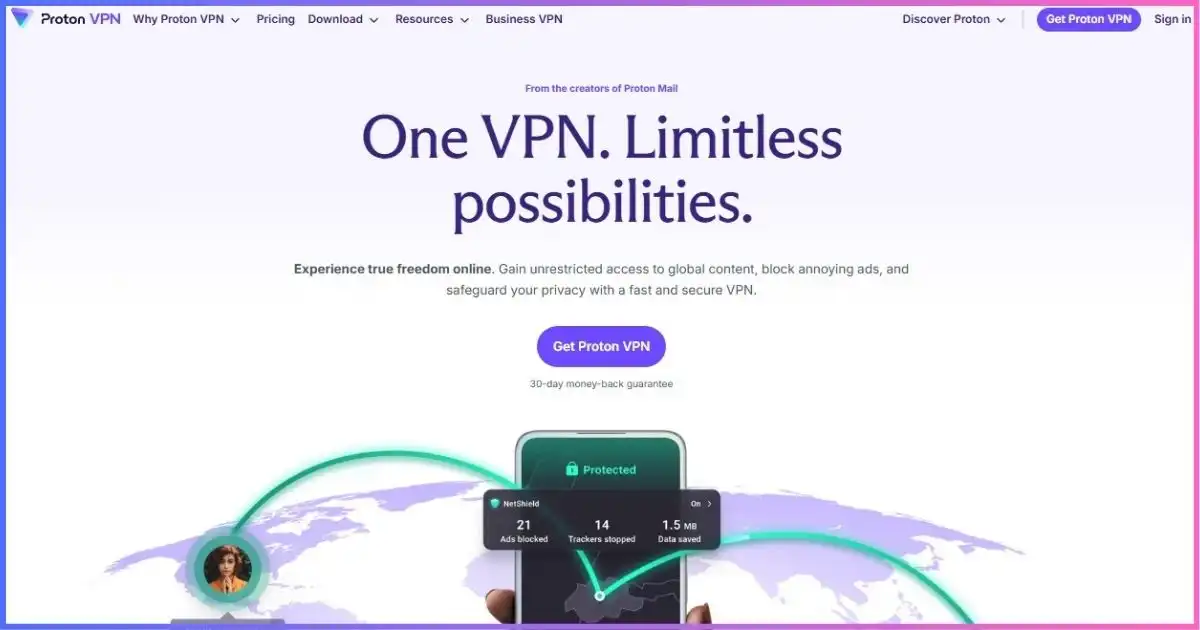
Proton VPN is the undisputed leader for privacy-sensitive industries. Headquartered in Switzerland (outside 14 Eyes intelligence alliances), it operates under strict federal privacy laws. Crucially, all Proton VPN apps are open-source and independently audited, providing cryptographic proof that no PHI metadata is being logged. For small to medium clinics, “Proton for Business” offers centralized admin panels, SSO integration, and dedicated account management.
Its Secure Core multi-hop architecture routes traffic through hardened privacy servers before exiting, protecting against compromised local ISP nodes. For telehealth providers conducting consultations from home offices, Proton ensures that patient audio/video streams and EHR access are shielded from local network snooping.
Pros
- Swiss jurisdiction with strict medical-grade privacy laws
- 100% open-source clients with public audits
- Secure Core multi-hop for high-risk remote access
- Dedicated B2B tiers for clinic management
Cons
- Secure Core adds latency (noticeable on video calls)
- B2B features require upgrading from consumer plans
Deep dive in our Proton VPN review.
NordVPN — Threat Protection & NordLayer
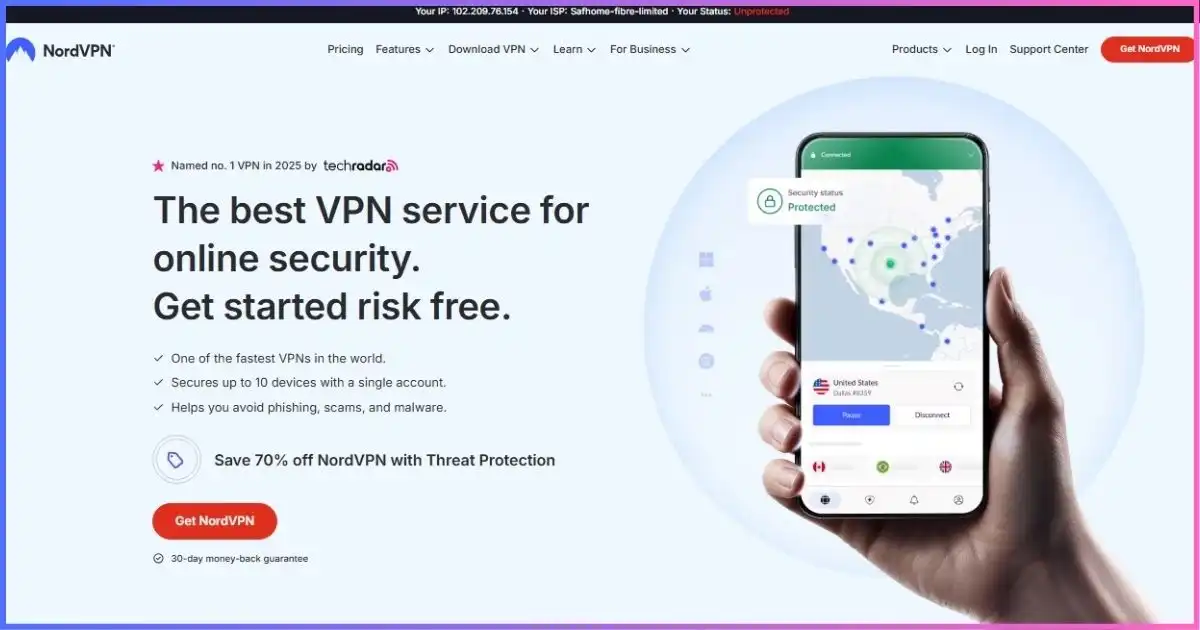
Ransomware is the greatest threat to hospital operations, often entering via a remote worker’s compromised device. NordVPN’s Threat Protection Pro blocks malicious domains, trackers, and malware downloads at the network layer, even when the VPN tunnel is disconnected. This acts as a critical first line of defense for medical staff accessing EHR portals from home or coffee shops.
For larger organizations, Nord’s enterprise arm (NordLayer) provides ZTNA capabilities, SSO/SAML integration, and segmented access controls. The consumer NordVPN plan remains an excellent choice for independent practitioners and remote medical workers who need RAM-only server assurance (TruRAM) ensuring no session data persists on the provider’s end.
Pros
- Threat Protection Pro blocks ransomware vectors
- RAM-only servers leave no forensic trace
- Seamless upgrade path to NordLayer for enterprise
- Multiple independent no-logs audits
Cons
- Main desktop apps are not fully open-source
- Enterprise BAA requires NordLayer, not consumer plan
See our NordVPN review for technical details.
ExpressVPN — TrustedServer & Hospital Wi-Fi
Locum tenens doctors, traveling nurses, and medical sales reps constantly connect to untrusted hospital guest Wi-Fi and airport networks. ExpressVPN’s Lightway protocol is engineered for instant reconnection when networks drop, ensuring telehealth sessions or EHR queries don’t time out and expose data. Its TrustedServer architecture guarantees that all server data is wiped on reboot.
ExpressVPN’s automatic obfuscation also helps medical staff bypass restrictive international firewalls when providing telemedicine consultations to patients in regions with heavy internet filtering (see our restrictive countries guide). It is the most frictionless “install and forget” security layer for highly mobile medical professionals.
Pros
- Lightway protocol excels on unstable hospital Wi-Fi
- TrustedServer (RAM-only) architecture
- Automatic obfuscation for global telehealth
- BVI jurisdiction with strong legal privacy shields
Cons
- No native multi-hop / Secure Core feature
- Higher price point than budget alternatives
Full analysis in our ExpressVPN review.
Surfshark — Unlimited Devices for the Whole Practice
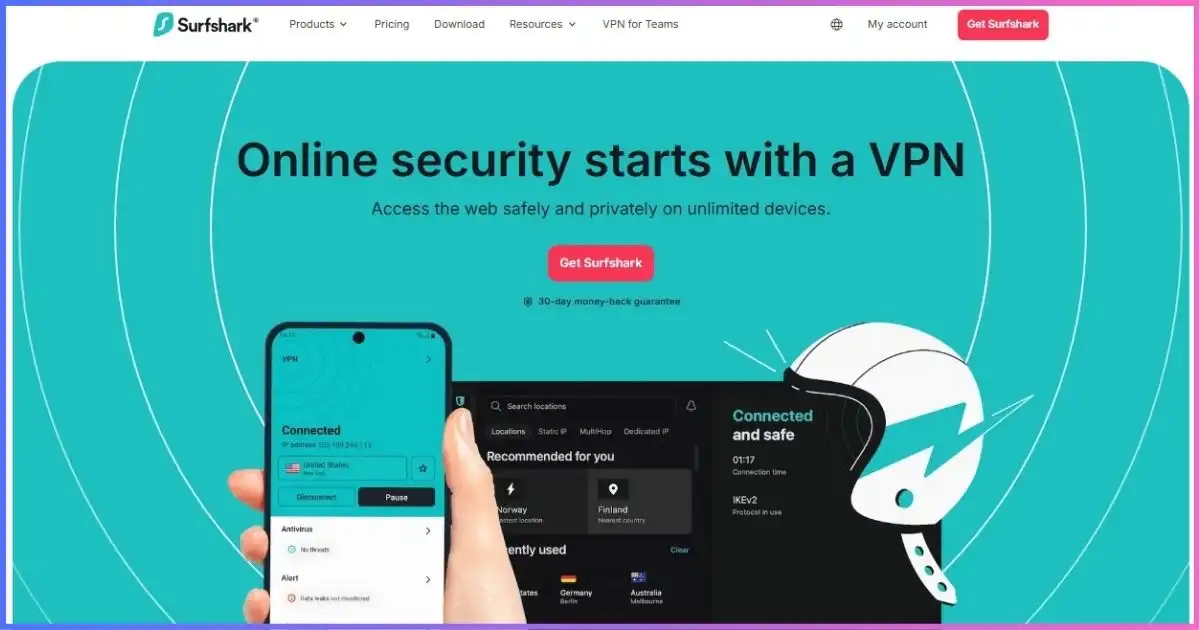
For small private practices, dental offices, or therapy clinics operating on tight IT budgets, Surfshark offers the best value. Its unlimited simultaneous connections mean you can secure the front desk PC, the billing laptop, the doctor’s tablet, and the waiting room clinic router all under a single ~$1.99/mo subscription.
Surfshark’s CleanWeb feature blocks malicious ads and phishing links, reducing the risk of a staff member accidentally clicking a credential-harvesting link. While based in the Netherlands (9 Eyes), its independent Deloitte audits and robust AES-256 encryption make it a highly capable, budget-friendly transit security layer for small covered entities.
Pros
- Unlimited devices for entire clinic staff
- CleanWeb blocks phishing and malicious domains
- Extremely budget-friendly for small practices
- Independent Deloitte infrastructure audits
Cons
- Netherlands jurisdiction (9 Eyes alliance)
- Closed-source client applications
Value analysis in our Surfshark review.
Honest exclusionsVPNs to Avoid for Protected Health Information (PHI)
When handling ePHI, historical trust and corporate lineage are non-negotiable. The following providers are excluded from our healthcare recommendations due to jurisdiction risks, closed-source code, or historical logging controversies.
 IPVanish — Avoid for PHI
US-based and subject to 14 Eyes intelligence sharing. Furthermore, IPVanish has a documented history of logging and handing over user data to law enforcement, contradicting their no-logs marketing. Unacceptable for medical data.
IPVanish — Avoid for PHI
US-based and subject to 14 Eyes intelligence sharing. Furthermore, IPVanish has a documented history of logging and handing over user data to law enforcement, contradicting their no-logs marketing. Unacceptable for medical data.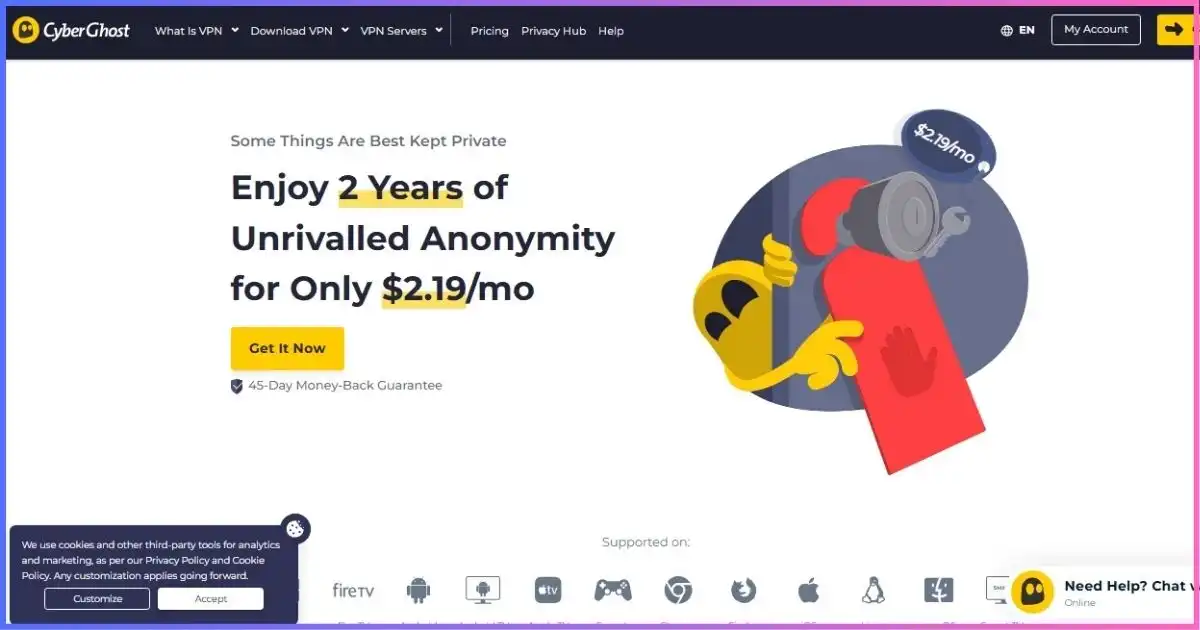 CyberGhost — Avoid for Sensitive Clinics
Owned by Kape Technologies, a company with a controversial history in ad-injection and malware-distribution frameworks prior to rebranding. For medical practices requiring absolute trust in the software supply chain, this lineage is a red flag.
CyberGhost — Avoid for Sensitive Clinics
Owned by Kape Technologies, a company with a controversial history in ad-injection and malware-distribution frameworks prior to rebranding. For medical practices requiring absolute trust in the software supply chain, this lineage is a red flag.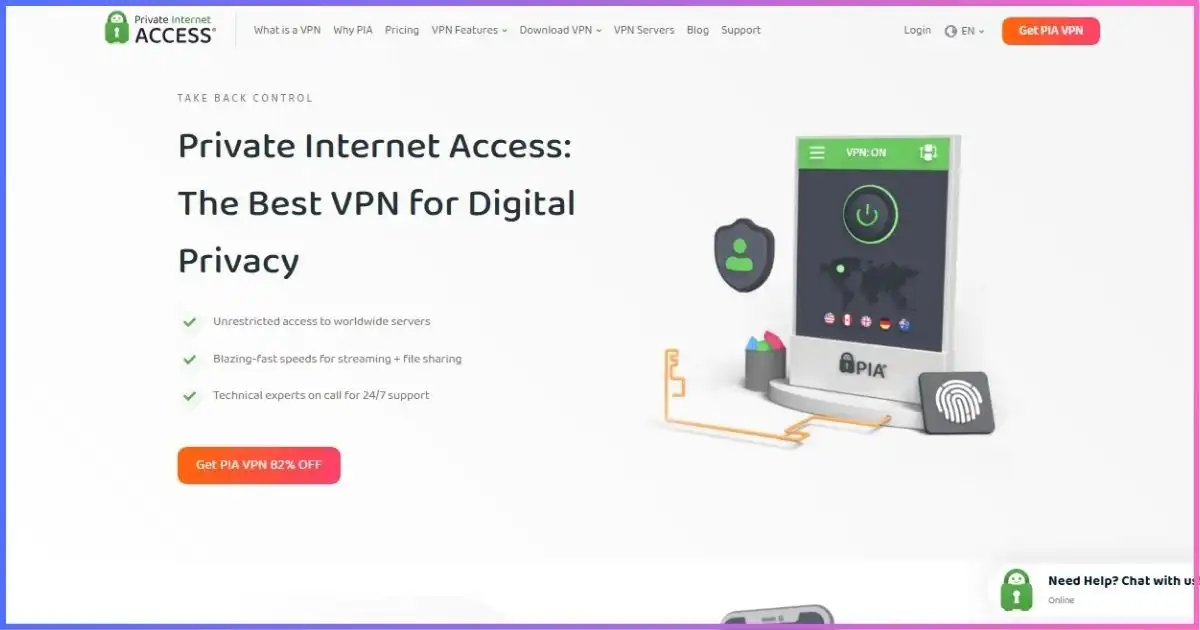 PIA — Caution for US Healthcare
While PIA has a proven no-logs court record and open-source apps, its US jurisdiction makes it vulnerable to National Security Letters (NSLs) with mandatory gag orders. Better suited for general professionals than HIPAA-covered entities.
PIA — Caution for US Healthcare
While PIA has a proven no-logs court record and open-source apps, its US jurisdiction makes it vulnerable to National Security Letters (NSLs) with mandatory gag orders. Better suited for general professionals than HIPAA-covered entities.Enterprise ArchitectureWhen to Upgrade from VPN to Zero Trust (ZTNA)
Traditional VPNs grant “castle-and-moat” access: once a doctor authenticates, they often have broad access to the internal network. If their device is compromised by ransomware, the malware can spread laterally to the EHR servers. Modern healthcare IT is moving toward Zero Trust Network Access (ZTNA).
ZTNA verifies the device health, user identity, and specific application request for every single session. If your organization has more than 50 remote workers, handles massive volumes of ePHI, or requires strict HIPAA/GDPR audit trails, you should transition from a consumer VPN to an enterprise ZTNA provider (like NordLayer, Zscaler, or Cloudflare Access). For smaller remote teams, a business-tier VPN with SSO integration is often sufficient.
VPN vs Zero Trust: Healthcare Security Posture
Comparison of security controls. Higher is better for protecting ePHI against lateral movement and ransomware.
VPNs win on cost and ease of deployment for small clinics; ZTNA wins on granular security for large hospital networks.
ChecklistClinic & Remote Setup: 5 Steps for Medical Staff
- Enforce Full-Disk Encryption. A VPN protects data in transit. If a doctor’s laptop is stolen from a car, the data at rest is only safe if BitLocker (Windows) or FileVault (Mac) is enabled with a strong passphrase.
- Enable the Kill Switch & Auto-Connect. Configure the VPN to connect automatically on untrusted networks (hospital guest Wi-Fi, cafes) and enable the kill switch to prevent ePHI from leaking if the tunnel drops.
- Activate Malware Blocking. Turn on Threat Protection Pro (NordVPN), NetShield (Proton), or CleanWeb (Surfshark) to block known ransomware command-and-control domains and phishing sites.
- Use Split Tunneling for Local Devices. If staff need to print to a local clinic printer or access a local NAS, use split tunneling to route only internet traffic through the VPN, keeping local LAN traffic direct.
- Implement MFA on the EHR. The VPN is only the outer door. Ensure the Electronic Health Record (EHR) portal requires hardware keys (YubiKey) or biometric MFA for the final authentication step.
MethodologyHow We Evaluated Medical Security
We evaluated these providers against the HIPAA Security Rule’s technical safeguards, focusing on encryption strength, metadata retention policies, endpoint protection features, and jurisdiction safety. Editorial scoring weights:
- 35% — Privacy architecture & independent no-logs audits
- 25% — Endpoint protection (malware/ransomware blocking)
- 20% — Transit encryption protocols (WireGuard/Lightway)
- 15% — Jurisdiction safety (Non-14 Eyes preferred)
- 5% — B2B/Enterprise features (SSO, Admin panels)
FAQsHealthcare IT & VPN FAQs
Is using a consumer VPN HIPAA compliant?
Can ransomware infect a clinic through a VPN?
What is the best VPN for telehealth from home?
Do VPN providers sign Business Associate Agreements (BAAs)?
How do I secure a clinic waiting room Wi-Fi?
The Best VPN for Healthcare Organizations, in One Paragraph
For medical professionals, telehealth providers, and small clinics, Proton VPN is the gold standard due to its Swiss jurisdiction, open-source transparency, and Secure Core architecture. NordVPN is the best choice for endpoint defense against ransomware, while ExpressVPN provides the most reliable transit security for traveling medical staff. Remember: a VPN is only one layer of HIPAA compliance. Pair it with full-disk encryption, MFA, and regular staff training to truly protect patient data.
| VPN | Best for (Healthcare use) | Rating | Get started |
|---|---|---|---|
| Proton VPN | Privacy-first clinics, compliance, open-source trust | 9.7 / 10 | Visit Site |
| NordVPN | Endpoint defense, ransomware blocking, NordLayer B2B | 9.4 / 10 | Visit Site |
| ExpressVPN | Traveling doctors, hospital Wi-Fi, telehealth stability | 9.1 / 10 | Visit Site |
| Surfshark | Small clinic budgets, unlimited staff devices | 8.6 / 10 | Visit Site |
Disclosure: This article contains affiliate links. If you purchase through them, we may earn a commission at no extra cost to you. Rankings reflect independent security analysis and compliance research, not commission rates. Pricing verified September 2026. This guide provides technical security information, not legal advice; consult with your organization’s HIPAA compliance officer or legal counsel regarding specific data protection requirements.
Sources & Research Notes
Security ratings and compliance analyses are based on public audit reports, HIPAA technical safeguard documentation, and healthcare cybersecurity industry reports. Pricing verified September 2026.
- U.S. Department of Health and Human Services (HHS) — Office for Civil Rights (OCR) “Breaches Affecting 500 or More Individuals” portal and HIPAA Security Rule (45 CFR § 164.312) technical safeguard documentation (hhs.gov).
- Verizon Data Breach Investigations Report (DBIR) — Annual analysis of healthcare sector breaches, highlighting ransomware, stolen credentials, and organized crime targeting medical records (verizon.com).
- Ponemon Institute / IBM Cost of a Data Breach Report — Annual research showing healthcare has the highest average cost per breach of any industry globally, driven by the high black-market value of PHI.
- Proton VPN Security Blog & GitHub — Open-source repository commits, Secure Core architecture documentation, and independent audit publications (Securitum, Cure53).
- NordVPN Transparency Hub & NordLayer — Deloitte and PwC no-logs audit summaries; TruRAM server infrastructure; Threat Protection Pro malware blocking documentation.
- ExpressVPN Trust Center — TrustedServer (RAM-only) whitepapers, Lightway protocol open-source repository, and BVI jurisdiction legal analysis.
- Surfshark Audit Reports — Deloitte independent audits of infrastructure and no-logs policies; CleanWeb domain blocking architecture.
Editorial scores are our own judgments based on technical architecture and compliance alignment. Cybersecurity is an evolving field; always verify the latest audit status and consult your compliance officer before deploying tools in production healthcare environments.