CyberGhost VPN vs NordVPN: Which One Is Better?
CyberGhost VPN vs NordVPN is a choice between inexpensive, task-first simplicity and a more complete premium toolkit. CyberGhost makes streaming, downloading and gaming servers easy to find, costs much less on its introductory plan, and gives long-term subscribers 45 days to reconsider. NordVPN costs more but covers more countries, protects more devices, and offers a much deeper collection of specialty routing, remote-access and restrictive-network features.
NordVPN wins overall; CyberGhost wins on price and refund time
Choose NordVPN if you want the more capable all-purpose VPN: 150-country coverage in its live directory, ten connections, NordLynx, SmartPlay, Meshnet, Double VPN, Onion over VPN, obfuscated servers, NordWhisper and supported-platform post-quantum protection. Choose CyberGhost if you want a simple interface and the lowest upfront cost: $51.74 for 26 months, followed by a published $51.74 annual renewal. NordVPN Basic is $94.23 for 27 months and renews at $139.08 per year.
Table of Contents
At a glanceCyberGhost VPN vs NordVPN: Quick Comparison
| Category | CyberGhost VPN | NordVPN Basic | Winner |
|---|---|---|---|
| Overall score | 8.8/10 | 9.4/10 | NordVPN |
| Longest introductory offer* | $51.74 / 26 months ($1.99/mo) | $94.23 / 27 months ($3.49/mo) | CyberGhost |
| Published renewal | $51.74/year | $139.08/year | CyberGhost |
| Refund window | 45 days on 6+ month terms; 14 days monthly | 30 days on eligible initial purchases | CyberGhost |
| Simultaneous devices | 7 | 10 | NordVPN |
| Network snapshot | 100 countries / 125–126 locations | 8,027 servers / 150 countries / 225 locations | NordVPN |
| Protocols | WireGuard, OpenVPN, IKEv2 | NordLynx, NordWhisper, OpenVPN, selected IKEv2 | NordVPN |
| Special servers | Streaming, download/P2P, gaming, NoSpy | Double VPN, Onion over VPN, obfuscated, dedicated IP | NordVPN |
| No-logs assurance | Three Deloitte engagements; latest report public | Six engagements; latest detailed report account-gated | Close |
| Port forwarding | No | No on standard plans | Tie |
*US promotional prices checked September 19, 2026. Both long plans are prepaid. Taxes, currency, bonus months and checkout offers may vary.
CyberGhost: task-first value
The easier bargain: choose an activity label, connect, and use the long refund window to test real services.
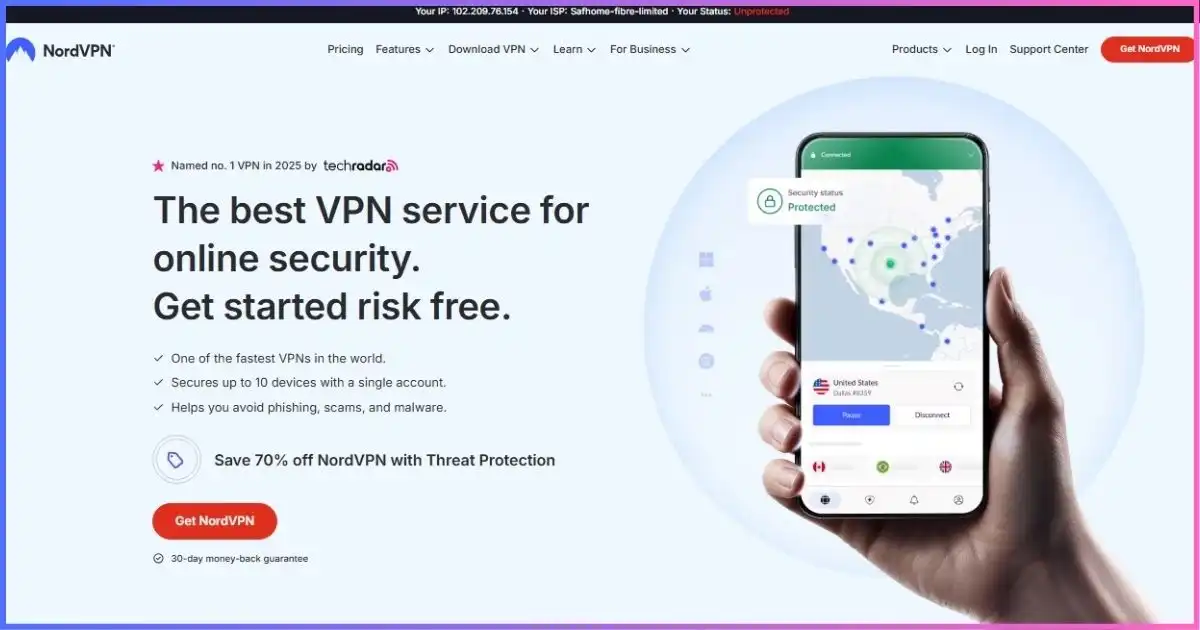
NordVPN: broader capability
The stronger all-rounder: more countries, more specialty modes, more device slots and deeper everyday tooling.
Round 1 · CyberGhost winsPricing, Renewals and Money-Back Guarantees
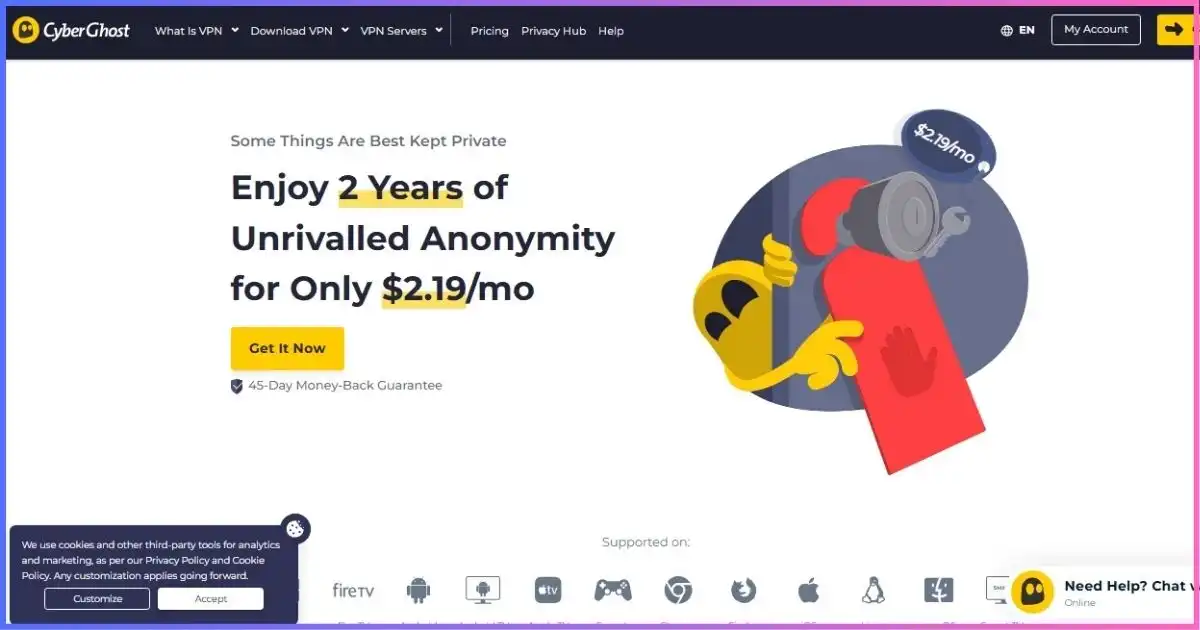
CyberGhost is dramatically cheaper. Its longest offer is $1.99 per month equivalent, paid as $51.74 for the first 26 months. The unusually important detail is renewal: the checkout states $51.74 annually thereafter. NordVPN Basic costs $94.23 for its first 27 months, including three bonus months, and then renews at $139.08 per year.
| Term | CyberGhost | NordVPN Basic | Takeaway |
|---|---|---|---|
| Monthly | $12.99 | $14.99 | CyberGhost is $2 less |
| Mid/annual option | 6 months: $41.94 | 12 months: $65.88 | Different terms; compare total commitment |
| Longest offer | $51.74 / 26 months | $94.23 / 27 months | CyberGhost nearly halves the first charge |
| Renewal | $51.74/year | $139.08/year | CyberGhost remains much cheaper |
| Refund | 45 days on 6+ month terms; 14 monthly | 30 days, eligible initial purchase | CyberGhost gives long-plan buyers more time |
Initial prepaid cost (USD)
Column height shows the initial charge, not plan duration. CyberGhost and Nord include different terms.
monthly
monthly
6 months
12 months
26 months
27 months
CyberGhost’s long-term refund period is also better, although monthly buyers receive only 14 days. Nord’s 30-day guarantee generally covers eligible new direct purchases, not ordinary renewals. Canceling auto-renewal is separate from requesting money back. For more low-cost options, see our best cheap VPNs.
Round 2 · Very closePrivacy, Ownership and Independent Audits
CyberGhost is based in Romania and owned by Kape Technologies. NordVPN operates under Panama-based Nord Security. Jurisdiction and ownership deserve disclosure, but neither alone tells you whether a VPN can identify browsing activity. Architecture, retained data, audits and response history are more useful.
CyberGhost announced its third Deloitte Romania no-logs assurance engagement in February 2026. The review covered its VPN server network, configuration and change management, incident-response controls, and token-based Dedicated IP system. Its newest report is publicly downloadable. CyberGhost also publishes quarterly transparency reports; the reporting shows large volumes of copyright complaints and smaller numbers of police requests, with the provider stating it had no activity logs to match.
NordVPN has completed six no-logs assurance engagements. The latest examined standard, Double VPN, obfuscated and Onion over VPN configurations during late 2025. Nord makes the detailed report available to account holders rather than publishing it openly. Its July 2026 notice says it does not keep browsing, traffic, bandwidth or VPN IP logs, while disclosing limited connection-enforcement and abuse indicators.
Both audits use the ISAE 3000 (Revised) assurance framework. That is meaningful independent evidence, but still a point-in-time assessment—not a permanent guarantee. Our VPN logging-policy guide explains how activity logs differ from operational account data.
CyberGhost privacy case
- Three Deloitte engagements
- Latest report publicly downloadable
- Quarterly request statistics
- Token-based Dedicated IP design
- Separately operated NoSpy servers
NordVPN privacy case
- Six assurance engagements
- RAM-only ordinary servers
- More audited specialty routes
- Panama service jurisdiction
- Detailed current privacy notice
Round 3 · NordVPN winsSecurity Features and VPN Protocols
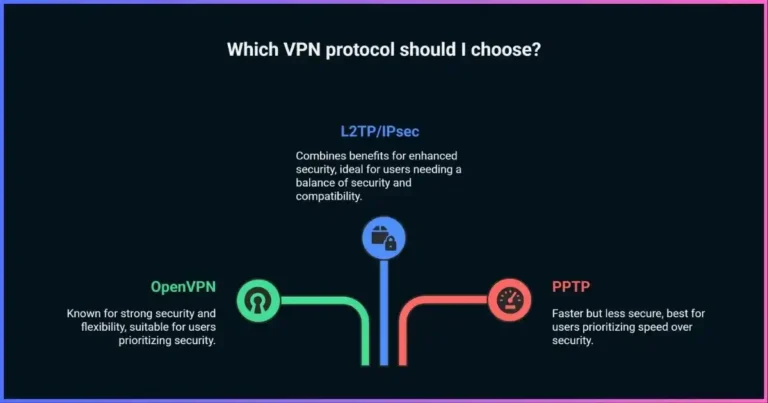
Both services cover the foundation: modern encryption, private DNS, IP/DNS leak protection, automatic kill switches and RAM-only infrastructure. CyberGhost supports WireGuard, OpenVPN and IKEv2, but protocol availability varies. WireGuard spans major apps and TVs; OpenVPN is absent from the native macOS and iOS lists; IKEv2 is limited to Windows, macOS and iOS. CyberGhost does not support manual WireGuard configuration.
NordVPN supports NordLynx, OpenVPN, NordWhisper and selected IKEv2 paths. NordLynx builds on the lean WireGuard protocol design. Nord’s advantage is what sits around the tunnel:
- Double VPN routes through two VPN servers.
- Onion over VPN sends traffic into the Tor network after the VPN hop.
- Obfuscated servers disguise OpenVPN traffic on filtered networks.
- NordWhisper provides another option where conventional VPN traffic is blocked.
- Post-quantum protection strengthens NordLynx key exchange on supported platforms, with important mode incompatibilities.
CyberGhost offers useful alternatives: NoSpy servers operated from its Bucharest data center, Windows Smart Rules for application and Wi-Fi automation, and a Content Blocker for known advertising, tracker and malicious domains. They are practical, but not equivalent to Nord’s range of route types.
For a plain-language explanation, read our guide to common VPN protocols.
Round 4 · NordVPN winsServer Network and Location Coverage
NordVPN’s live directory listed 8,027 servers in 150 countries across 225 locations at the research cutoff. A separate support page quotes higher totals using broader virtual-location definitions, so this article uses the live directory figures consistently.
CyberGhost’s current directory lists 100 countries, 125–126 locations and 21 Dedicated IP locations. Its checkout advertises 9,900+ servers, while the primary English directory does not consistently lead with a stable total. Server-count marketing can mix physical machines, instances and virtual locations; country and selectable-location coverage is the cleaner comparison.
CyberGhost’s activity filters still add value: a beginner can look for streaming, downloading or gaming recommendations instead of interpreting a raw city list. Nord’s map is simply broader, improving the chance of a nearby low-latency exit while traveling.
Round 5 · NordVPN wins narrowlySpeed and Connection Reliability
A single “speed loss” percentage would be misleading. VPN performance changes with the starting line, Wi-Fi quality, distance, ISP peering, protocol, server load, device and hour. Both providers operate substantial 10-Gbps infrastructure and use efficient WireGuard-family options. CyberGhost WireGuard is a good default; NordLynx is similarly lean and paired with a larger pool of nearby countries.
Nord wins because the fast path is more consistent across its apps and its location breadth can shorten routes. CyberGhost’s task labels are convenient but do not guarantee a better route than the nearest ordinary server.
How to test them fairly
- Use the same device, network and test endpoint.
- Record three no-VPN runs, three nearby-VPN runs and three distant-VPN runs.
- Compare medians for download, upload, latency and reconnection—not the best result.
- Repeat during your normal peak hours and while using the actual app or service that matters.
Round 6 · NordVPN winsApps, Device Limits and Split Tunneling
NordVPN allows 10 simultaneous connections; CyberGhost allows 7. A compatible router can protect multiple attached devices through one tunnel, but router installation, processing power and feature parity differ from native apps.
Both cover Windows, macOS, Android, iOS and common TV environments. Nord offers a more developed Linux experience and a consistent product vocabulary across platforms. CyberGhost’s Linux support is more command-line/manual in nature. Its free Chrome and Firefox extensions are browser proxies covering only browser traffic and four locations—not substitutes for the paid device-wide VPN.
CyberGhost’s routing tools are useful but uneven. Windows Smart Rules handle startup, Wi-Fi, URL exceptions and application triggers; Android and Android TV provide per-app split tunneling. Nord also limits split tunneling to selected platforms, but its overall app suite is more polished and its ten-slot allowance is more forgiving.
Round 7 · Split decisionStreaming, SmartPlay and TV Devices
CyberGhost has the friendliest server-selection interface for streaming. Supported desktop and TV apps group routes by service or activity, so a beginner can select a labeled location instead of trying random cities. Its 45-day long-plan refund window also provides more time to test several subscriptions and devices.
NordVPN is stronger overall. SmartPlay combines VPN routing with DNS technology inside the apps, broader country coverage supplies more nearby options, and native Apple TV, Android TV and Fire TV apps reduce setup work. Nord’s standalone SmartDNS can help on a limited set of incompatible devices, but it does not encrypt traffic or provide ordinary VPN location selection.
No VPN can promise permanent access to a streaming platform or catalog. Services rotate blocks, IP reputations change, and account/home-location rules still apply. Test the exact service, region and device during the refund window. See our best streaming VPNs
Round 8 · NordVPN wins narrowlyTorrenting and Port Forwarding
CyberGhost identifies download/P2P locations in supported apps. NordVPN recently simplified its own workflow: all standard Nord servers now support P2P, so there is no separate P2P category to find. Both provide kill switches and modern protocols.
Neither standard consumer VPN provides ordinary inbound port forwarding. CyberGhost blocks incoming connections, and a Dedicated IP does not change that. NordVPN Basic and ordinary Dedicated IP also lack forwarding; Nord’s separate Dedicated Server add-on can provide up to 20 forwarding rules in limited locations, but that is a different product with a separate cost.
BitTorrent still works through outbound peer connections without forwarding. A kill switch and torrent-client interface binding can reduce accidental exposure, but a VPN does not make copyright infringement legal or scan malicious files. Our torrenting VPN comparison includes services with standard-plan forwarding.
Round 9 · NordVPN winsGaming, Latency and Meshnet
CyberGhost’s gaming labels are convenient: supported apps surface routes intended for stable latency. NordVPN wins the fuller gaming comparison because NordLynx minimizes protocol overhead, the network offers more nearby countries, and Meshnet creates encrypted private links between approved devices for LAN-style sessions, remote play paths and file access.
A VPN usually adds latency because traffic takes an extra route. It can lower ping only when the VPN bypasses poor ISP peering. It can mask your residential IP from direct peers, but cannot protect a game publisher’s servers, repair weak Wi-Fi or guarantee immunity from all denial-of-service attacks.
Our gaming VPN guide explains console, router and NAT limitations.
Rounds 10–11 · NordVPN winsTravel, Public Wi-Fi and Restrictive Networks
Either VPN can protect the network path on hotel, airport and café Wi-Fi, and both can automate connections on unfamiliar networks. CyberGhost’s Wi-Fi rules are particularly approachable on supported apps. Nord’s larger location map is more useful after landing: a nearby exit often reduces latency and makes local services less suspicious of the connection.
Nord also has the better contingency plan when a school, workplace, hotel or national network blocks standard VPN traffic. Obfuscated servers disguise OpenVPN traffic, while NordWhisper offers another protocol designed for restrictive conditions. CyberGhost can change OpenVPN ports, but it does not document a comparable leading cross-platform stealth mode.
VPN use may be restricted by local law and no provider guarantees access against every firewall. Install and sign in before departure, save recovery codes offline, and retain more than one protocol. Our travel VPN guide
Round 12 · TieCustomer Support and Ease of Use
Both provide 24/7 live chat, email/ticket support and substantial setup libraries. CyberGhost is easier when your intent matches its labels: choose streaming, downloading or gaming and select a suggested route. NordVPN is easier when your problem is technical: its specialty categories and feature naming map more directly to Double VPN, obfuscation, Onion routing or Meshnet.
CyberGhost’s main usability weakness is uneven parity across Windows, macOS, mobile, Linux and TVs. Nord’s weakness is bundle complexity: Basic, Complete and Prime can distract from the fact that the core VPN is already in Basic.
Decision guideShould You Choose CyberGhost or NordVPN?
Strength profile
- CyberGhost: strongest at value and beginner task selection.
- NordVPN: the more balanced profile across security, network and apps.
- Scores are comparative editorial judgments, not Mbps measurements.
Choose CyberGhost if you…
- Want the lowest initial and renewal price
- Value a 45-day long-plan refund window
- Prefer service/activity-labeled servers
- Use Windows Smart Rules heavily
- Need no more than seven simultaneous devices
Choose NordVPN if you…
- Want the best all-purpose service
- Travel often or use restricted networks
- Need ten device connections
- Want SmartPlay, Meshnet and specialty routes
- Prefer broad platform consistency
For standalone deep dives, read our CyberGhost VPN review and NordVPN review.
Round-by-round scorecard
NordVPN is better overall; CyberGhost is the better bargain
NordVPN wins at 9.4/10. The broader country map, ten-device allowance, NordLynx, SmartPlay, Meshnet, obfuscated servers, NordWhisper, multi-hop choices and better app consistency justify its premium for people who will use those advantages.
CyberGhost scores 8.8/10. It is not a weak alternative—it is an excellent beginner bargain. The $51.74 first term, published $51.74 annual renewal, 45-day long-plan guarantee, public audit report and task-labeled server interface make it easy to buy and test. Choose it when cost and simplicity matter more than advanced routing or worldwide breadth.
FAQsCyberGhost VPN vs NordVPN FAQs
Is NordVPN better than CyberGhost?
Which is cheaper, CyberGhost or NordVPN?
Which is faster?
Which is better for streaming?
Does either VPN support port forwarding?
Which keeps fewer logs?
How many devices can each VPN protect?
Which is better for beginners?
Sources & comparison methodology
Research cutoff: September 19, 2026. Offers, renewal prices, server directories and platform features can change after publication.
- CyberGhost official checkout and billing disclosures: long-term, six-month and monthly charges; renewal language; refund periods; seven-device limit; optional Dedicated IP pricing.
- CyberGhost official server directory: current country, city/location and Dedicated IP coverage; physical/virtual labeling and P2P availability.
- CyberGhost support documentation: WireGuard/OpenVPN/IKEv2 platform availability, kill switch, Windows Smart Rules, Android split tunneling, device compatibility, browser proxies, Smart DNS limitations and inbound-connection policy.
- CyberGhost’s third Deloitte audit announcement, downloadable assurance report and quarterly transparency reporting.
- NordVPN official pricing and offer terms: Basic initial charge, bonus months, annual/monthly rates, renewal and refund terms.
- NordVPN live server directory, protocol and specialty-server documentation: NordLynx, NordWhisper, post-quantum compatibility, SmartPlay, Meshnet, P2P and device limits.
- NordVPN privacy notice and sixth no-logs assurance announcement, including assessment dates and account-only report access.
- Technical context: WireGuard protocol documentation and the IAASB’s ISAE 3000 (Revised) standard.
Scoring method: We weighted current price and renewal value, refund terms, privacy architecture and verification, security/protocol breadth, location choice, expected route efficiency, app parity, streaming workflow, P2P support, gaming/remote access, restrictive-network options, device allowance and support. We did not invent universal speed-retention or streaming-success percentages; those outcomes depend on route, device, ISP, server, service and time.
Disclosure: This article contains affiliate links. We may earn a commission if you purchase through them, at no additional cost to you. That does not change the prices, caveats or verdict. A VPN protects the network path; it does not make unlawful activity legal, eliminate phishing or replace endpoint and account security.