NordVPN vs Proton VPN
NordVPN wins overall by a fraction; Proton VPN wins for privacy transparency and free access
NordVPN is the more polished all-purpose service for streaming, gaming, Meshnet, post-quantum protection, and straightforward specialty-server use. Proton VPN is the stronger transparency and power-user choice with open-source apps, public annual audits, Secure Core, the larger live fleet, a genuinely useful free plan, and port forwarding on paid desktop apps.
In this NordVPN vs Proton VPN comparison
NordVPN vs Proton VPN: quick verdict
Choose NordVPN if you want the smoother premium experience. NordLynx, SmartPlay, SmartDNS, Meshnet, a mature specialty-server interface, shipped post-quantum protection on listed platforms, and advanced desktop protection create a more complete everyday package. Its network spans one more country and more listed locations, although Proton reports far more individual servers.
Choose Proton VPN if privacy transparency, a free tier, or P2P matters most. All production VPN apps are open source, annual no-logs reports are public, Secure Core uses company-controlled entry infrastructure, and paid Windows/macOS/Linux apps support port forwarding. Proton Free has unlimited data and no ads—the strongest no-cost option in this matchup.
Read the standalone NordVPN review and Proton VPN review for deeper provider analysis.
NordVPN and Proton VPN compared at a glance
| Category | NordVPN | Proton VPN | Winner |
|---|---|---|---|
| Long-term offer checked | $3.49/mo; $94.23 for 27 months | $2.99/mo; $71.76 for 24 months | Proton VPN |
| Free VPN | No ongoing full free plan | Unlimited data, one device, 10 countries selected by app | Proton VPN |
| Live network | 8,027 servers, 150 countries, 225 locations | 20,798 servers, 149 countries, 196 locations | Proton VPN scale |
| Paid devices | 10 simultaneous | 10 simultaneous | Tie |
| No-logs evidence | Six Deloitte assurance engagements; latest report account-gated | Five consecutive annual Securitum reports; public | Proton transparency |
| Open-source apps | Meshnet components are open; main apps not fully open source | All production VPN apps open source | Proton VPN |
| Post-quantum VPN | Shipping on listed NordLynx platforms | Planned groundwork; not shipping when checked | NordVPN |
| Port forwarding | Only separate Dedicated Server product | Paid Windows, macOS, Linux and manual configs | Proton VPN |
| Streaming | SmartPlay plus standalone SmartDNS | Paid Plus support; native TV apps | NordVPN |
| Refund | 30 days on eligible initial purchase | 30 days on eligible direct paid purchase | Tie |
Data checked September 18, 2026. Prices, taxes, offers, bonus months, renewals, and server totals can change by region and checkout route.
Editorial category scorecard
Scores out of 10; criteria and weights are disclosed below.
Round results
● NordVPN: 5 wins
● Proton VPN: 5
wins
● Ties: 2 rounds
1. Pricing, renewals, free access, and refunds
Proton VPN costs less and offers a real free tier
Winner: Proton VPNNordVPN Basic costs $94.23 upfront for the first 27 months, including three bonus months, or $3.49 per month equivalent. It then renews at $139.08 per year. The one-year Basic offer is $65.88 and month-to-month is $14.99. Complete ($121.23 for 27 months) and Prime ($202.23) add security, password, storage, and identity benefits that vary by platform and country.
Proton VPN Plus was observed at $71.76 upfront for 24 months, or $2.99 per month equivalent. Proton’s page renders offers dynamically, and a durable renewal amount was not exposed in our research view, so verify the next charge in checkout. Proton Unlimited, Duo, and Family combine the VPN with Proton Mail, Pass, Drive, Calendar, and multi-account benefits; compare them only if you need the wider ecosystem.
Long-term entry-price snapshot
Advertised USD totals and equivalents; term lengths differ.
27 months
24 months
annual renewal
renewal
Proton Free is useful, but deliberately limited
Proton Free includes unlimited data, no ads, one connection, kill-switch protection, and servers in 10 countries. The app selects the fastest server, and switching is randomized: the first cooldown starts around 45 seconds, with later changes using roughly 10-minute intervals. Free users do not receive the complete Plus network, supported streaming, P2P, Secure Core, or NetShield.
NordVPN has no comparable permanent free VPN. Both paid services provide a 30-day refund opportunity for eligible initial/direct purchases, subject to store, payment, renewal, and local-law conditions. Canceling renewal is separate from requesting a refund. Proton therefore wins both initial value and free access; Nord wins renewal-price clarity.
2. Privacy, logging, jurisdiction, and independent audits
Proton VPN sets the transparency benchmark
Winner: Proton VPNProton VPN is operated from Switzerland. All production VPN apps are open source, allowing the public to inspect the client code, and Proton publishes separate app-security reviews. Its no-logs infrastructure has undergone five consecutive annual Securitum assessments, including a 2026 report. The complete reports are publicly accessible rather than restricted to paying customers.
NordVPN operates its VPN under Panama. Its July 2026 notice says it does not retain browsing, traffic, bandwidth, or assigned VPN-IP logs. Temporary last-session information used for the connection limit is deleted within 15 minutes, while a 90-day yes/no service-use indicator assists abuse and chargeback handling. SmartDNS, Dedicated IP, Dedicated Server, billing, and optional diagnostics have product-specific implications.
NordVPN completed its sixth no-logs assurance engagement with Deloitte Lithuania in late 2025, covering standard, Double VPN, obfuscated, and Onion over VPN configurations. This is substantial evidence, though the detailed report is generally account-gated. Both providers use credible, repeated third-party assessment; Proton wins because its annual reports and application code are easier for anyone to examine.
3. Security architecture, protocols, and post-quantum protection
NordVPN ships post-quantum protection; Proton counters with Secure Core
Winner: NordVPN, narrowlyNordVPN security
- NordLynx, OpenVPN, NordWhisper, selected IKEv2
- Post-quantum protection on listed NordLynx platforms
- Automatic kill switch and DNS leak protection
- Double VPN and Onion over VPN
- Obfuscated servers
- RAM-only ordinary servers with encrypted boot
- DNS and advanced desktop threat protection
Proton VPN security
- WireGuard UDP/TCP, Stealth, Smart Protocol
- Secure Core routes via controlled entry infrastructure
- Open-source production apps
- Kill switch and always-on modes
- Tor over VPN and NetShield
- VPN Accelerator
- Post-quantum support planned, not yet shipping
NordVPN’s post-quantum option works with NordLynx on listed Linux, Windows, Android, iOS, tvOS, and Android TV builds. It was not listed for macOS when checked and cannot run with OpenVPN, Dedicated IP, obfuscated servers, or Meshnet. This protects VPN key establishment; it does not make every destination quantum-safe. See the NIST post-quantum standards overview for neutral context.
Proton Protocols, introduced as a 2026 beta architecture, lays groundwork for future post-quantum encryption but did not yet ship that protection. Proton’s current advantage is Secure Core: traffic enters through provider-controlled infrastructure in Switzerland, Iceland, or Sweden before exiting elsewhere, reducing exposure to a compromised exit or hostile data center. Like any multi-hop path, it adds latency and is not ideal for streaming.
Nord earns the narrow round for a shipping post-quantum option and mature specialty modes. Proton remains the better choice for users who prioritize open clients and provider-controlled multi-hop entry servers.
4. Server network, infrastructure, and country coverage
Proton operates the larger published fleet
Winner: Proton VPNProton’s live directory listed 20,798 servers across 149 countries and 196 locations, including 17,984 Plus servers and 125 Secure Core servers serving 68 exit countries. Most Plus locations offer up to 10Gbps capacity. Some countries use Smart Routing, meaning the IP location and physical server location differ while retaining the same VPN protections.
NordVPN’s live directory listed 8,027 servers across 150 countries and 225 locations. A separate support page used broader 8,400+/167+ wording; we use the live directory to avoid mixing definitions. Nord’s ordinary servers are RAM-only with encrypted boot and broadly 10Gbps uplinks. A substantial portion is colocated, but the whole fleet should not be described as provider-owned.
Proton wins raw published scale by a wide margin. Nord lists one more country and 29 more locations under the providers’ current taxonomies, which may matter more than server count in a specific region. Neither total predicts your speed by itself; nearby capacity, congestion, and ISP peering matter more.
Capability profile
Proton extends furthest on privacy, network size, value, and P2P. NordVPN’s strongest edges are streaming and everyday usability. Both profiles are premium-grade.
■ NordVPN ■ Proton VPN
5. Speed, latency, and reliability
Both are fast enough for high-bandwidth use
Result: TieNordLynx and Proton’s WireGuard modes are both efficient. NordVPN’s broad 10Gbps deployment, dense location list, and quick specialty-server selection make it consistently easy to find a good route. Proton combines extensive 10Gbps Plus capacity with VPN Accelerator, which uses optimized routing and transport techniques to improve long-distance performance.
Secure Core, Double VPN, Tor paths, obfuscation, post-quantum layers, and distant exits all add overhead. That is expected: these modes solve different threat or access problems. Test two nearby servers at the same hours and compare throughput, latency, jitter, and packet loss. A universal “X% faster” verdict would become false as soon as the ISP, route, device, or server load changed.
6. Streaming, smart TVs, and SmartDNS
NordVPN offers the most flexible streaming setup
Winner: NordVPNNordVPN integrates SmartPlay into every VPN app, combining an encrypted tunnel with DNS technology intended to improve streaming access. Its separate SmartDNS remains available for devices that cannot run a VPN app, although SmartDNS is unencrypted, does not hide the normal IP like a VPN, and supports fewer services. Native apps are preferable.
Proton VPN Plus supports major streaming services and has native Android TV and tvOS 17+ Apple TV apps; its Android TV package can also be sideloaded on Fire TV. Proton Free does not include supported streaming. Secure Core is not recommended for video because the extra hop can reduce quality, and not every Secure Core exit is streaming-enabled.
Both services can work well, but platforms continuously change IP blocking and licensing enforcement. Test actual playback, not just the landing page, within the refund window. Nord wins for SmartPlay plus the fallback SmartDNS option. See our best VPNs for streaming comparison for device-specific picks.
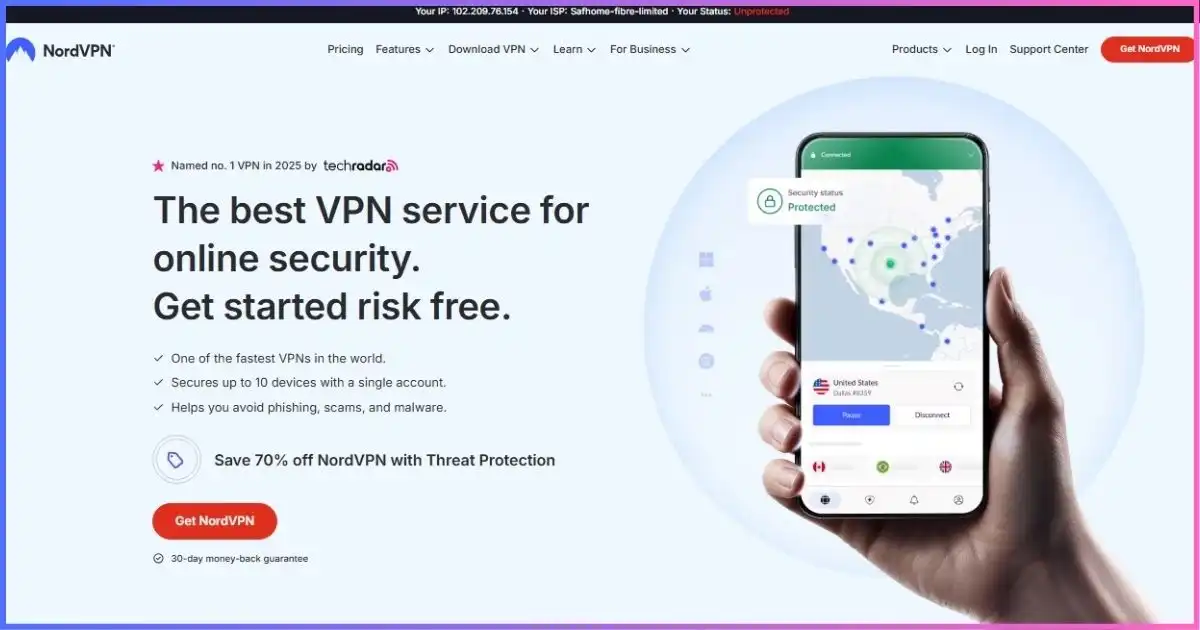
NordVPN advantage
SmartPlay, SmartDNS, and a streamlined consumer workflow.
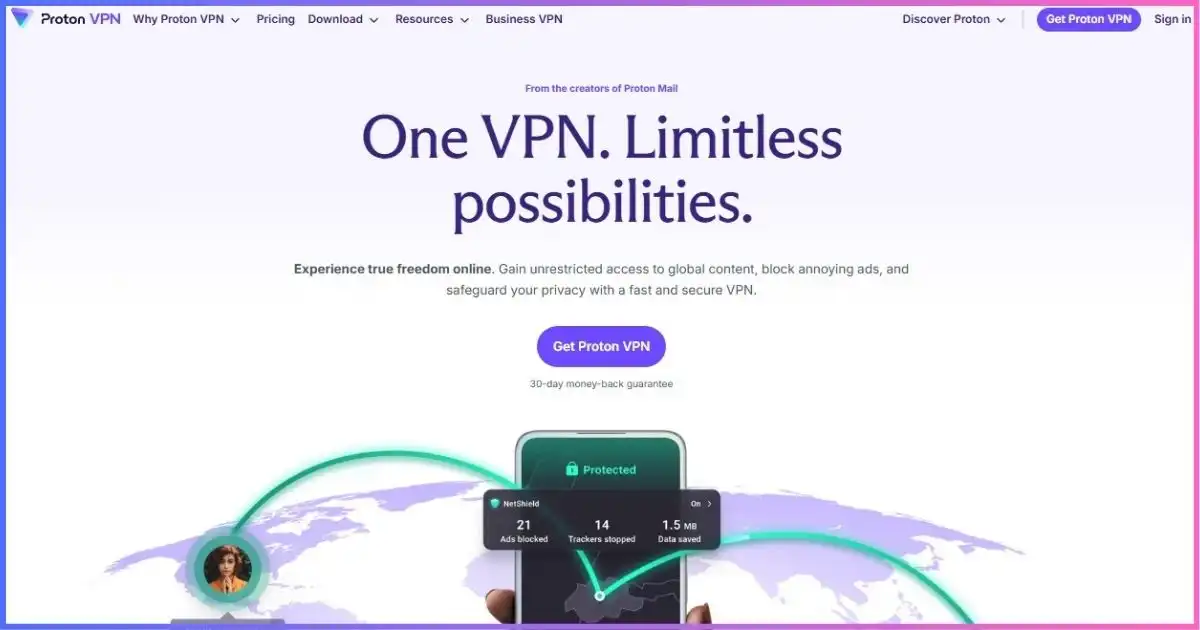
Proton VPN advantage
Huge Plus network and native television applications.
7. Gaming, Meshnet, Moderate NAT, and DDoS exposure
NordVPN wins the overall gaming workflow
Winner: NordVPNNordVPN combines NordLynx, broad location choice, and Meshnet. Meshnet can link up to 10 personal devices and 50 external devices for remote LAN-style games, device access, file transfers, or peer traffic routing. It is free and open source, and distinct from connecting to NordVPN’s commercial servers.
Proton is more gaming-capable than many older comparisons suggest. Paid users can enable Moderate NAT on Windows, macOS, Android, iOS, and Linux to improve direct multiplayer and voice/video connectivity. Proton warns that Moderate NAT slightly reduces resistance to correlation and cannot operate at the same time as port forwarding.
Both hide the household IP from direct peers and may improve a poor ISP route, but a VPN usually adds some latency. Neither can fix weak Wi-Fi, stop an attack on the game operator, or guarantee a lower ping. Nord wins for Meshnet and simpler routing; Proton is better when NAT type is the specific problem. Compare more options in our gaming VPN guide.
8. Torrenting and port forwarding
Proton VPN is the clear P2P winner
Winner: Proton VPNProton Plus labels P2P servers and provides NAT-PMP port forwarding on paid Windows, macOS, and Linux apps, Linux CLI, and supported manual WireGuard/OpenVPN configurations. The server assigns a port that normally changes after reconnecting, so the torrent client’s listening port must be updated. macOS support was early access when checked.
NordVPN now supports P2P on all standard servers, making ordinary downloads simple. However, standard VPN servers and the ordinary Dedicated IP add-on do not forward incoming ports. Only the separate Dedicated Server product supports port forwarding—up to 20 rules in limited locations—and it is not part of Basic pricing.
Port forwarding can improve incoming peer availability and seeding but opens a controlled path to the application, so keep the client updated and share only intended files. Bind the client to the VPN interface and use legally authorized content. Proton wins decisively; our top VPNs for torrenting guide explains why it ranks highly.
9. Apps, devices, split tunneling, and ecosystem
Both cover 10 devices, but their platform strengths differ
Result: TieBoth core paid plans permit 10 simultaneous VPN connections. Nord supports Windows, macOS, Linux, Android, iOS, Apple TV, Android TV, Fire TV, major browser extensions, and routers. Proton covers the same major categories, offers its Android app through Google Play, F-Droid, APK, and GitHub, and makes production clients open source.
| Split-tunneling platform | NordVPN | Proton VPN Plus |
|---|---|---|
| Windows | App-level include/exclude controls; documented DNS caveats | Apps and IP addresses; can work with kill switch |
| macOS | No native app-level equivalent when checked | Experimental app exclusion; WebKit/Safari limitations |
| Android | App exclusion | Supported |
| Linux | Port/subnet allowlisting | Linux GUI support |
| Android TV | App exclusion | Include/exclude modes |
| Browser extensions | Website exclusions | Domain-based split tunneling |
Proton has broader split-tunnel coverage, but most Proton platforms cannot use split tunneling and kill switch together; Windows is the exception. Nord’s consumer ecosystem is more cohesive, with Meshnet, Dark Web Monitor, SmartPlay, and higher-tier password/storage/protection products. Proton’s ecosystem is stronger for privacy-focused email, password management, storage, and calendar users. The round is a tie because “better” depends on whether you value routing control, open code, or bundled simplicity.
10. Travel, censorship resistance, and support
NordWhisper and Proton Stealth are both credible fallback tools
Winner: Proton VPN, narrowlyNordWhisper is available across Windows, macOS, Linux, Android, iOS, and Android TV. Nord also offers obfuscated OpenVPN servers. NordWhisper cannot be combined with Dedicated IP, Meshnet, or Onion over VPN, so travelers should understand which mode solves which problem.
Proton Stealth is available on Windows, macOS, Android, iOS/iPadOS, Android TV, and through the Linux Proton Protocols beta. Smart Protocol automatically searches for a working transport, including WireGuard UDP/TCP and Stealth. Proton’s unlimited free plan is particularly valuable for users who need basic private access without a payment method, although free server choice is randomized.
Proton wins narrowly for the combination of Stealth, Smart Protocol, open apps, and free access; Nord’s mature coverage makes the difference small. Neither provider can guarantee operation against every national firewall. Install and sign in before travel, retain multiple protocols, and check local law.
A VPN encrypts traffic to its server but cannot make a phishing page safe or repair a compromised device. The FTC’s public Wi-Fi guidance explains why HTTPS, updates, multifactor authentication, and scam awareness remain important. Our best VPN for travel guide covers pre-departure preparation.
Both offer extensive support documentation and direct help. NordVPN provides 24/7 live chat and a more conventional commercial support workflow. Proton supplies detailed technical guides, community resources, and ticket support; response speed can depend on plan and issue. Nord gets the support/usability round, while Proton gets travel resilience.
Which VPN should you choose?
Choose NordVPN if you…
- Want the smoother all-purpose premium VPN
- Prioritize streaming and SmartDNS flexibility
- Want Meshnet for private device connectivity
- Need shipped post-quantum protection on listed platforms
- Prefer simple specialty-server categories
- Want bundled desktop protection, password, or storage options
Choose Proton VPN if you…
- Want open-source apps and public annual audit reports
- Need the best free option of these two
- Want the larger published paid server fleet
- Need port forwarding for P2P
- Prefer Secure Core and Stealth
- Already use Proton Mail, Pass, Drive, or Calendar
If neither profile is decisive, compare the broader field in our best VPN providers guide.
NordVPN wins overall—but Proton VPN may be better for you
NordVPN wins by the narrowest margin, 9.4/10 to 9.3/10. It is the more cohesive paid consumer service for streaming, gaming, specialty routing, post-quantum protection, and everyday usability. Its clearly published renewal rate also makes long-term budgeting easier.
Proton VPN is the better privacy-transparency, free-access, and P2P choice. Its open-source apps, fifth consecutive public annual audit, Secure Core, Stealth, larger live network, unlimited-data free tier, and desktop port forwarding are substantive advantages—not niche extras. If one of those priorities is central, choose Proton despite Nord’s fractional overall lead.
NordVPN vs Proton VPN FAQs
Is NordVPN better than Proton VPN?
NordVPN is fractionally better overall for streaming, gaming, consumer usability, post-quantum availability, Meshnet, and specialty-server workflows. Proton VPN is better for transparency, free access, published network size, Secure Core, and paid port forwarding.
Is Proton VPN cheaper than NordVPN?
At the offers checked, yes. Proton VPN Plus was $71.76 for 24 months ($2.99/month equivalent), while NordVPN Basic was $94.23 for 27 months ($3.49/month equivalent). Nord clearly published its $139.08 annual renewal; Proton’s dynamic page did not expose one durable renewal amount.
Does Proton VPN have a free plan?
Yes. Proton Free has unlimited data, no ads, one connection, and app-selected servers in 10 countries. It excludes supported streaming, P2P, Secure Core, NetShield, the complete network, and manual country choice. NordVPN has no comparable permanent free plan.
Which VPN is more private?
Both have strong no-logs evidence. Proton wins transparency because its production apps are open source and its five consecutive annual Securitum reports, including 2026, are public. NordVPN has completed six Deloitte assurance engagements and uses RAM-only, encrypted-boot ordinary servers.
Which is better for streaming?
NordVPN. SmartPlay is integrated into its VPN apps, and standalone SmartDNS remains available for incompatible devices. Proton Plus supports major platforms and native TV apps, but its Free plan does not include supported streaming and Secure Core is not optimized for video.
Which is better for torrenting?
Proton VPN. Paid P2P servers support NAT-PMP port forwarding through Windows, macOS, and Linux apps and compatible manual configurations. NordVPN supports P2P on standard servers but only its separate Dedicated Server product offers forwarding.
Do NordVPN and Proton VPN support the same number of devices?
Yes. NordVPN and Proton VPN Plus each permit 10 simultaneous VPN connections. Proton Free permits one connection.
Which works better in restrictive countries?
Both have strong options: NordVPN provides NordWhisper and obfuscated servers, while Proton offers Stealth and Smart Protocol. Proton wins narrowly due to its free access and open-source clients, but neither can guarantee availability against every firewall.
Sources & comparison methodology
Research date: September 18, 2026. We reviewed current NordVPN pricing/renewal pages, live server directory, privacy notice, sixth assurance announcement, protocol, NordWhisper, post-quantum, kill-switch, split-tunneling, Meshnet, streaming, P2P, port-forwarding, and platform documentation. For Proton VPN, we reviewed current pricing, the live server directory, Free/Plus plan documentation, protocol and Proton Protocols information, Secure Core, split tunneling, port forwarding, Moderate NAT, NetShield, streaming/TV support, open-source publications, app reviews, and annual no-logs reports.
Scoring: Privacy and security account for 25%, performance/reliability 20%, network/infrastructure 15%, streaming/gaming/P2P 15%, apps/usability 10%, price/free-tier/refund value 10%, and support/transparency 5%. The overall result uses weighted capability, so equal round totals need not create equal scores. Features receive credit only when current availability and material restrictions are documented.
Limits: Speed and streaming vary by route, device, ISP, server load, location, and date. Providers do not standardize how they count servers, countries, virtual locations, or specialty infrastructure. Audits are point-in-time evidence. Prices and renewals can change by checkout context. Scores are comparative editorial judgments, not guarantees.
Affiliate disclosure: We may earn a commission if you purchase through provider buttons on this page, at no additional cost to you. Compensation does not determine the outcome. Proton VPN remains our recommended choice for free access, transparency, and ordinary paid port forwarding even though NordVPN wins overall.