Best VPN for Developers: Speed, CLI, Port Forwarding & Meshnet
For developers, a VPN is not a privacy luxury — it is infrastructure. When you are pushing code at 3am from a hotel in Berlin, pulling 4 GB Docker images on public Wi-Fi, running dev servers behind NAT, whitelisting your IP with a client’s staging environment, or SSHing into production from a café, the tool that encrypts your tunnel is part of your toolchain. The best VPN for developers is the one that fits how you actually ship: WireGuard speed for npm/pip/cargo, a first-class Linux CLI for headless boxes, port forwarding for self-hosted services, SOCKS5 for scripts, Meshnet for reaching home machines, and audited no-logs when you handle client code.
In this guide we rank the VPNs that treat developers as power users — not consumers. That means open-source clients, Linux support, CLI tooling, port forwarding, SOCKS5 proxies, split tunneling, per-app kill switch, and a refund window you can test inside a real project repo before renewal. We exclude the streaming-first picks that are irrelevant for developers and keep only the seven that ship meaningful developer-grade tooling.
What Is the Best VPN for Developers in 2026?
Private Internet Access (PIA) is the best VPN for developers overall. It is the only mainstream provider that combines port forwarding, a SOCKS5 proxy, open-source clients, a proper Linux GUI, unlimited simultaneous devices, and the lowest verified price in this guide ($2.03/mo on the 2-year plan) — all backed by court-validated no-logs. NordVPN is the best pick when you want Meshnet peer-to-peer remote access plus the fastest WireGuard network. Proton VPN wins for privacy-first developers thanks to open-source everything, a permanent free tier, and Swiss jurisdiction. Surfshark is the unlimited-device value pick, IPVanish covers developers who want owned infrastructure, ExpressVPN is the premium-speed fallback when global consistency matters, and SafeShell is a niche stealth add-on for developers working from heavily filtered countries.
Rule of thumb: if a VPN’s marketing page only mentions Netflix and streaming, it probably wasn’t built for you. The dev-friendly ones advertise port forwarding, SOCKS5, CLI, and open-source clients.

Table of Contents
- Quick answer: best VPN for developers 2026
- Developer work & security statistics
- What makes a VPN developer-grade
- Feature comparison table
- Developer VPN charts
- 1. PIA — best overall for developers
- 2. NordVPN — best for Meshnet remote access
- 3. Proton VPN — best for privacy-first devs
- 4. Surfshark — unlimited devices, solid speed
- 5. IPVanish — owned infrastructure, unlimited
- 6. ExpressVPN — premium speed fallback
- 7. SafeShell — stealth niche pick
- Best VPN by developer use case
- When to self-host instead
- Setup tips for developers
- FAQs
- Final verdict
- Sources & research notes
The developer surface you need to protect is enormous. With 78.3% of web-facing servers running Linux [[37]], every headless server, CI runner and cloud VM you touch is a potential attack vector on untrusted networks. Stack Overflow’s 2025 Developer Survey confirmed that 54% of respondents use six or more tools at work [[8]] — that tool sprawl, combined with insider threats climbing 58% with remote work adoption [[21]] and 63% of businesses suffering a remote-work data breach [[21]], means the tunnel between your laptop and your infrastructure is no longer optional. Add the fact that GitHub onboards roughly one new developer per second [[13]], and you are looking at a toolchain that now extends well beyond your local machine.
What Makes a VPN Developer-Grade?
We filtered out streaming-first and consumer VPNs. A VPN earns a spot as the best VPN for developers only if it materially supports how engineers actually work — measured on eight criteria:
- WireGuard or audited proprietary protocol: NordLynx, Lightway, and WireGuard-native support; legacy OpenVPN as fallback.
- Linux support + CLI: GUI app plus a command-line interface for headless boxes, CI runners and SSH-only environments.
- Port forwarding: essential for self-hosted dev servers, P2P, torrenting large datasets and reaching behind NAT.
- SOCKS5 proxy: for scripts, Docker,
curl, and tools that don’t speak HTTP(S). - Split tunneling + per-app kill switch: keep the IDE on the VPN while the browser stays local, and kill only the VPN’d apps on tunnel drop.
- Remote device access (Meshnet, ZeroTier-style peer-to-peer): reach home machines from anywhere without a third-party service.
- Independent no-logs audits + open-source clients: developers read source code; closed-source apps are a red flag when handling client work.
- Unlimited or generous multi-device coverage: most developers run 4–8 devices between laptop, desktop, phone, tablet and server.
Pricing was verified September 2026 against vendor pages and independent trackers; treat first-term figures as the deal price and renewal figures as the real long-run cost.
Best VPNs for Developers: Feature Matrix
The developer-focused scan: every gate we care about, at a glance. A checkmark means the feature is genuinely shipped; a dash means it isn’t available.
| VPN | Lowest $/mo | Devices | Port Fwd | SOCKS5 | Linux CLI | Meshnet | Open-source clients |
|---|---|---|---|---|---|---|---|
| PIA | $2.03 | Unlimited | ✓ | ✓ | ✓ | — | ✓ |
| NordVPN | $3.49 | 10 | — | ✓ | ✓ | ✓ | — |
| Proton VPN | $2.99 | 10 | ✓ | — | ✓ | — | ✓ |
| Surfshark | $2.49 | Unlimited | — | — | ✓ | — | — |
| IPVanish | $2.19 | Unlimited | — | ✓ | ✓ | — | — |
| ExpressVPN | $2.99 | 8 | — | — | ✓ | — | — |
| SafeShell | ~$2.50 | 5 | — | — | — | — | — |
Developer VPN Charts
Chart 1 — Developer-grade feature coverage by provider
Count of dev-critical features (port fwd, SOCKS5, Linux CLI, Meshnet, open-source clients, unlimited devices). Max score = 6.
Chart 2 — Pricing by commitment length (developer picks)
Effective $/month per billing term, averaged across the seven providers. Long-term plans collapse monthly sticker price by ~80%.
Committing to a 2-year plan typically drops the per-month cost under $3 — cheaper than most CI runners and many SaaS subscriptions in your stack.
Chart 3 — Simultaneous device coverage per subscription
How many devices you can protect at once — critical for multi-device developers.
Chart 4 — Refund windows (days) by provider
How long you can test in a real project before renewal locks in.
The 7 Best VPNs for Developers Ranked (2026)
Private Internet Access (PIA) — Port Forwarding, SOCKS5, Open-Source, $2.03/mo
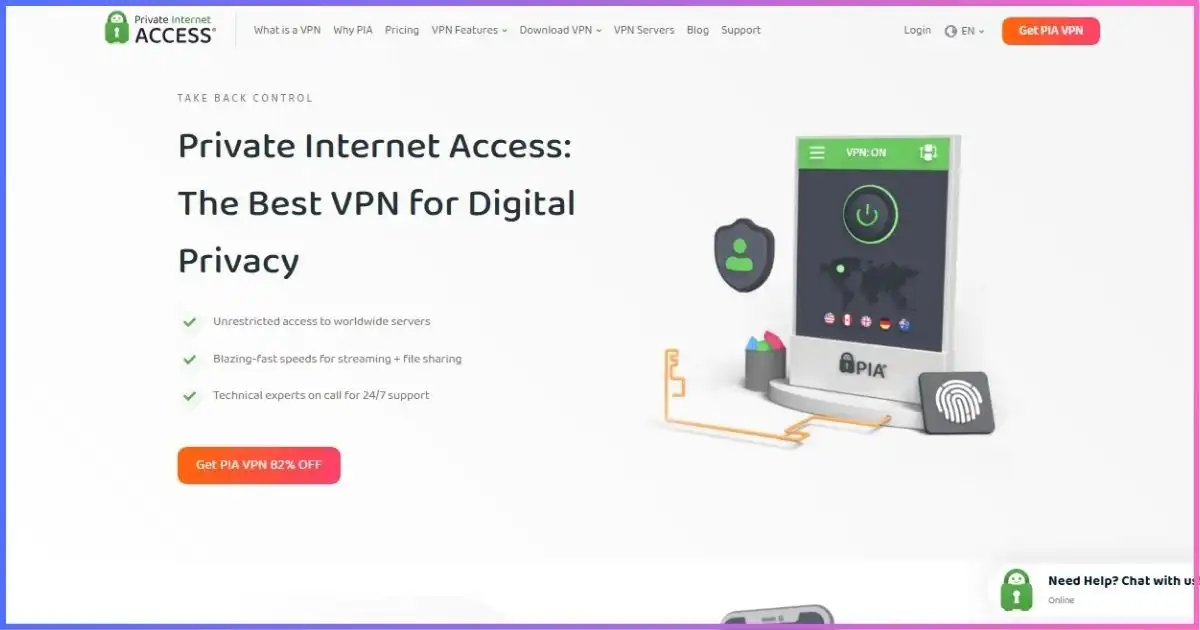
PIA is the only mainstream provider in this guide that ships all four developer primitives at once: port forwarding, SOCKS5 proxy, open-source clients, and a proper Linux GUI. Pair that with court-validated no-logs history, unlimited simultaneous connections, port-forwarded torrents-friendly throughput, and the lowest verified price here at $2.03/mo — and you have the default answer to “what is the best VPN for developers?”. Our full benchmark data is in the PIA review.
| Plan | Effective price | Billed |
|---|---|---|
| Monthly | $11.95/mo | $11.95 |
| 12 months | $3.99/mo | $47.88 upfront |
| 24 months + 2 free | $2.03/mo | ~$53 upfront |
Pros
- Only mainstream pick with port forwarding + SOCKS5 + open-source clients + Linux GUI
- Unlimited simultaneous connections
- Court-validated no-logs history
- Lowest verified price in this guide
- Split tunneling, per-app kill switch
Cons
- US jurisdiction (Five Eyes)
- Streaming less consistent than NordVPN or ExpressVPN
- UI feels utilitarian
NordVPN — Meshnet, Fastest WireGuard, Largest Audited Network
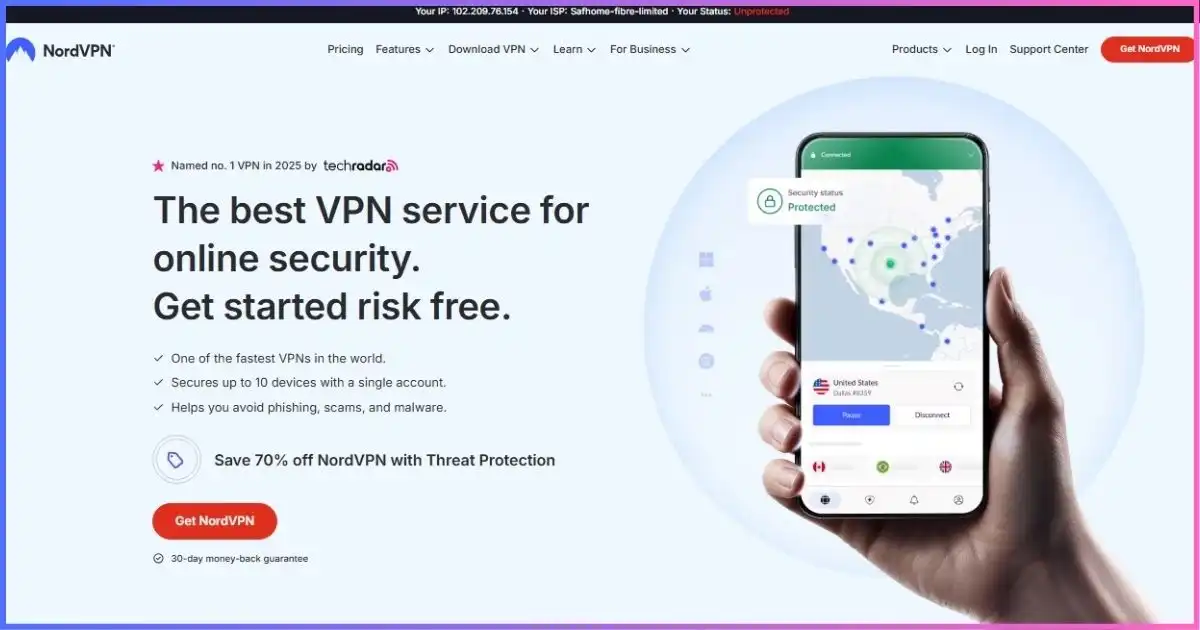
NordVPN earns #2 because its Meshnet feature is genuinely useful for developers: it lets you create a private, encrypted peer-to-peer network between your own devices — up to 60 in total — replacing TeamViewer, ZeroTier, or Tailscale-style setups when you need to reach a home machine from a café in Tokyo. Combine that with the deepest independent audit record in the category, NordLynx (WireGuard) speeds that consistently top benchmarks, and a proper Linux CLI, and it is the strongest pick when remote access matters more than port forwarding. Full testing notes in our NordVPN review.
| Plan (Basic tier) | Effective price | Billed |
|---|---|---|
| Monthly | $14.99/mo | $14.99 |
| 12 months | $5.49/mo | ~$65.88 upfront |
| 24 months + 3 free | $3.49/mo | $94.23 for 27 months |
Pros
- Meshnet peer-to-peer remote access (free with any plan)
- Largest audited network in the category
- Fastest and most consistent NordLynx speeds
- 10 simultaneous devices
- Linux CLI + SOCKS5 proxy
Cons
- No port forwarding
- Priciest 2-year plan in this guide
- 10-device cap vs unlimited rivals
Proton VPN — Open-Source Everything, Free Tier, Swiss Jurisdiction
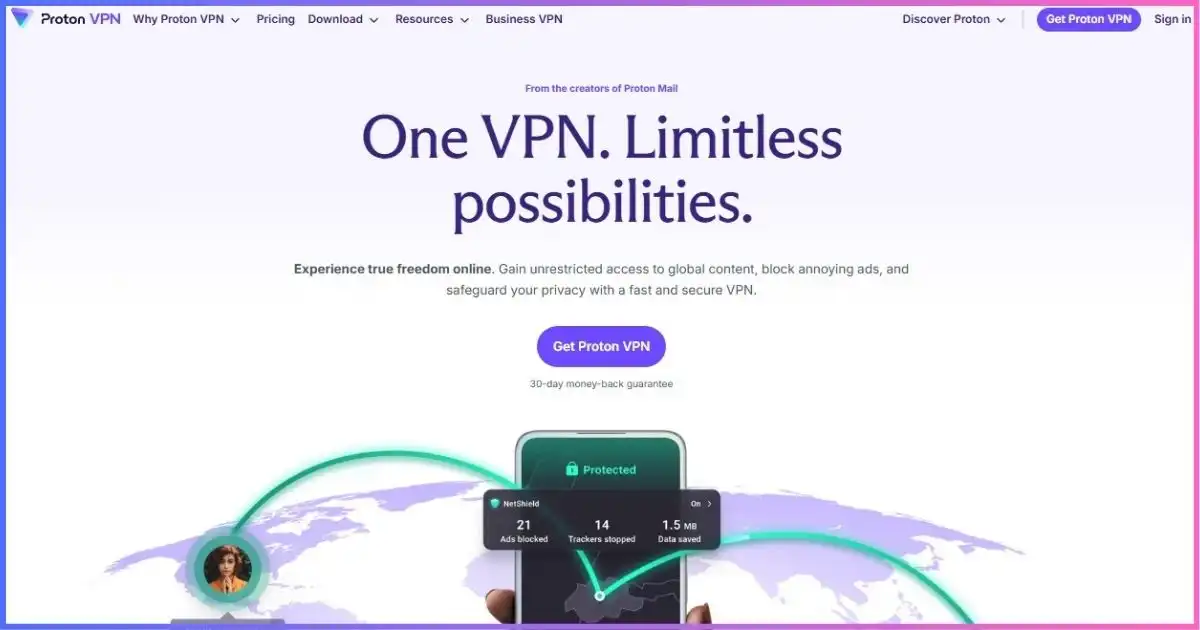
Developers who handle sensitive client code, regulated industries, activist orgs, or journalists need more than marketing. Proton VPN offers open-source clients, independent audits, Swiss jurisdiction with strong privacy law, Secure Core multi-hop routing, Tor-over-VPN, port forwarding on Plus plans, and a genuinely free forever tier you can spin up in CI before paying. See our Proton VPN review, and for adjacent picks see best VPN for journalists and best VPN for activists.
| Plan | Effective price | Billed |
|---|---|---|
| Free | $0 forever | 1 device, limited servers |
| Monthly (Plus) | $9.99/mo | $9.99 |
| 12 months (Plus) | $4.99/mo | $59.88 upfront |
| 24 months (Plus) | $2.99–3.49/mo | ~$71.76 upfront |
Pros
- Free tier with no time limit (great for CI/tests)
- Open-source, audited, Swiss-based
- Secure Core + Tor over VPN + port forwarding
- 10 devices on paid plans
Cons
- Free tier is slow and server-limited
- No SOCKS5 proxy
- Streaming less consistent than NordVPN/Express
Surfshark — Unlimited Devices at $2.49/mo
Surfshark’s unlimited simultaneous connections at $2.49/mo make it the strongest value for developers who run many devices across laptop, desktop, phone, tablet and dev server — and the per-device cost works out to fractions of a dollar. It lacks port forwarding and SOCKS5 (which is why PIA ranks above it), but it covers the core WireGuard speed, kill switch, leak protection and streaming gates cleanly. Full benchmark data in our Surfshark review.
| Plan | Effective price | Billed |
|---|---|---|
| Monthly | $16.45/mo | $16.45 |
| 12 months | $3.39/mo | $47.85 upfront |
| 24 months + 3 free | $2.49/mo | $67.23 for 27 months |
Pros
- Unlimited simultaneous connections
- Lowest per-device cost in the category
- Independent no-logs audits
- Strong streaming & speeds
Cons
- No port forwarding or SOCKS5
- Monthly price ($16.45) is steep
- Renewal jumps to ~$79/yr
IPVanish — Owns Its Servers, Unlimited Devices, SOCKS5
IPVanish owns and operates its own server fleet instead of renting third-party hardware — a genuine privacy advantage for developers who care about the physical infrastructure. Combined with unlimited devices and a SOCKS5 proxy, it is a solid budget pick for U.S.-based teams. See our IPVanish review for details.
| Plan (Essential tier) | Effective price | Billed |
|---|---|---|
| Monthly | $12.99/mo | $12.99 |
| 12 months | $3.33/mo | ~$39.99 upfront |
| 24 months | $2.19/mo | ~$52.56 upfront |
Pros
- Unlimited devices + SOCKS5 at $2.19
- Self-owned, self-operated servers
- Simple, stable apps
Cons
- US jurisdiction & past logging controversy (pre-2018 ownership)
- No port forwarding
- Renewals rise to ~$99.99/yr
ExpressVPN — Best Global Speed Consistency

ExpressVPN does not ship the classic developer primitives (no port forwarding, no SOCKS5), but its Lightway protocol is the most consistent for speed across continents — exactly what matters when your team is distributed across time zones and you can’t afford a bad region. The 2-year + 4-month Basic deal at $2.99/mo pulls it into budget territory, with a sharp renewal (~$99.95/yr) as the trade-off. See our ExpressVPN review for full testing.
| Plan (Basic tier) | Effective price | Billed |
|---|---|---|
| Monthly | $12.99/mo | $12.99 |
| 12 months | $4.99/mo | ~$59.88–74.85 upfront |
| 24 months + 4 free | $2.99/mo | $83.72 for 28 months |
Pros
- Most consistent global speed
- RAM-only TrustedServer infrastructure
- Lightweight Lightway protocol
- Linux CLI supported
Cons
- No port forwarding or SOCKS5
- Sharp renewal jump (~$99.95/yr)
- 8-device cap
SafeShell — Stealth for Developers in Restrictive Regions
SafeShell is the niche budget pick: its proprietary GCM stealth mode disguises VPN traffic as regular HTTPS, which matters for developers working from heavily filtered countries where standard WireGuard/OpenVPN handshakes get blocked. It ships none of the developer primitives (no port forwarding, no SOCKS5, no Linux CLI, no open-source client), so we recommend it only as a secondary, situation-specific tool. See our SafeShell review and best VPN for restrictive countries guide.
| Plan | Effective price | Billed |
|---|---|---|
| Monthly | $12.99/mo | $12.99 |
| 12 months | ~$3.25–6.67/mo | ~$38.99–79.99 (promo rotates) |
| 24 months | ~$2.50/mo | ~$59.99 upfront |
Pros
- Stealth/GCM mode for filtered networks
- Aggressive discounts (80%+ common)
- Simple setup on 5 devices
Cons
- No port forwarding, SOCKS5, Linux CLI, open-source clients
- Smaller network & no major independent audits
- Refund terms vary by promotion
Best VPN for Developers by Use Case
- Self-hosting & port forwarding: PIA (port forwarding + SOCKS5 + open-source) — pair with our top VPNs for torrenting guide for large datasets.
- Reaching home machines remotely: NordVPN for Meshnet peer-to-peer access — see best VPN for remote workers.
- Privacy-sensitive client code: Proton VPN for Swiss jurisdiction, open-source apps and free tier — see best VPN for journalists and best VPN for activists.
- Multi-device developers: Surfshark or IPVanish (unlimited devices) — see best VPN for professionals.
- Globally distributed teams: ExpressVPN for consistent speed across continents.
- Developers in filtered countries: SafeShell as a secondary stealth tool — see best VPN for restrictive countries.
- Healthcare or regulated work: Proton VPN or NordVPN — see best VPN for healthcare.
- Zero-trust vs VPN debate: see business VPN vs Zero Trust (ZTNA) for when a VPN is the wrong tool.
When Should a Developer Self-Host Instead?
Every pick in this guide is a managed service. Some developers are better served by self-hosting, especially if you are already comfortable with Linux servers. The honest read:
- Self-host a WireGuard server on your own VPS if you want full control, predictable cost (a $5 VPS covers most solo-dev traffic), and don’t need the commercial provider’s server network. Linux powers 78.3% of web-facing servers [[37]] — so the tooling is mature.
- Self-host Mesh alternatives like Tailscale, Headscale, or NetBird when peer-to-peer device access is your primary need and you don’t want a third-party SaaS in the loop.
- Use a managed VPN when you need multi-region server selection, built-in SOCKS5, port forwarding without configuring it, audited no-logs you can point at clients, or support for non-technical team members who won’t run a WireGuard config.
For most developers, the right answer is PIA or NordVPN for daily use, plus a small personal WireGuard or Tailscale setup for private infrastructure. They complement each other rather than compete.
Setup Tips for Developers
- Prefer WireGuard over legacy protocols. NordLynx (NordVPN), Lightway (ExpressVPN), and native WireGuard on PIA/Proton/Surfshark are all faster and have smaller attack surface than legacy OpenVPN configs.
- Enable per-app kill switch. Available on PIA, NordVPN and Proton — if the tunnel drops, only VPN-protected apps lose connectivity. This is exactly the failure mode that leaks client work on café Wi-Fi.
- Use the SOCKS5 proxy for scripts. On PIA and IPVanish, the SOCKS5 proxy works with
curl, Docker, and custom scripts that don’t speak HTTP(S) cleanly through a full tunnel. - Enable port forwarding only when needed. PIA’s port forwarding is the classic developer primitive for self-hosted dev servers, P2P, and large dataset transfers — enable it only when you are exposing a service.
- Split tunnel your IDE. Keep npm/git/Docker on the VPN for integrity, and let the browser stay local for speed — split tunneling on PIA, NordVPN, Surfshark and Proton handles this cleanly.
- Calendar the renewal. Every budget deal auto-renews higher: IPVanish and CyberGhost near $99.99/yr, ExpressVPN near $99.95/yr, Surfshark near $79/yr. Set a reminder 2 weeks before renewal.
- Use the refund window as a real test. 30 days on every pick. Test inside a real project repo on actual travel Wi-Fi, not just at home.
Best VPN for Developers FAQs
What is the best VPN for developers in 2026?
Do developers really need a VPN?
Which VPN supports port forwarding?
Which VPN has a SOCKS5 proxy?
Do these VPNs work on Linux?
What is Meshnet and why does it matter?
Should I self-host a WireGuard server instead?
Are free VPNs OK for developers?
What is the cheapest VPN for developers?
Do these VPNs work in China or restrictive countries?
The Best VPN for Developers: Final Recommendation
For developers, a VPN is infrastructure. With 78.3% of web-facing servers running Linux, 63% of businesses suffering remote-work breaches, and the average data breach costing $4.88M, the tunnel between your laptop and your servers is non-negotiable. The right pick depends on which primitive matters most to your workflow: port forwarding and SOCKS5 (PIA), Meshnet remote access (NordVPN), open-source + free tier (Proton), unlimited devices (Surfshark/IPVanish), or global speed consistency (ExpressVPN).
Buy PIA if you want the full developer toolchain at the lowest price; choose NordVPN when Meshnet peer-to-peer remote access is the primary use case; grab Proton VPN when your client code or industry demands open-source + Swiss jurisdiction. Whichever you choose, use the refund window as a real test inside your actual project repo, enable per-app kill switch, and calendar the renewal.
| VPN | Best for | Rating | Get started |
|---|---|---|---|
| PIA | Best overall for developers | 4.9 / 5 | Try PIA |
| NordVPN | Best for Meshnet remote access | 4.8 / 5 | Try NordVPN |
| Proton VPN | Best for privacy-first devs | 4.7 / 5 | Try Proton VPN |
| Surfshark | Best unlimited-device value | 4.5 / 5 | Try Surfshark |
| IPVanish | Owned network, unlimited + SOCKS5 | 4.4 / 5 | Try IPVanish |
| ExpressVPN | Best global speed consistency | 4.3 / 5 | Try ExpressVPN |
| SafeShell | Stealth for restrictive regions | 4.0 / 5 | Try SafeShell |
Disclosure: This article contains affiliate links. If you purchase through them, we may earn a commission at no extra cost to you. All rankings are based on independent research and verified September 2026 pricing — confirm current terms on the vendor site before committing, especially renewal rates.
Sources & Research Notes
Pricing verified September 2026 against vendor pricing pages and independent trackers; promotional pricing rotates, so treat first-term figures as deal prices. Developer, privacy and market claims cite the research below — none of which is from the vendor sites covered in this article, so the evidence is independent.
- Stack Overflow Developer Survey 2025 — 54% of respondents use 6+ tools at work, 84% using or planning to use AI, 51% of professional developers use AI tools daily — survey.stackoverflow.co/2025/.
- CommandLinux, “Linux VPN Server Deployment Statistics 2026” — 78.3% of web-facing servers globally run Linux — commandlinux.com/statistics/linux-vpn-server-deployment-statistics/.
- Insiderisk, “Remote Work Insider Threats 2025” — 58% rise in insider threats with remote work adoption, 63% of businesses suffered remote-work data breaches — insiderrisk.io/research/remote-work-dark-secret-2025.
- Ricoh / IBM, “5 Biggest Cyber Threats to Hybrid Work” — average cost of a data breach reached $4.88 million in 2024 — ricoh-usa.com/en/insights/articles/5-biggest-cyber-threats-to-hybrid-work.
- GitHub Octoverse 2025 — approximately 1 new developer joins GitHub every second — github.blog/news-insights/octoverse/.
- Cybernews, “Best VPNs that support port forwarding in 2026” — Proton VPN, PIA, and PureVPN highlighted for port forwarding — cybernews.com/best-vpn/vpn-with-port-forwarding/.
- SafetyDetectives, “5 Best SOCKS5 VPNs in 2026” — PIA highlighted for SOCKS5 + port forwarding combination — safetydetectives.com/blog/best-socks5-vpns/.
- All About Cookies, “Best VPNs With Port Forwarding 2026” — PIA, Proton VPN and PureVPN named — allaboutcookies.org/best-vpns-with-port-forwarding.
- VPN.com, “Best VPN for Command Line: CLI Tools for Sysadmins” — NordVPN and ExpressVPN Linux CLI coverage noted — vpn.com/vpn/best-vpn-for-linux/command-line-interface/.
- ProxyHorizon, “Best VPNs for Developers in 2026” — ranked picks for WireGuard speed, Linux CLI, split tunneling, audited no-logs, and dedicated IPs — proxyhorizon.com/blog/best-vpns-for-developers.
- Pinggy, “Top 5 Best Self-Hosted VPNs in 2026” — WireGuard, AmneziaVPN, Headscale, NetBird and WG-Easy for self-hosting — pinggy.io/blog/top_5_best_self_hosted_vpns/.
- Varonis, “Data Breach Statistics & Trends (updated 2025)” — data breaches cost $131,000 more when remote work was a factor — varonis.com/blog/data-breach-statistics.
- Surfshark pricing page (July–Sept 2026) — Starter $16.45 monthly, $3.39/mo yearly, $2.49/mo on 24-month + 3 free — surfshark.com/pricing.
- Proton VPN pricing & plan docs — Plus $9.99 monthly, $4.99/mo yearly, $2.99–3.49/mo 2-year; free tier permanent — proton.me/pricing.
- Private Internet Access buy page — $11.95 monthly, $3.99/mo 1-year, $2.03/mo 2-year + 2 free — privateinternetaccess.com.
- NordVPN pricing & support — Basic $14.99 monthly, $5.49/mo yearly, $3.49/mo 2-year; 10 devices — nordvpn.com/pricing.
- ExpressVPN pricing — Basic $12.99 monthly, ~$4.99/mo 1-year, $2.99/mo on 2-year + 4 months ($83.72) — expressvpn.com/pricing.
- IPVanish pricing & renewal page — Essential $12.99 monthly, $3.33/mo 1-year, $2.19/mo 2-year — ipvanish.com/pricing.
- SafeShell pricing & help center — ~$12.99 monthly, discounted 1–2 year terms (~$2.50–6.67/mo) — safeshellvpn.com/pricing.
- Security.org, “How Much Does a VPN Cost? 2026 Average VPN Pricing” — monthly subscriptions typically $10–13 — security.org/vpn/cost/.
- Top10VPN free VPN investigation — 86% of free VPN apps had substandard privacy policies — top10vpn.com/research/free-vpn-investigations/.